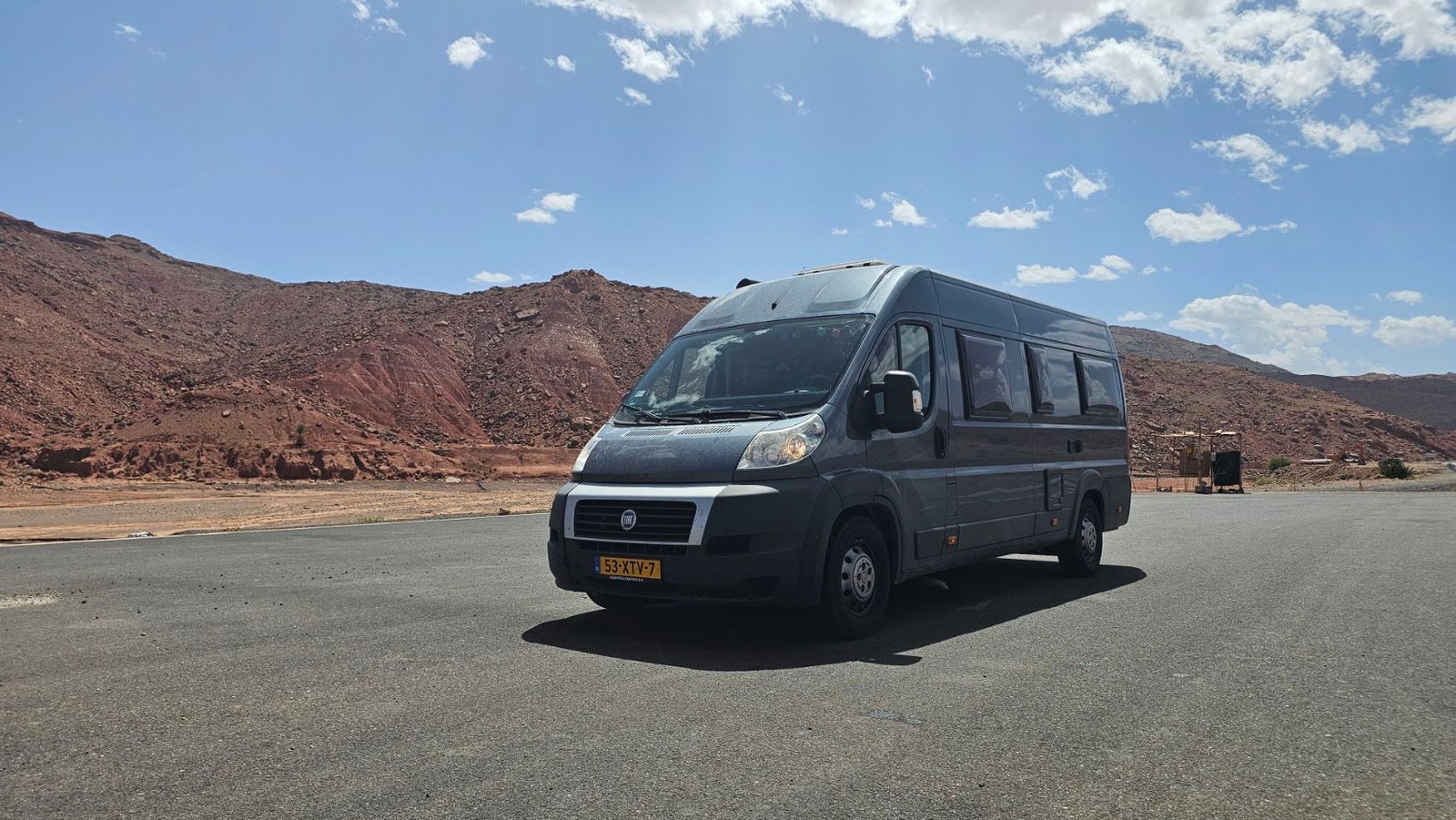
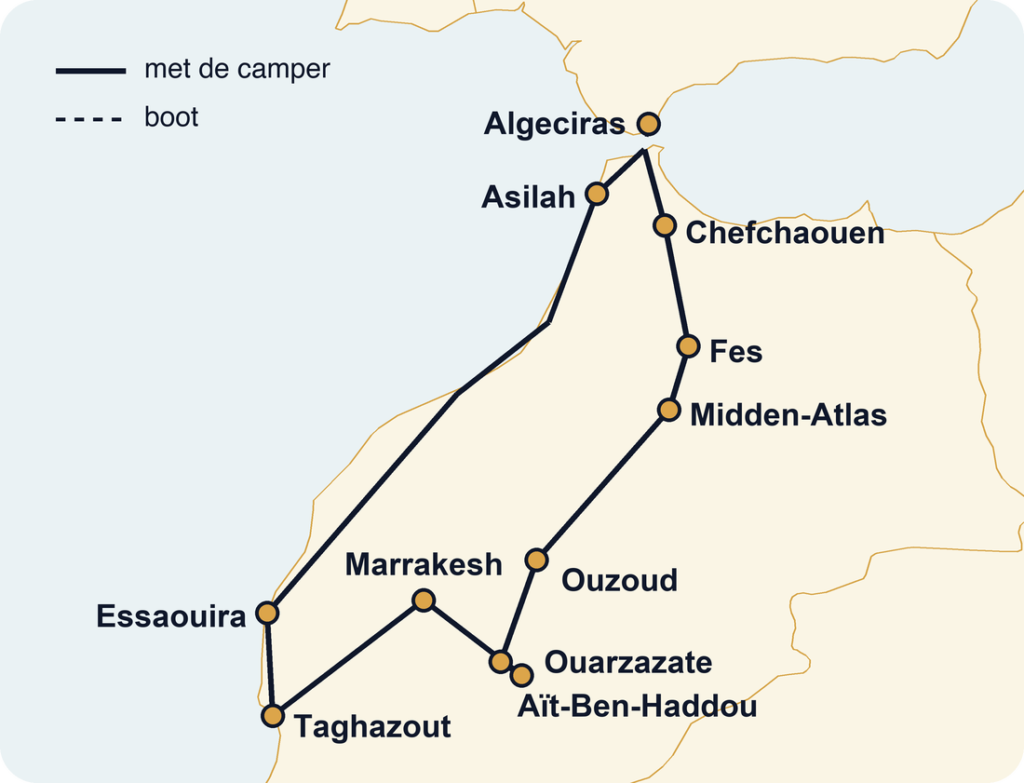
The route at a glance
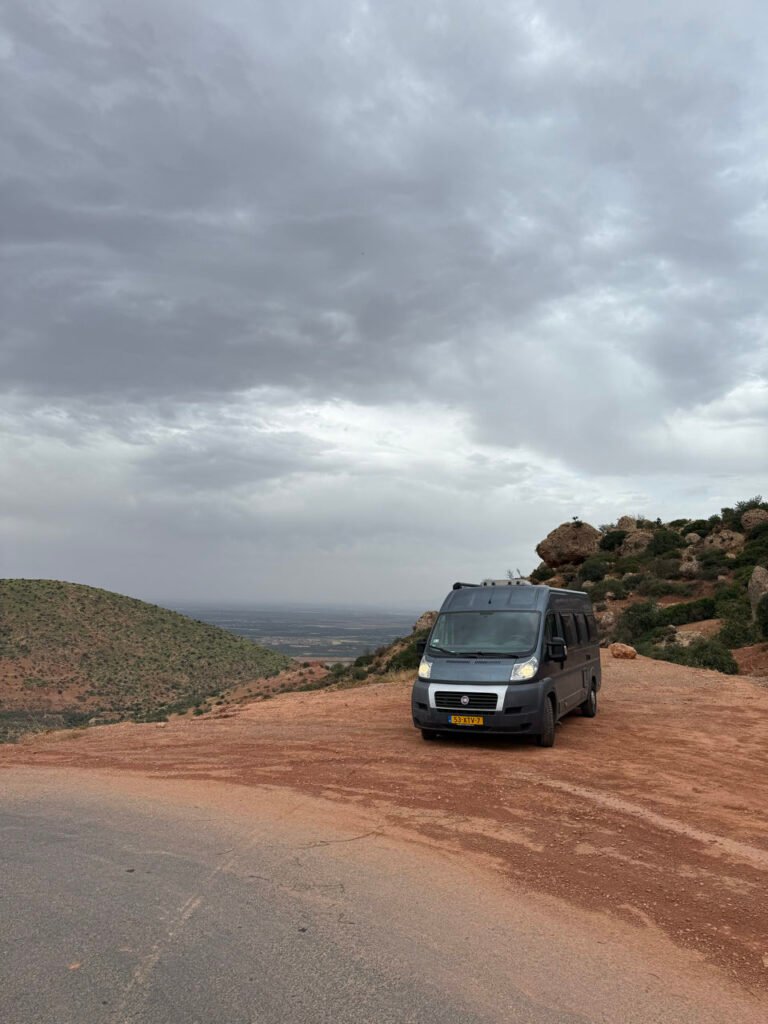
In May 2025 we set off south for our very first big trip with our new camper. We travelled from the Netherlands to Morocco and spent 3.5 weeks on a road trip there. We visited the classic cities, took a cooking workshop, enjoyed all the delicious food and were also amazed by the hygiene. We met the sweetest people, slept in special places and really discovered camper life. By now we had christened the camper Dikke Bertha (Big Bertha, as in the giant German cannon). Below you can read our Morocco camper route, with all the places we slept, prices and practical tips.
We did not take Bodhi on this trip. We chose that because we were leaving the EU for the African continent, but also because it would be hot and we wanted to visit a lot of cities. He enjoyed a nice holiday at Florine’s parents’ place in France, where we picked him up again on the way back.
Through Spain to the boat (days 1-4)
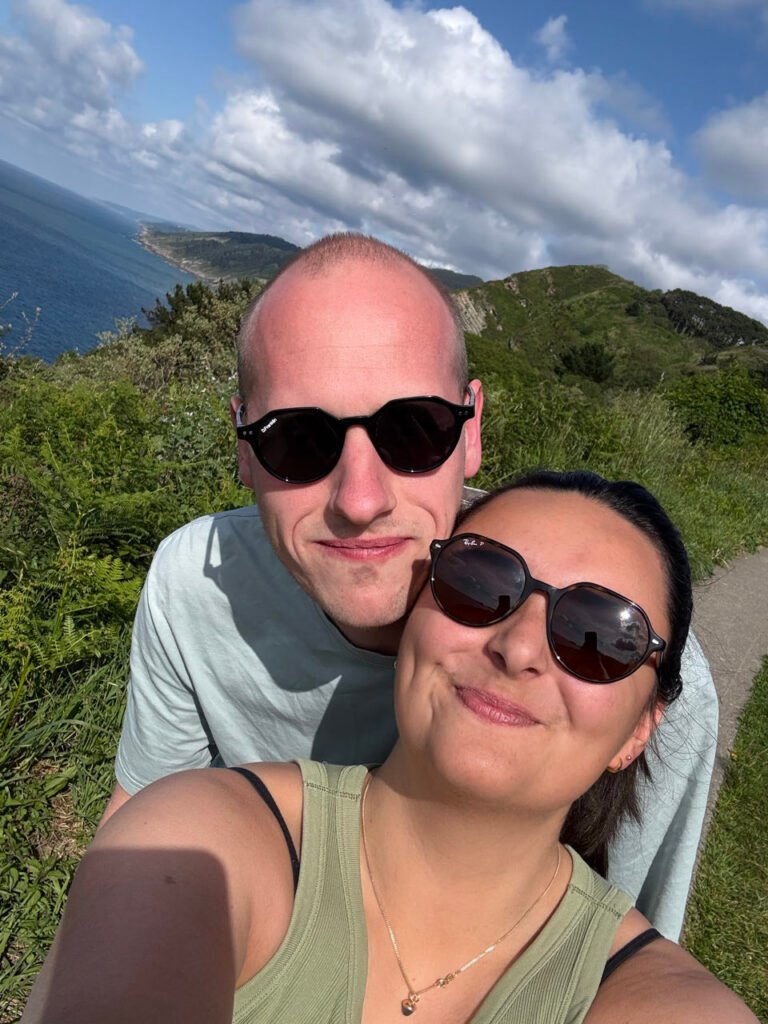
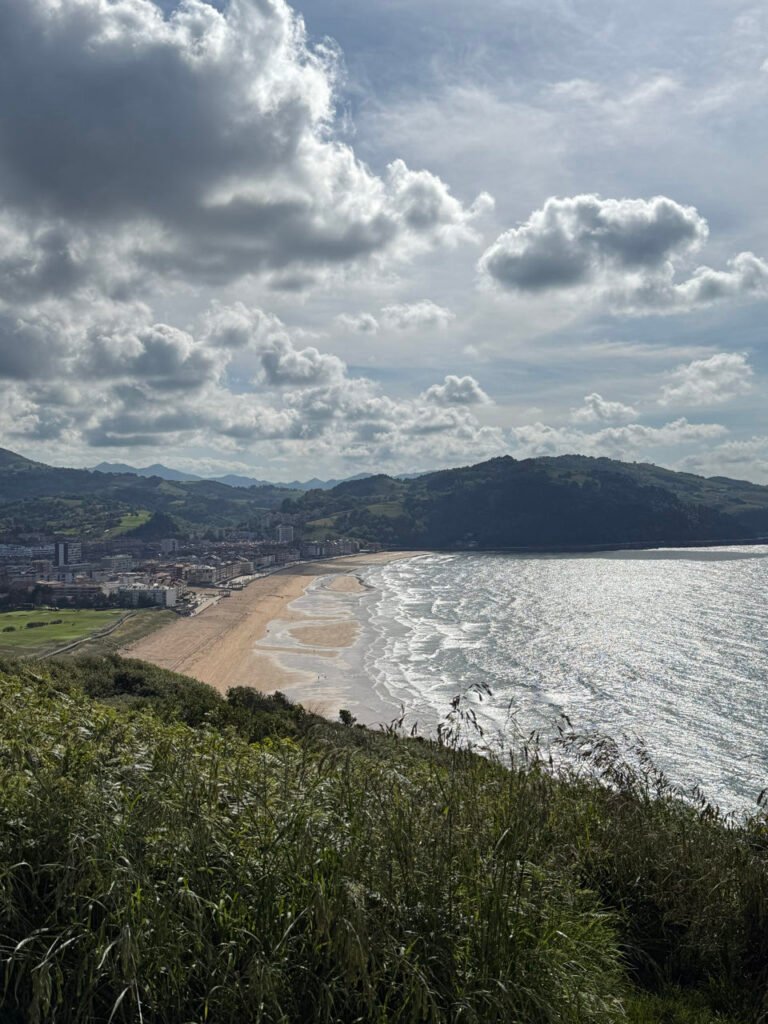
Zarautz. After a first night at a not very special, but free, spot in northern France, this felt like the real start. A campsite (Gran Camping Zarautz) with a fantastic view, the (surf) beach within walking distance and pancakes à la Julian. We got to know Bertha better and covered the kilometres incredibly fast. Compared to our T4 Westfalia this is a really nice upgrade, and we enjoyed all the space.
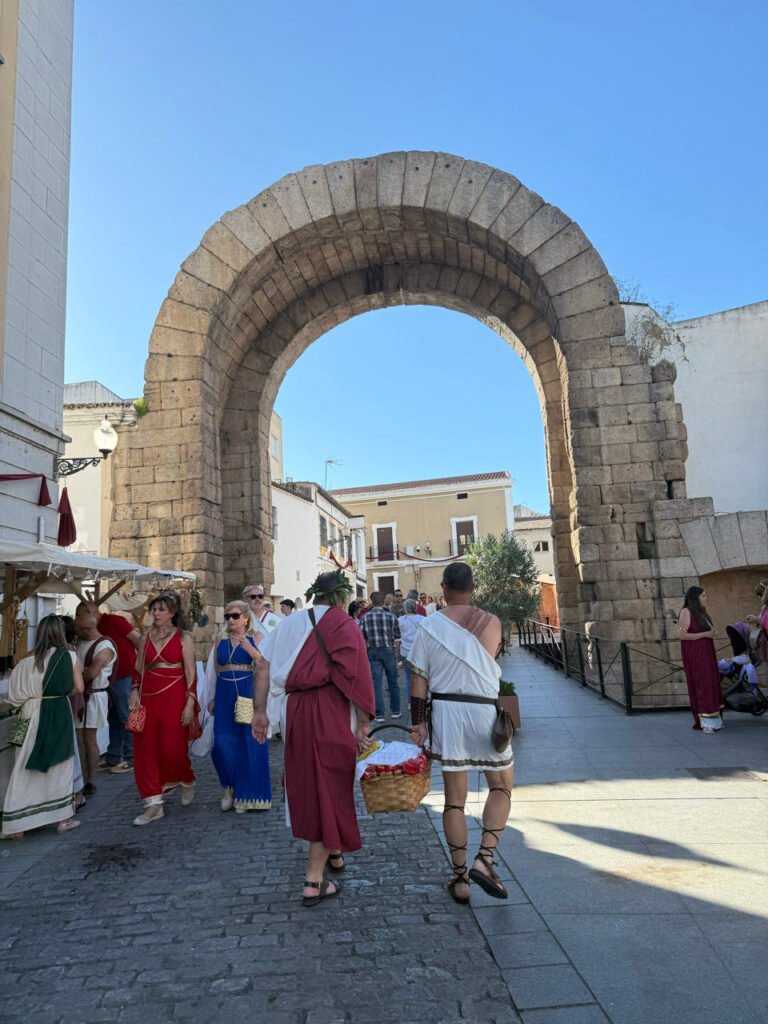
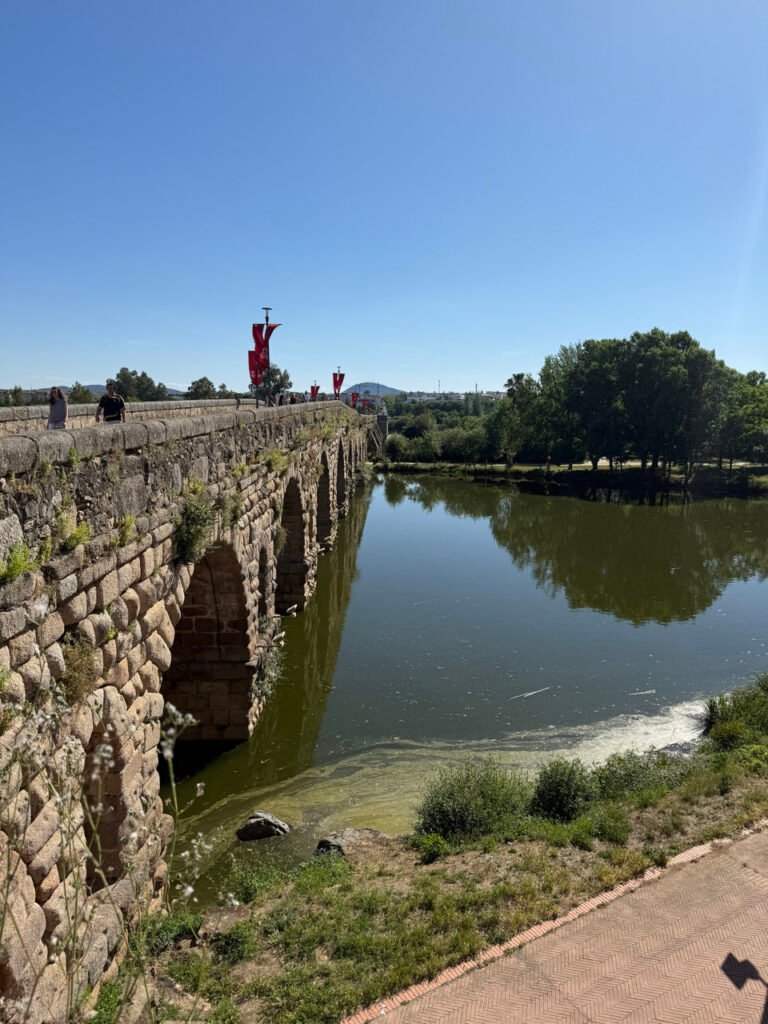
Mérida. With a good 38 degrees we looked for a spot in the city: a paid motorhome pitch (Autocaravanas Area Merida). That worked out, but the craziest thing was that everyone was walking around in Roman clothing. From babies to grandpas. An annual festival, it turned out, because the city is full of Roman history. Bars everywhere, a glass of wine for €2.50 and it was boiling hot. We had a lovely drink among all the festival-goers in the city and admired the beautiful authentic parts of town. Completely unexpectedly we had a really fun stopover. We can definitely recommend Mérida.
The boat. Not exactly fresh, we drove towards Algeciras. That is where Carlos of Viajes Normandie is, whom we had read about: a small travel agency just outside the city where you can arrange boat tickets quickly and easily. We took open tickets. We hesitated about whether to go the same afternoon, because we were tired. But the alternative (spending the afternoon in the Carrefour and sleeping in the car park) fell through, because everything is closed on Sundays. So the boat it was. The advantage of arranging it through Carlos is that you do not have to think too hard about it. If you happen to have a drone with you, Carlos can also keep it for you until you are back from Morocco. You are not allowed to take it in.
The crossing itself was nothing special. Unlike the ferries in Scandinavia you can stay in your camper, and it is a relatively short crossing, 1.5 hours. Do not forget to fill in your arrival card, both for your vehicle and for yourself and your fellow travellers. In our case there were very friendly fellow travellers in the queue who wanted to help.
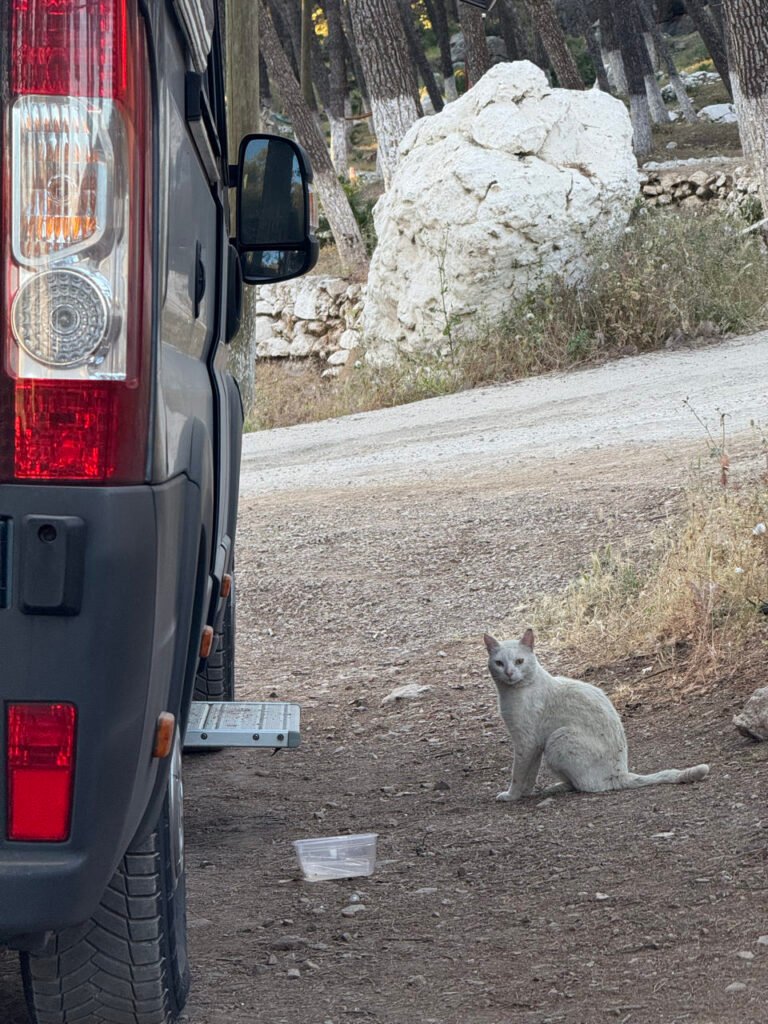
Customs on the way in went fairly smoothly, we were through within an hour. Make sure your green card covers Morocco; ours simply had it on there. Everyone was incredibly kind and helpful, and we were even invited to visit someone’s home in southern Morocco. We stayed on the guarded car park of the hotel-restaurant La Ferma in M’Diq, close to the port. Tired but satisfied we sat down that evening with a hot dog roll, while a cat knew exactly that he had to start meowing at full volume under our window.
The north: Chefchaouen and Fes (days 5-8)
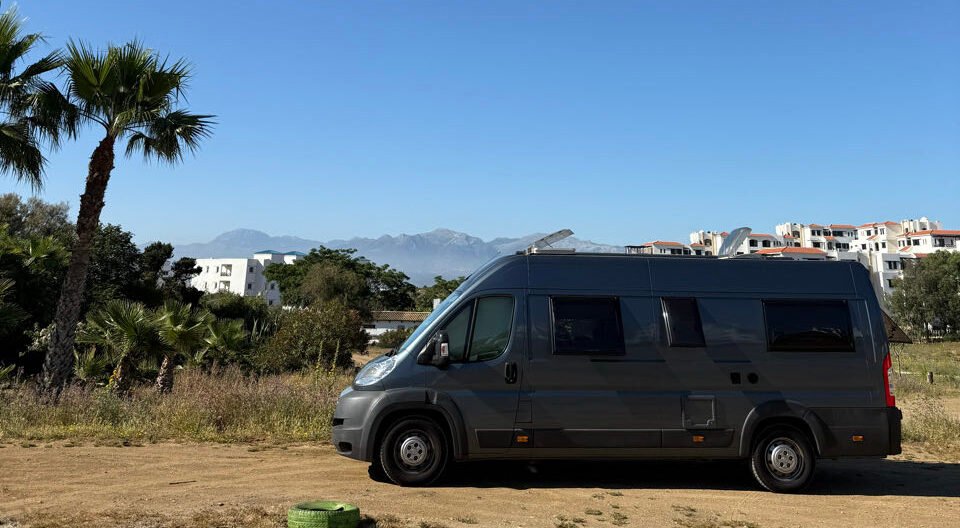
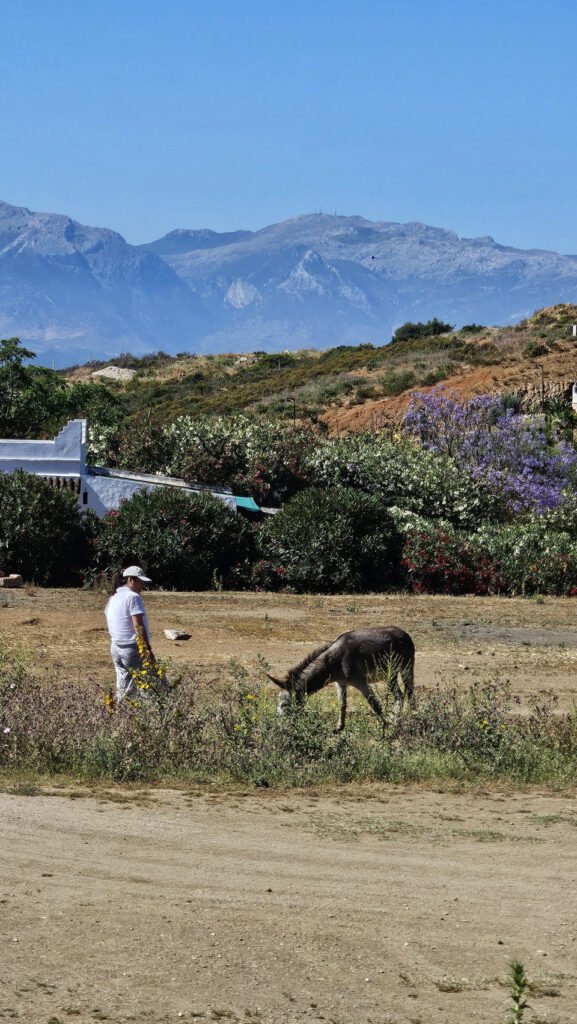
Chefchaouen. We woke up to a view and an immediate confrontation with the animal suffering that is very visible in Morocco. A lonely donkey in the field in front of the camper, tied up pitifully by two legs with a rope in the blazing sun, without water or food. Florine of course could not stand that. She immediately brought a bowl of water and after a few litres he looked a bit happier, although of course you do not know how long he has to make do with it now. From that moment on we had a bowl from which we gave all the animals along the way water and food. We bought dog food that the cats liked too. We came across a lot of sad and hungry animals, and we found that hard.
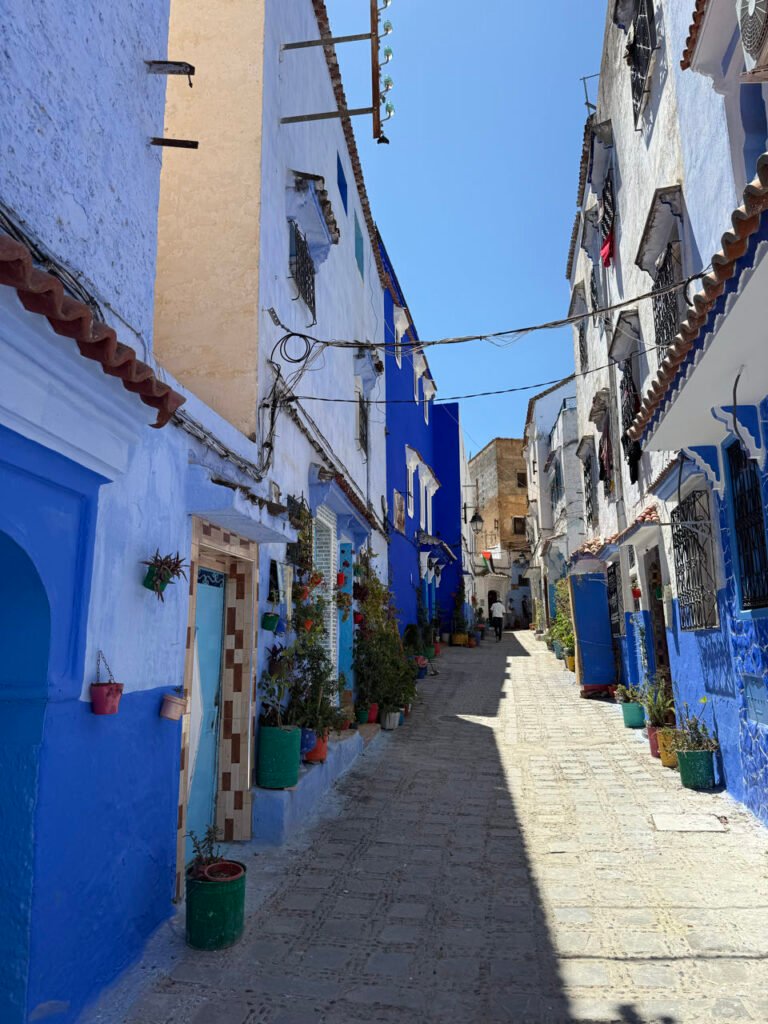
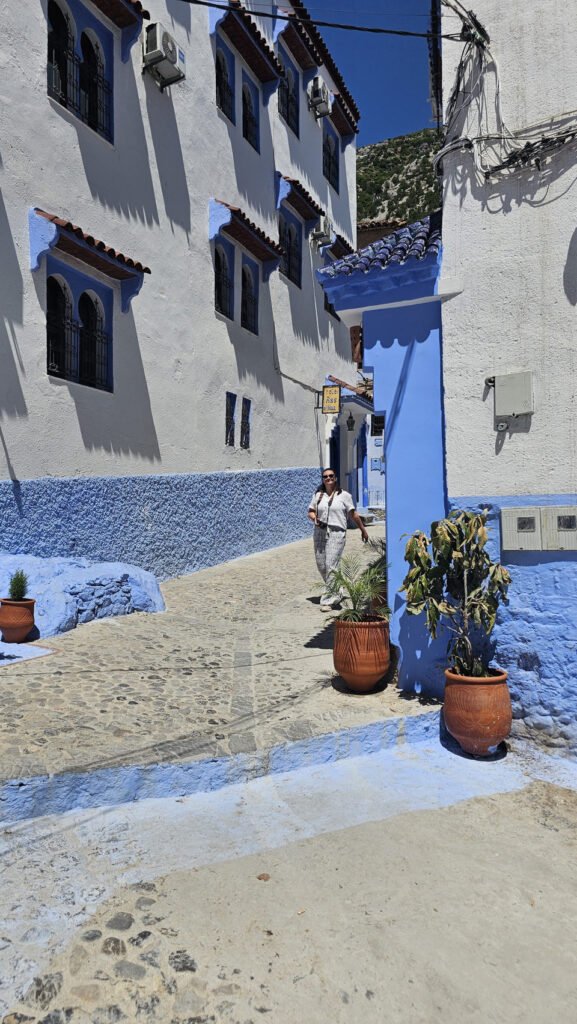
After that we drove on to Chefchaouen. ‘The Blue Pearl’ really is beautifully blue, as if you have landed in a fairy tale. The people are not pushy and there are lots of cute little shops. We stayed at Camping Azila, very basic, but the only campsite on the mountain above the town. Walking down is fine, for the way back up we took a taxi. It is ridiculously steep, and in this heat we gladly pay €2. 🙃 The town itself is a real blue oasis. You can visit nice little shops and take beautiful photos. There are cute terraces with a wonderful view over the blue houses. Plants are put outside everywhere too, highly recommended.
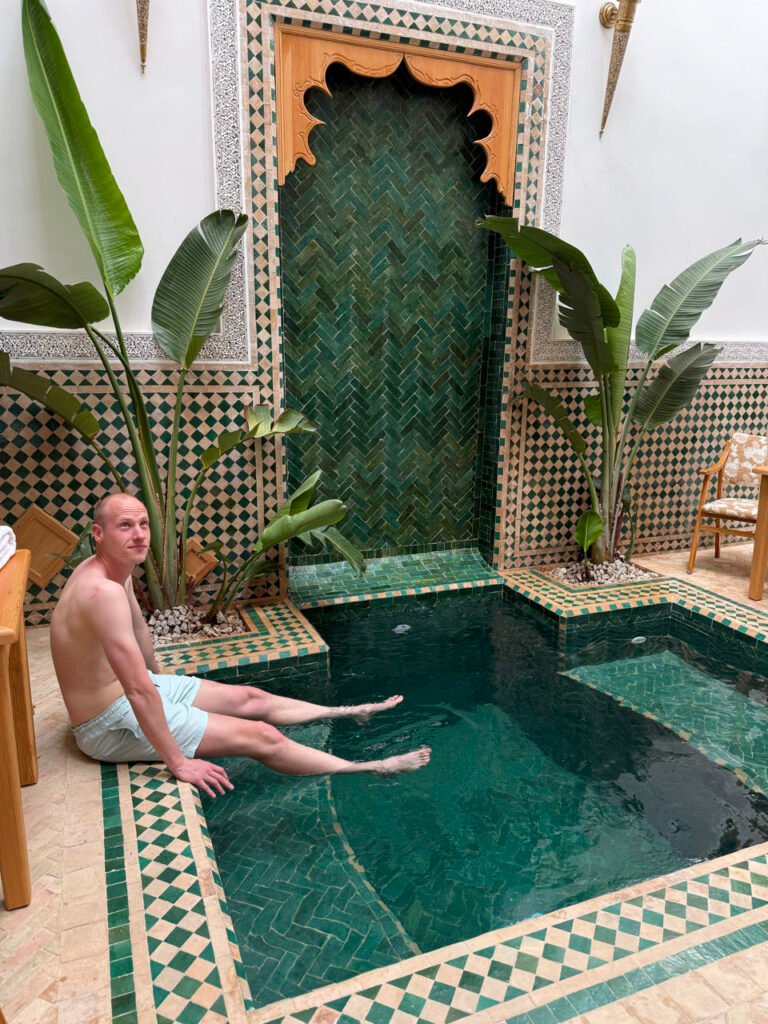
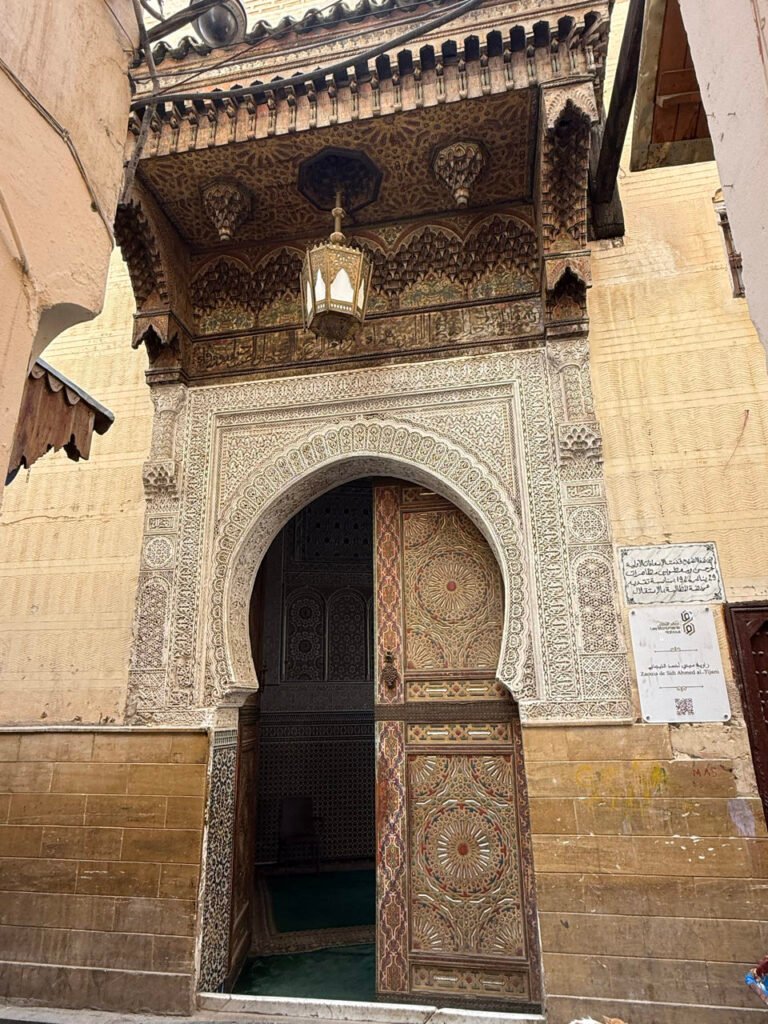
Fes. After four hours of winding through the mountains we arrived in Fes. Bertha stayed on a guarded car park and we slept two nights in Riad Dar Roumana, in the medina, the oldest part of the city. In the busy cities we chose a riad, because that is a real experience in Morocco too. The campsites had been fine up to then, but not very cosy. With our clothes stuffed in shopping bags we checked in and immediately jumped into the riad’s ice-cold plunge pool. The hard riad mattress slept worse than our own camper bed, by the way, but the Moroccan breakfast made up for a lot. The riad is also beautifully designed and run by a friendly and proud man. The bathroom was fantastic and it is also really nice to be out of the camper for a while in the heat of the city.
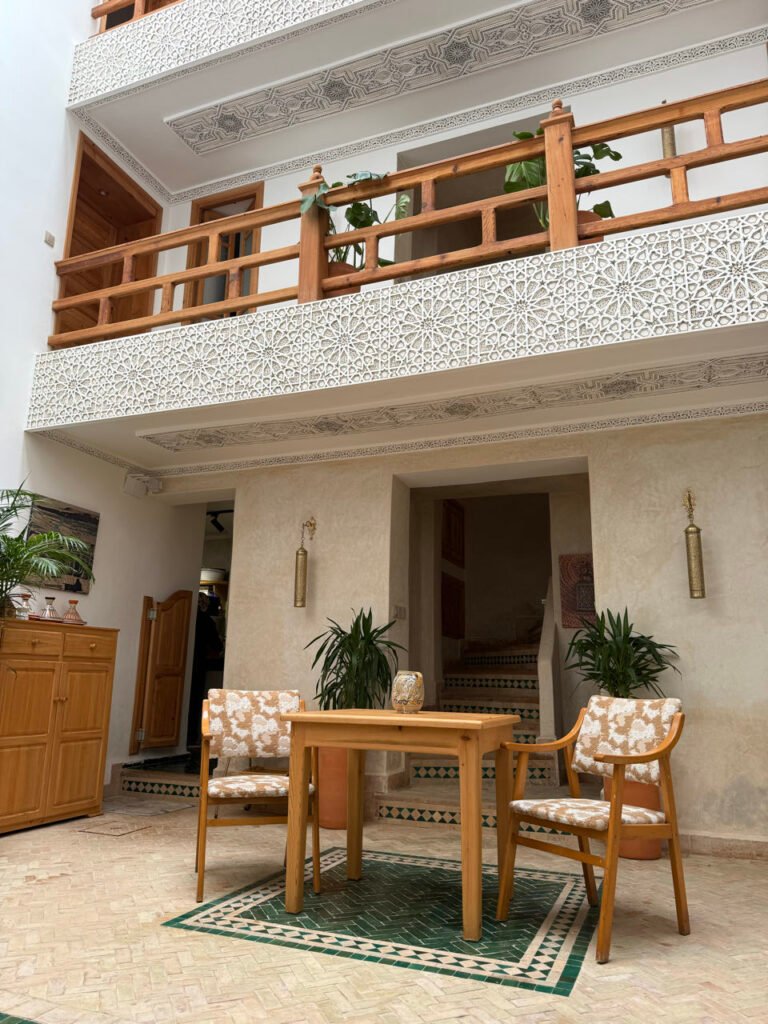
Fes feels like going back a century in time. The little streets are worthy of a film set, wood, leather and metal are worked everywhere, and men run through the largest car-free zone in the world with handcarts. It is intense, though. The smells alternate between tasty food, lovely-smelling bathhouses and death and decay from rubbish and leather processing. Extremely clean and extremely dirty at the same time. You get used to it, slowly. We really wanted to take THE photo of the tannery, but the smell in some streets was already so intense that we really could not handle it. So think about that carefully if you travel to Fes with the same goal.
Are you going to visit a souk (market)? Then be aware that chickens are slaughtered on the spot here and that meat and fish are sold very visibly. If you have a weak stomach, a strong nose or a heart for animals, you might be better off skipping it.
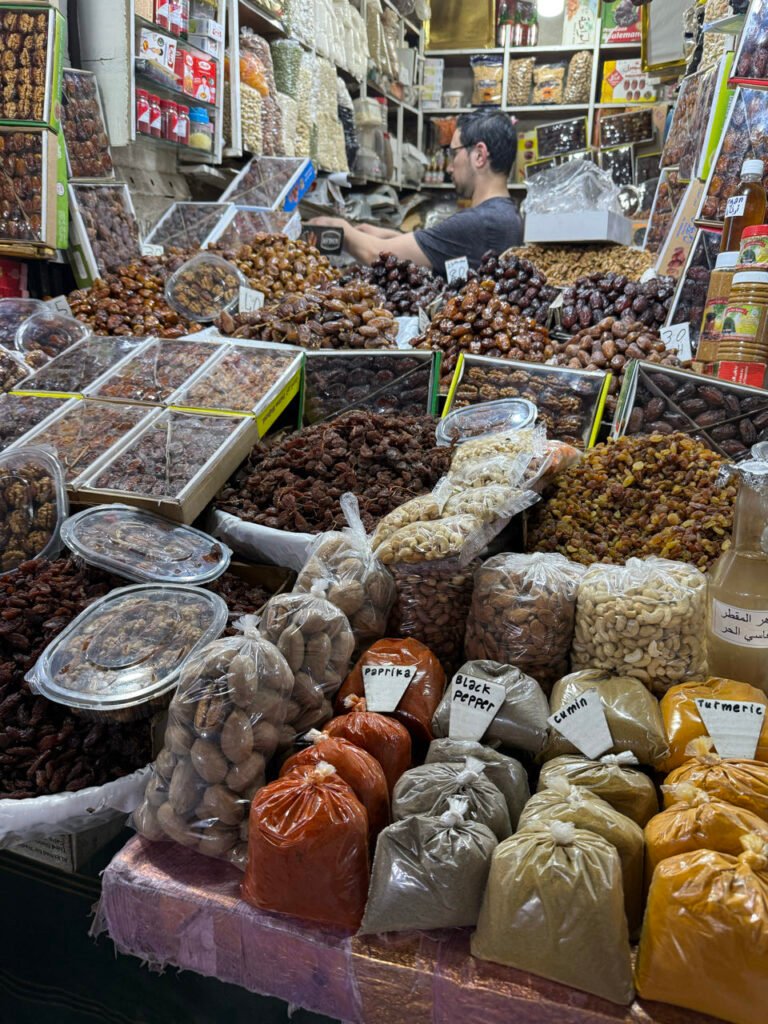
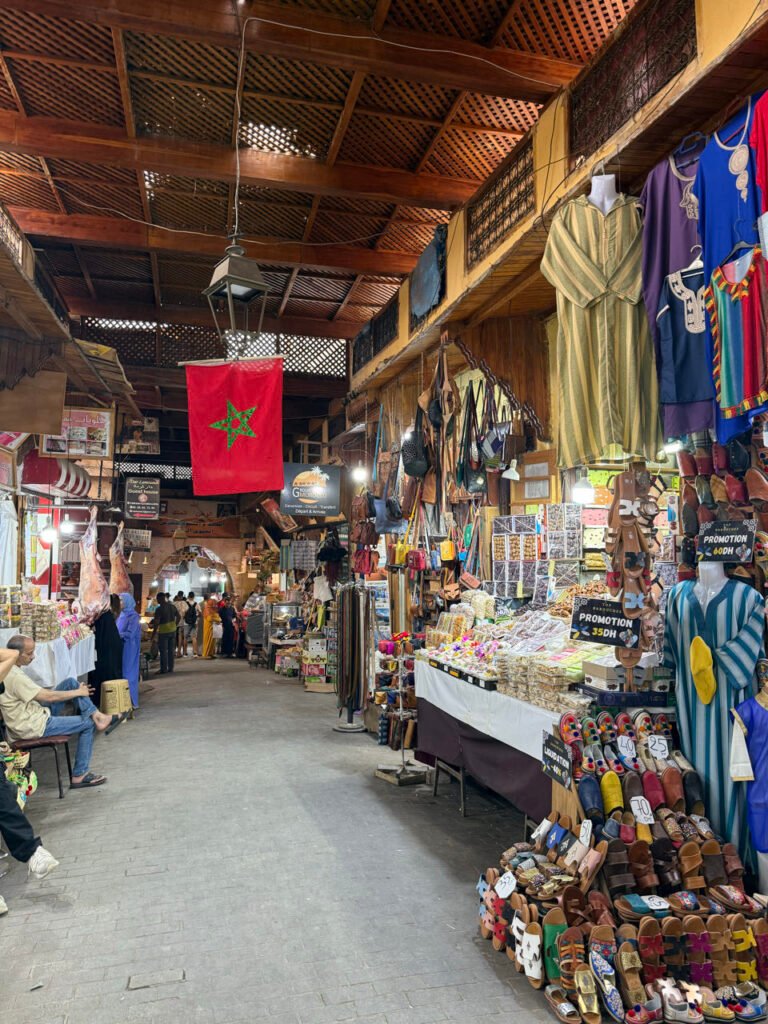
This is where we bought our first really woollen rugs, because we were looking for the best rug for our living room. On the advice of our riad host we visited a shopkeeper in a different kind of neighbourhood of Fes. We would never have gone there on our own. Our experience was great and the man was very friendly. Everything was loaded onto a handcart and taken to the camper. Cars are not allowed in a large part of old Fes.
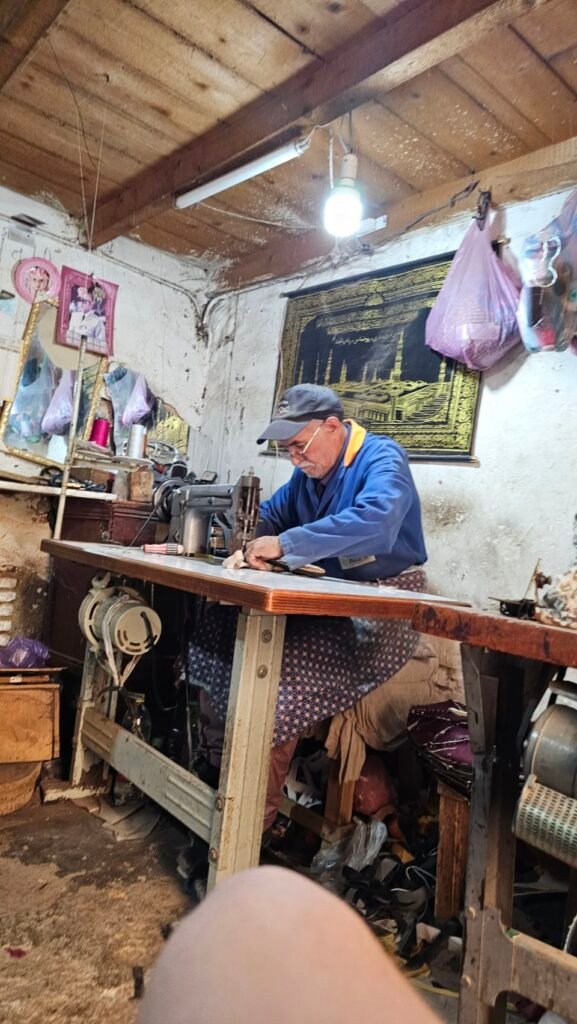
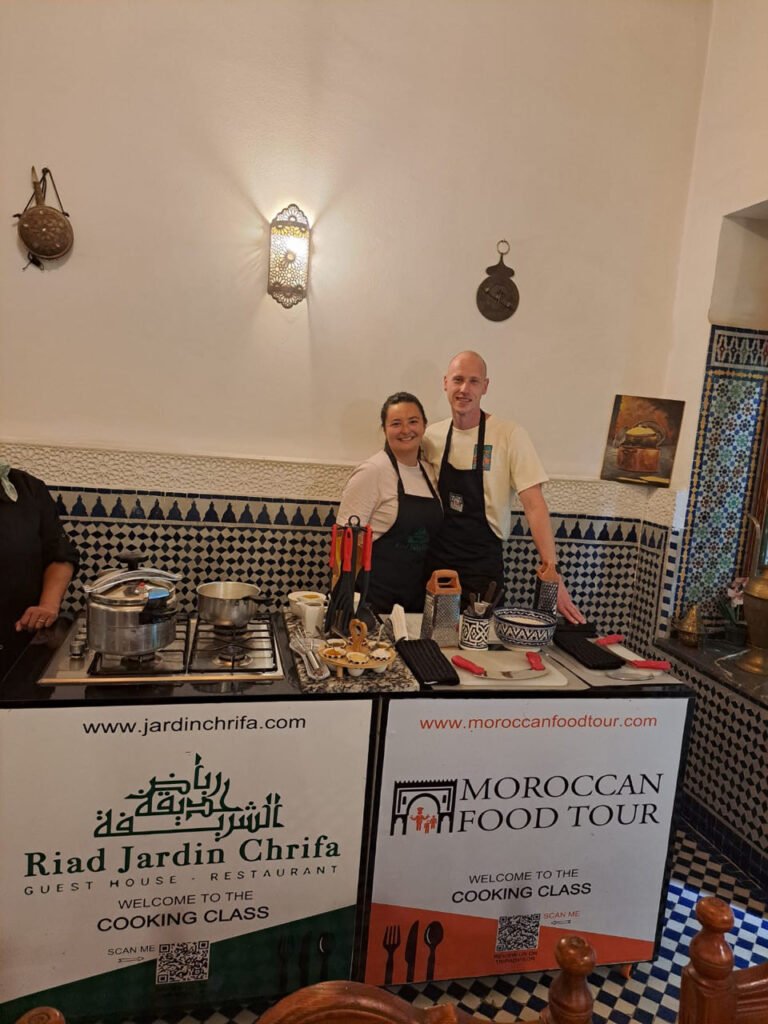
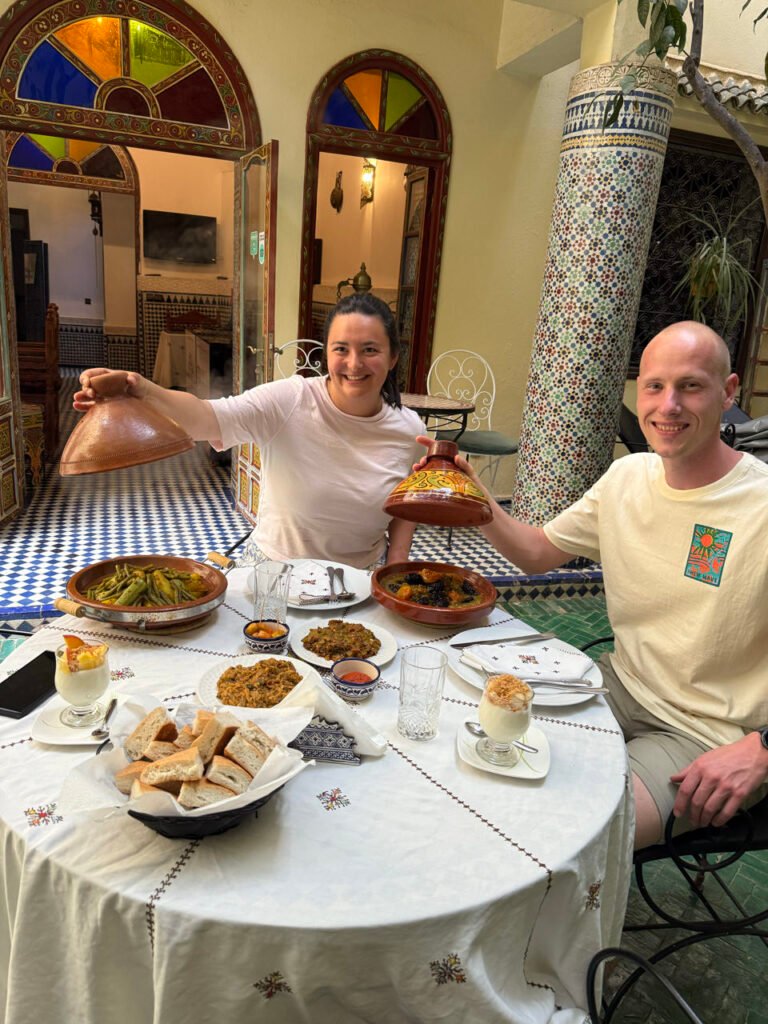
We also did a cooking class with a local Mama Chef in the garden of Riad Jardin Chrifa. First we went with her to buy the ingredients in the medina and then cooked a three-course menu (the tajines were delicious, the salads and the dessert we no longer know how to order) and had Florine’s Tevas made a size smaller by a tailor with a Singer from the stone age. He did not want anything for it. We slipped him something anyway, after which we received two leather purses as a present. They are still used for the coins at campsites, a really nice souvenir. The kindest people are the ones we meet here.
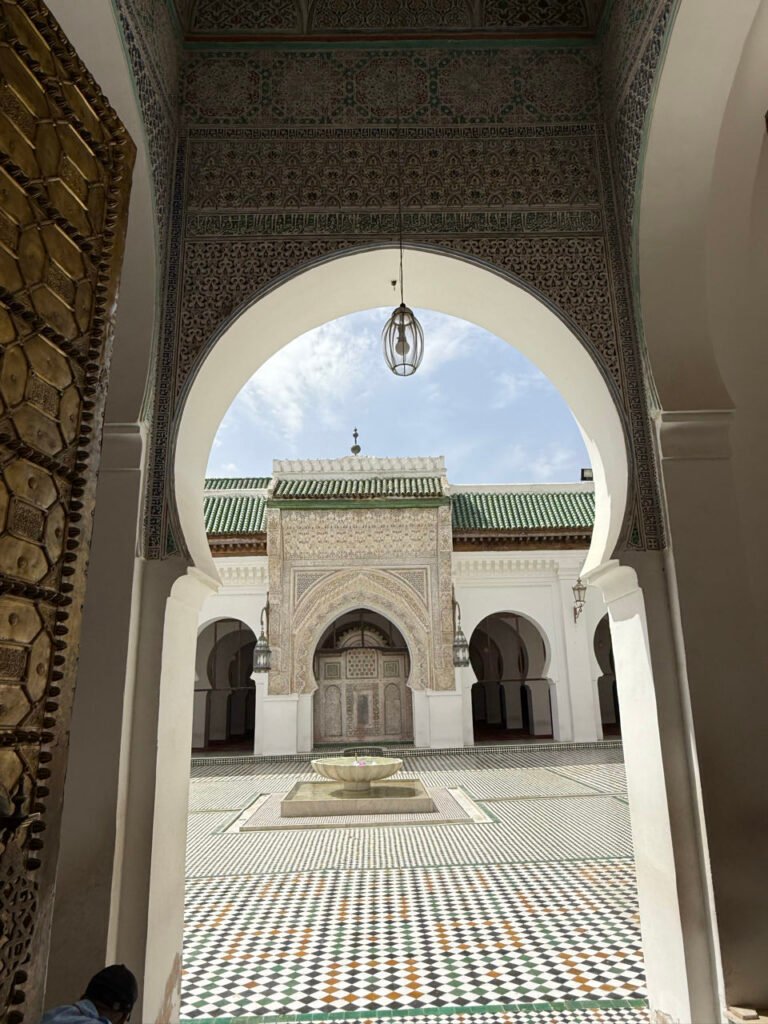
We were not allowed into the great mosque, that is only for Muslims. Fun fact: in all of Morocco there are only two mosques that non-Muslims may enter. This was not one of them. Somehow we had assumed it was down to the clothes you wear, but in this case that makes no difference.
Atlas, waterfalls and a film set (days 8-11)
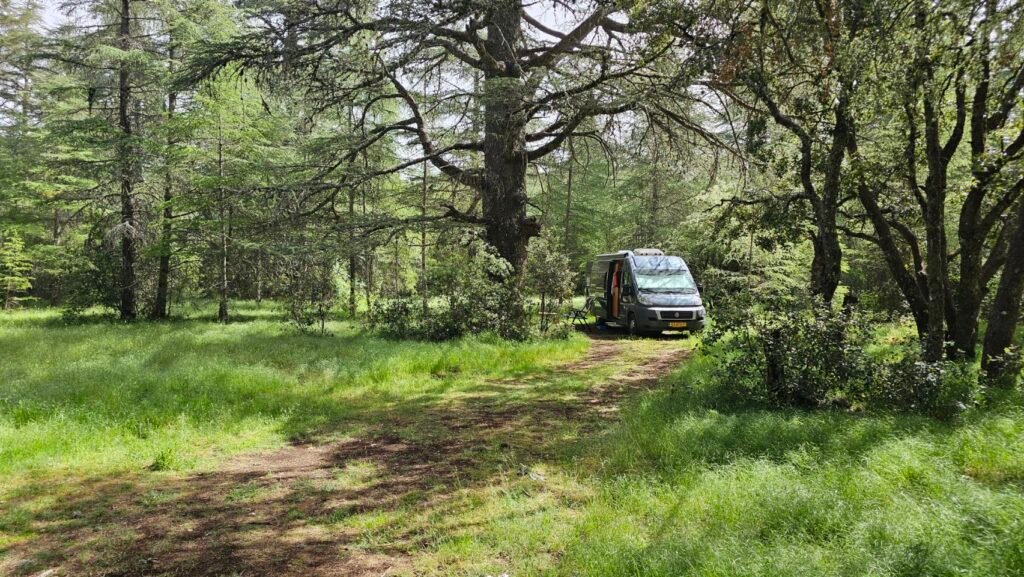
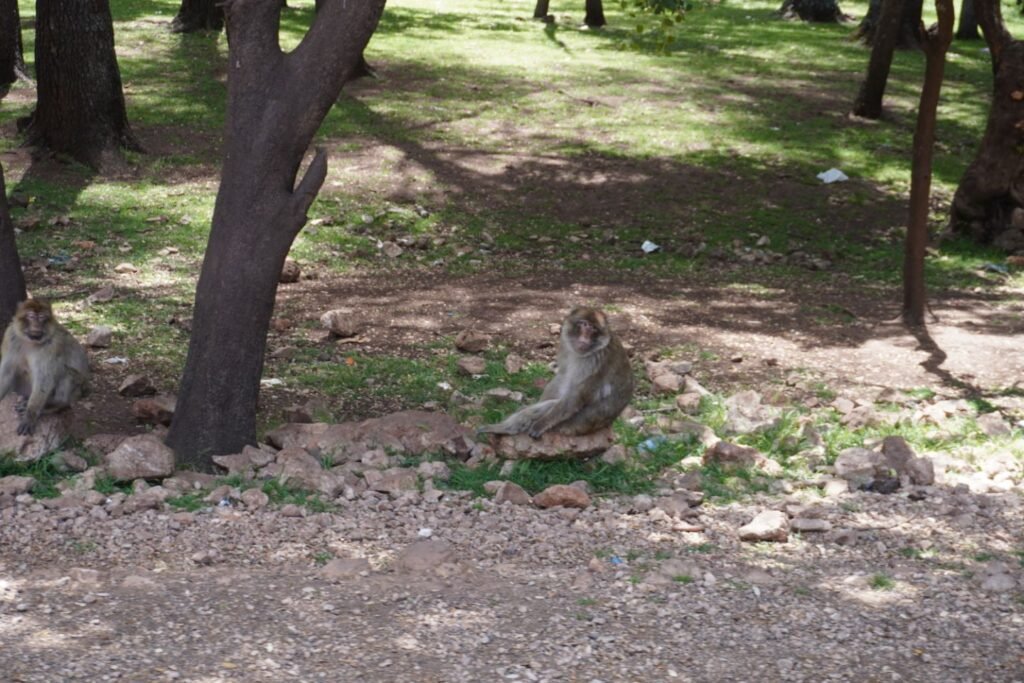
The Middle Atlas. After Fes we really wanted to unwind. We parked the camper high up in the Middle Atlas, among cedar forests (wild camping spot) that look a bit like Sweden. Barbary macaques were wandering around and fortunately very few people. We fell asleep to the sound of rain on the roof. Fun fact: there is also a ski area here.
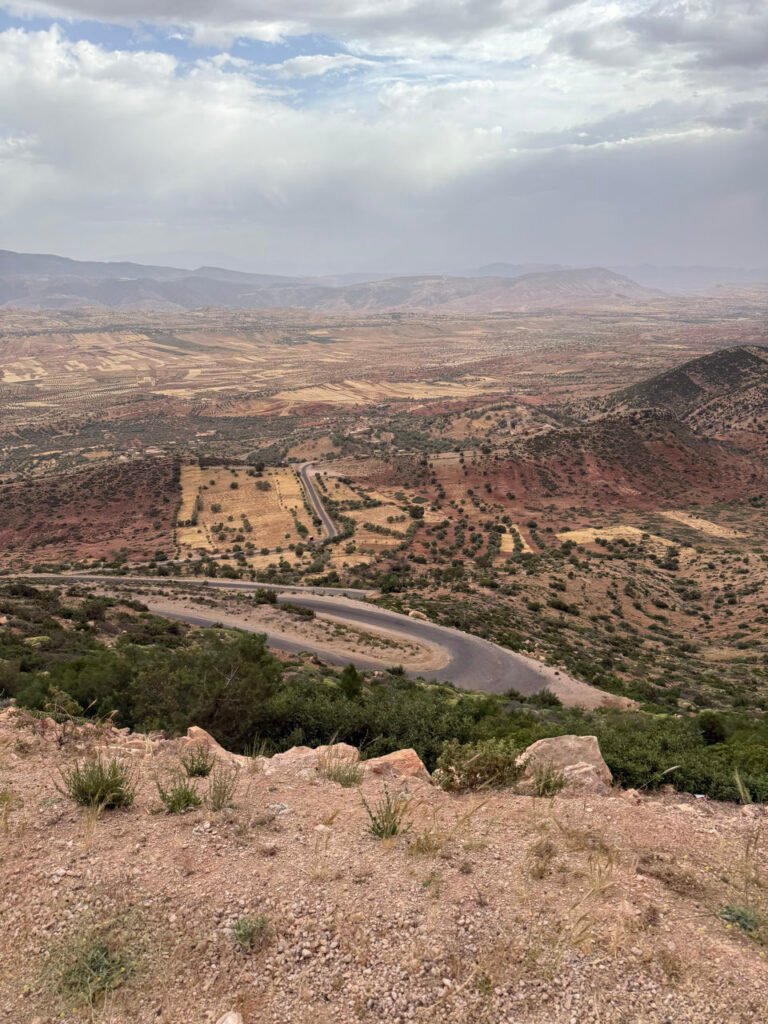
The next day we covered quite a few kilometres to the south. A beautiful route, but mostly long in the car.
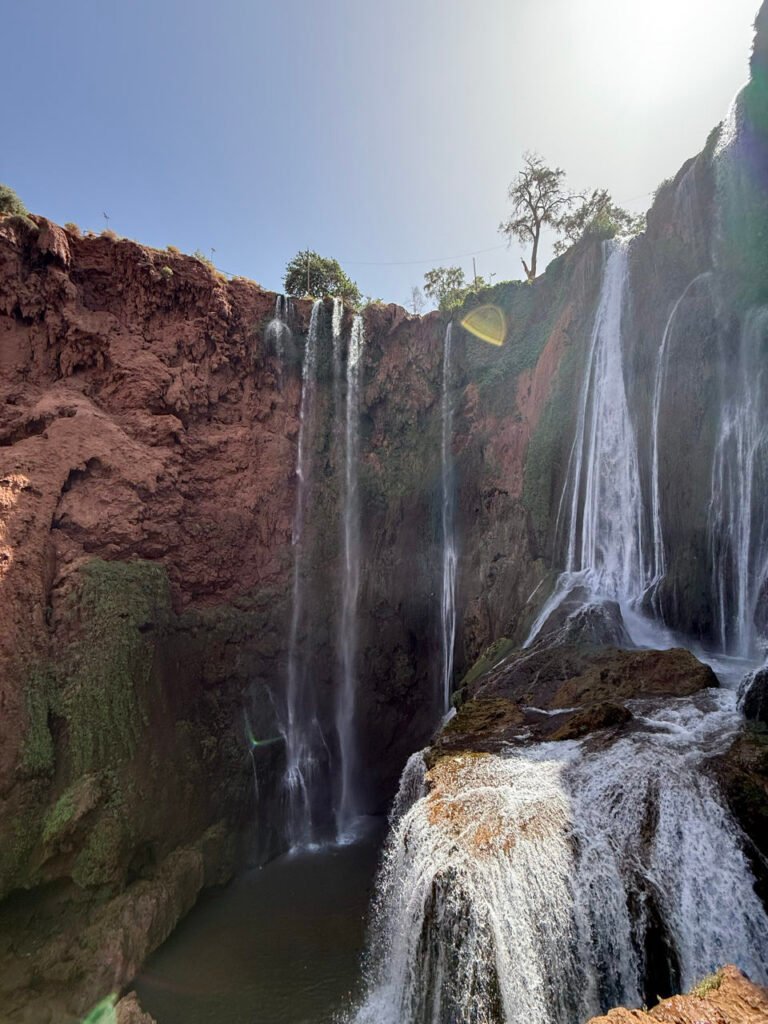
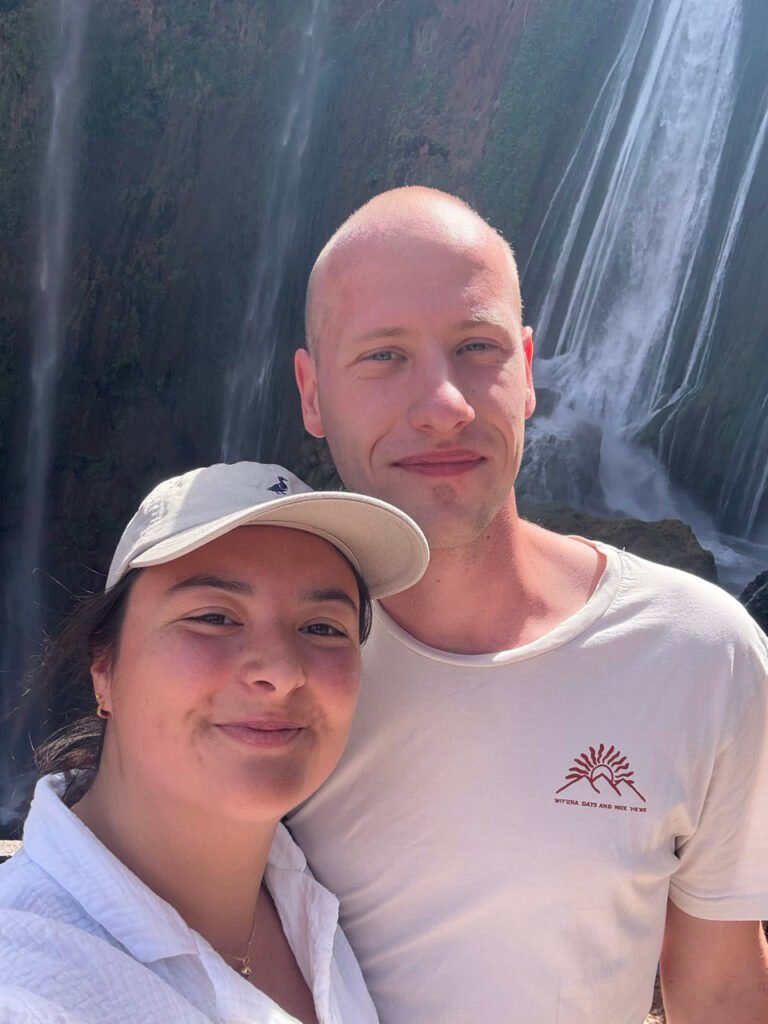
Ouzoud. We baked banana bread at the camper, made coffee and walked to the waterfalls. Beautiful, and we understand why they are special. We were just ahead of the crowd: when we drove away the coaches came in one by one. Villages like this run on tourists, and you notice. Our advice: do not drive here specially from Marrakesh, unless you are passing anyway (like us). The route to the viewpoint is lined with little shops and terraces, everything at top price. It was not our favourite place, but it was beautiful.
Aït-Ben-Haddou. A kasbah where Gladiator and Game of Thrones, among others, were filmed. We had read a lot of good stories about it and, to be honest, found it disappointing. Beautiful, but nothing about it is original. It is a bit of a tourist trap, with lots of day-trippers from Marrakesh. Lots of souvenirs that have nothing to do with the place, everyone wants money, and it was hot. We could not wait to leave.
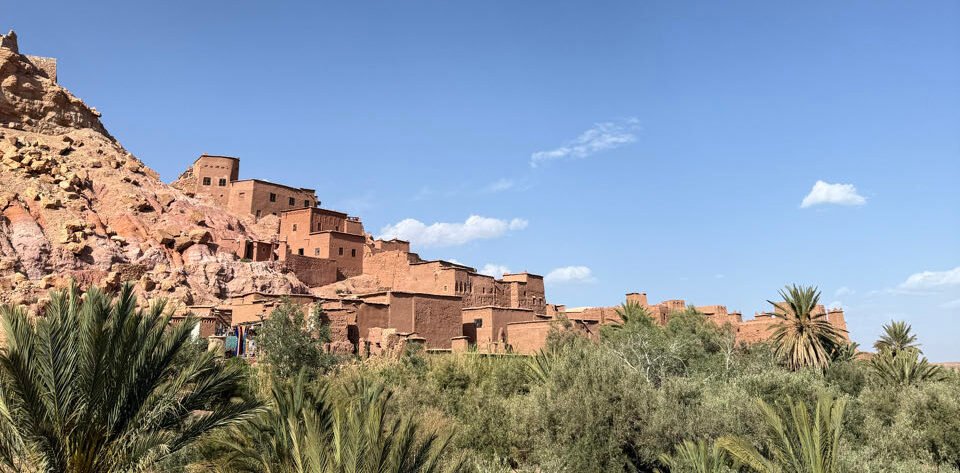
Note that money is asked for entrance here. This is not official, but people tell a story that the people who live there are rebuilding their homes after the earthquake. Hardly anyone lives there, though. You have to decide for yourself whether you want to pay, but you do get stopped if you do not. We went to a different entrance and did not have to pay there. This was the entrance via the bridge.
After the touristy waterfall and this farce we were a bit done with it for a moment. We did not know how to get to see authentic Morocco without these tourist traps, and we get an unpleasant feeling from being fleeced for basically nothing. So we hope the next places are better.
What is also tricky: it is beautiful. Whether we would skip it in future, we do not know. We think it can help to arrange an overnight stay first, where the locals can show you around at sights like this. They are always very helpful and have good tips. They also have a different interest in tourism.
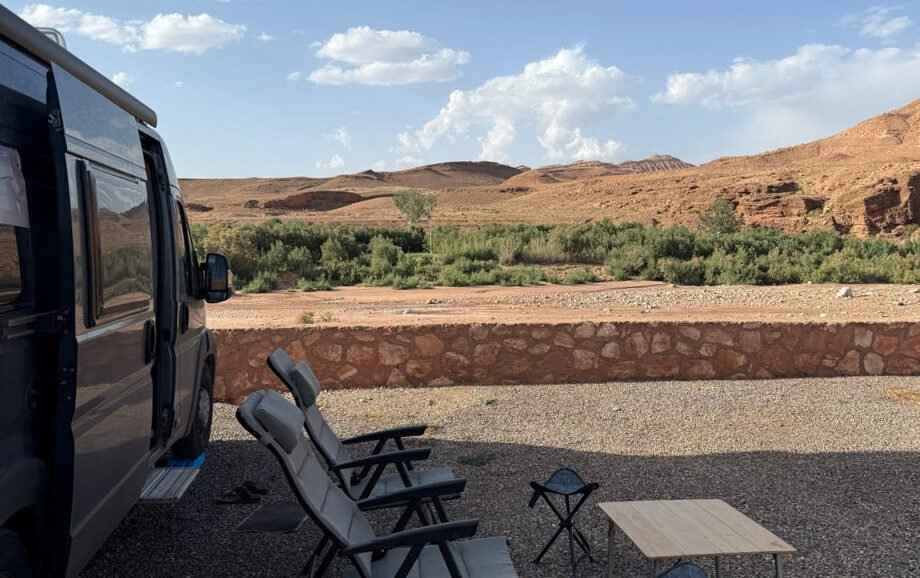
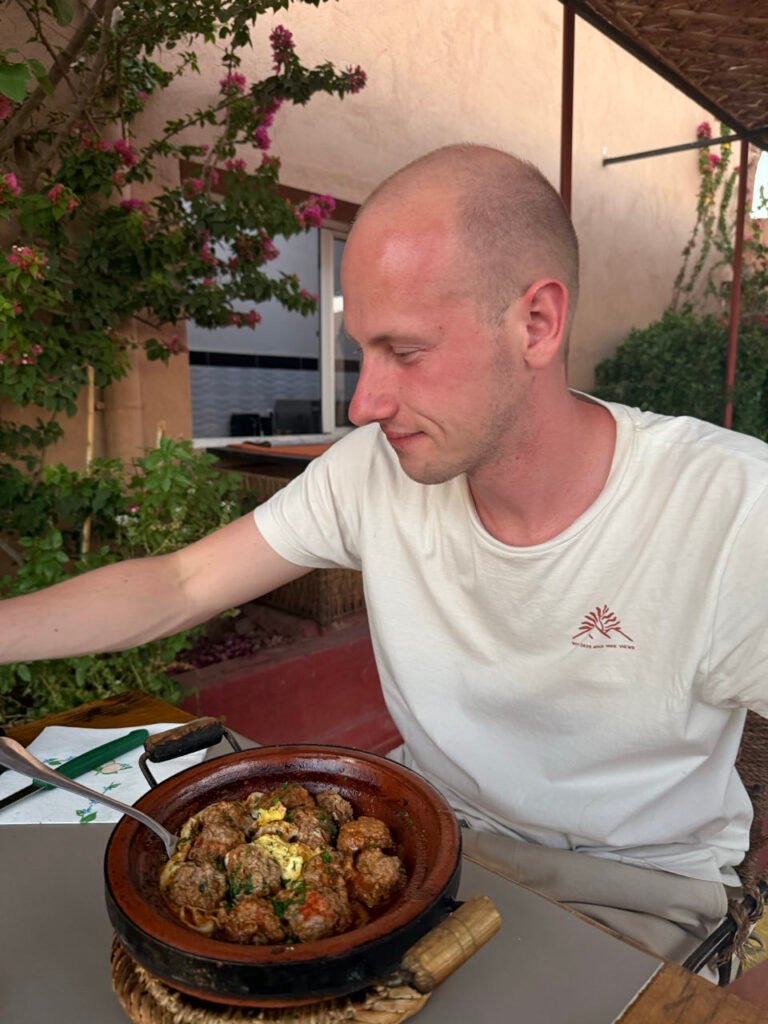
The campsite a bit further on fortunately made up for everything: Defat Kasbah. The guys who work there are super sweet, we swam, ate the best tajine of the trip and drank tea with them. Through that we also learned a lot about the local people and the art of weaving rugs, and we did not feel approached as just tourists at all. It was really great! After that a party started in the house next to us and we were kept awake until the small hours with ABBA. That is part of it too, a bit less sleep is not so bad. Now Florine could finish her book nicely.
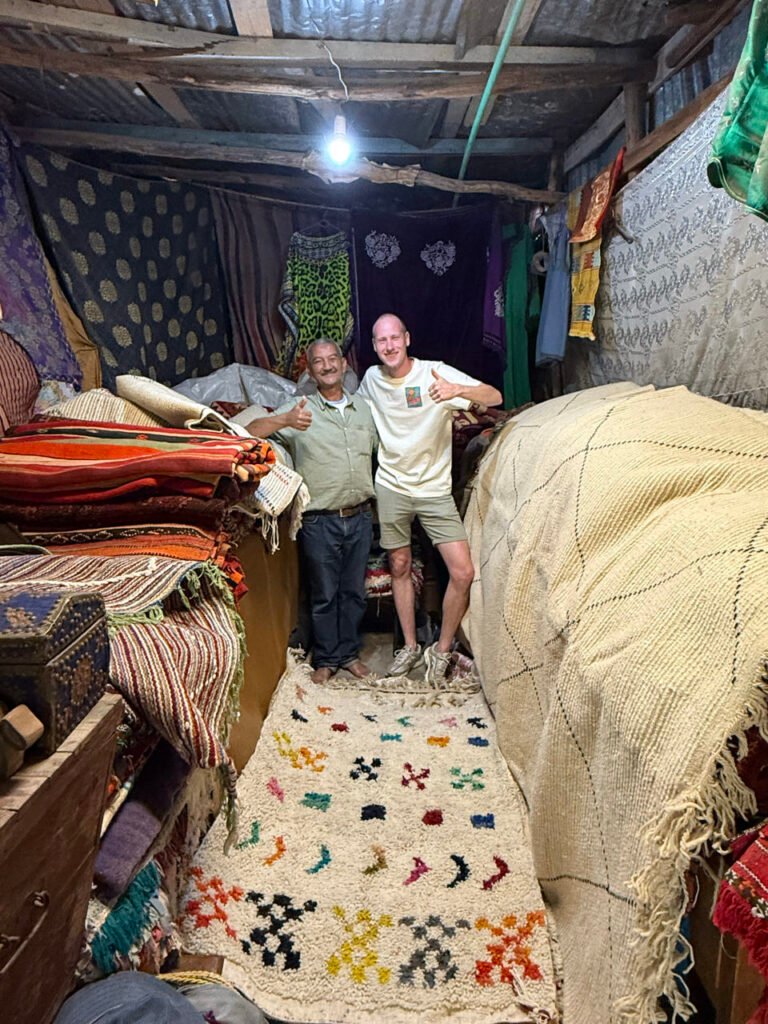
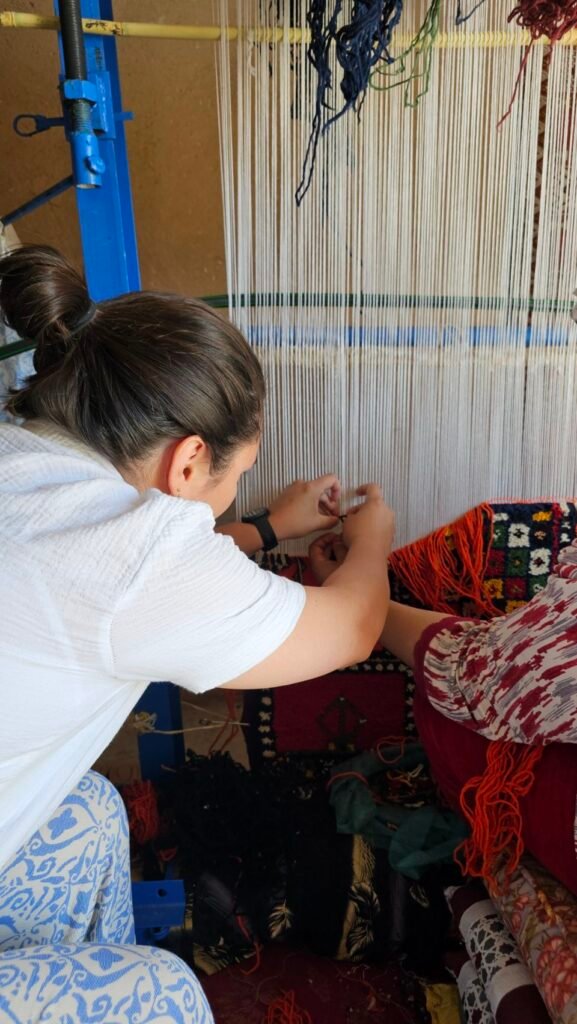
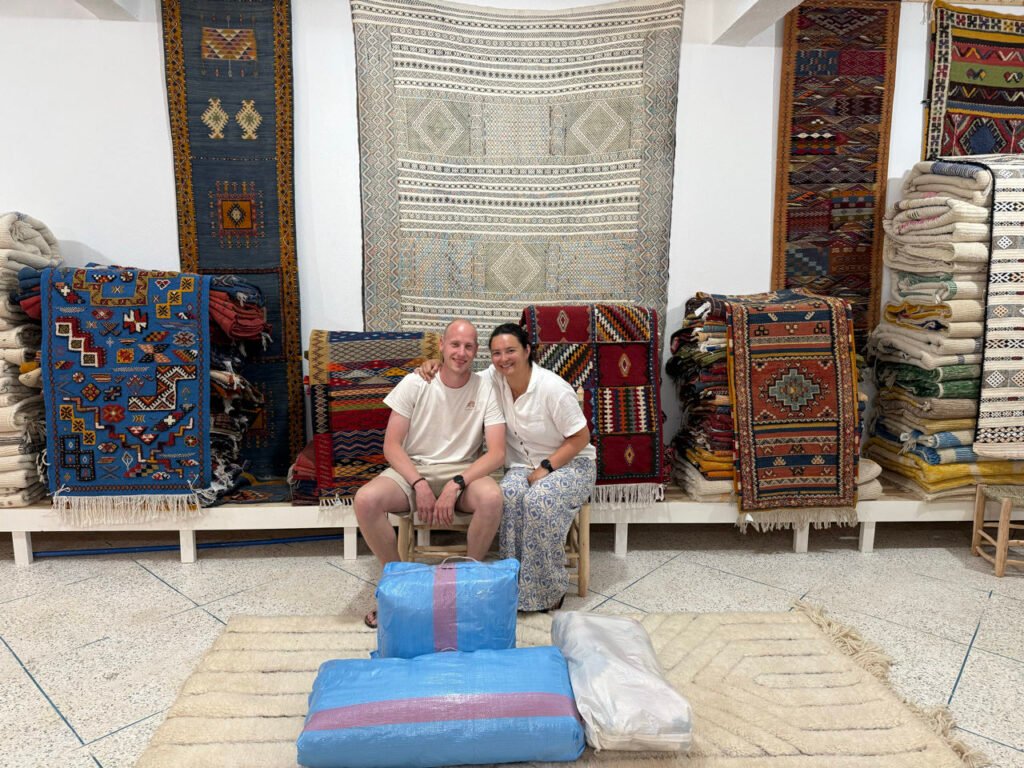
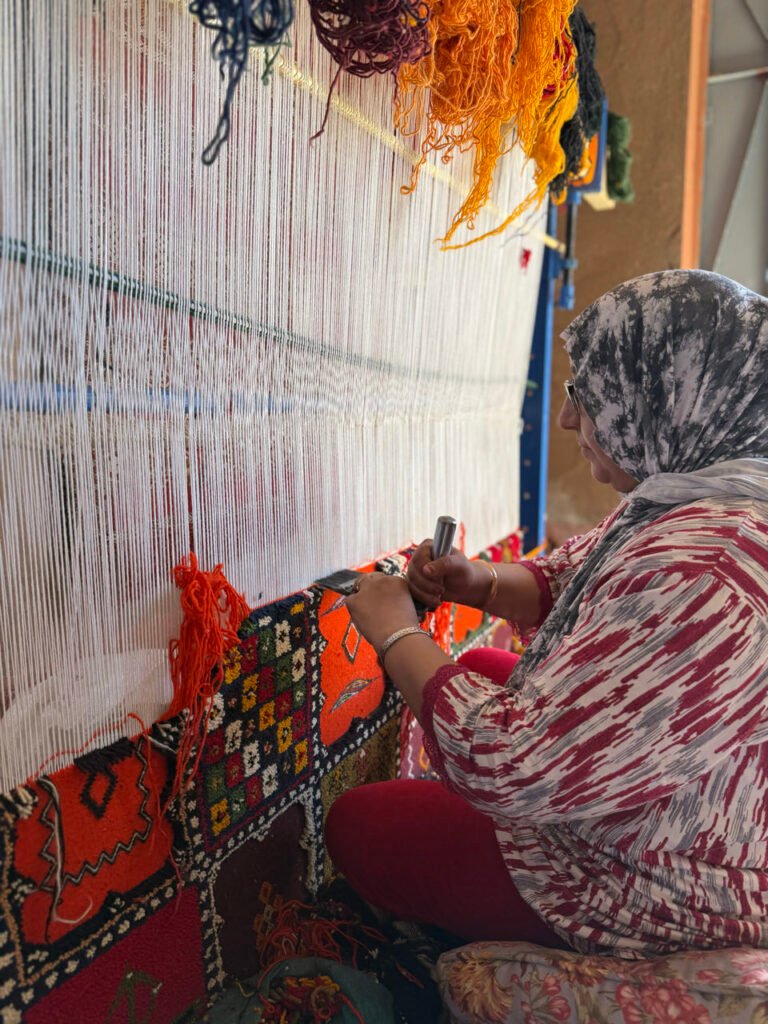
Ouarzazate. Because we did not have enough rugs yet, we visited the cooperative of a friend of Taoufik, the guy from the campsite. He had been waiting for us since 7 o’clock. There we found our dream rug, and after that an extensive photoshoot had to be done. We found that photo later in his WhatsApp status: ‘the best day ever’. Nice that we could make his day and once again a great experience of hospitable Moroccan culture. We were also allowed to see and experience how every rug was made by hand. At the back of the building a beautiful rug was being made by hand by a woman. This is a cooperative in which several weavers from the area work together within one shop. If all goes well the profit is therefore divided better than with individual resellers, where the weavers barely earn anything from a rug that took weeks of handwork. We were welcomed with Moroccan tea and some treats, and it was a lovely day for us too.
For anyone wondering: on days like this Florine always wore clothing that covers her legs and shoulders, because we find that respectful towards the people we meet. She also feels more comfortable that way and has never had a comment about it. Julian wore shorts, and nobody looked at him oddly for that either, but long trousers can feel nicer for yourself. Especially in Marrakesh we saw tourists in Western clothing. We chose to wear covered clothing ourselves.
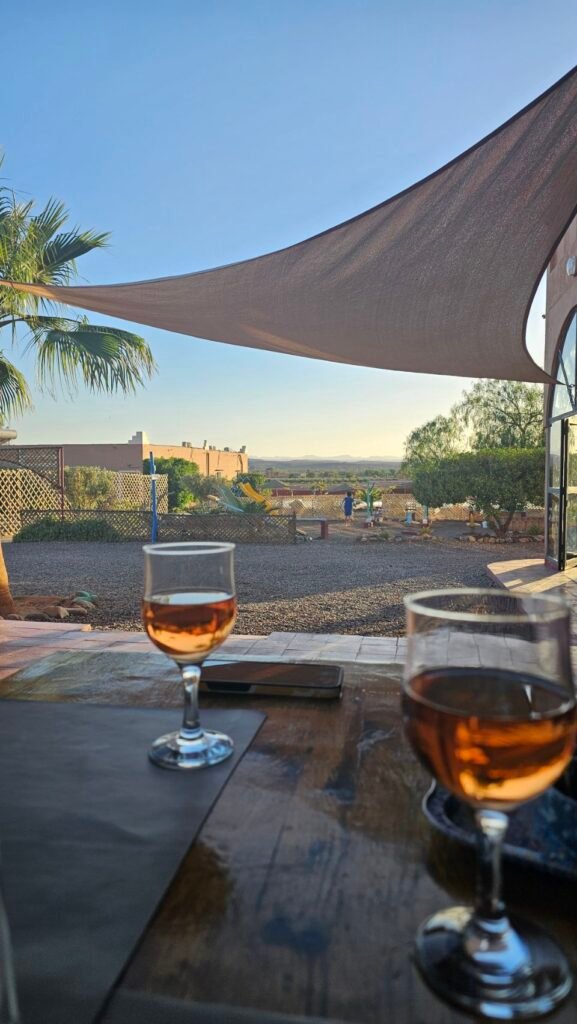
That evening we stayed at a campsite run by a Frenchman, a real one, with a pool and a view. Doing laundry, filling water, emptying the toilet, relaxing. The boot was by now really full. It was Camping L’Escale near Ouarzazate. Here we enjoyed a day of peace and quiet. It is an intense country, but we are getting more and more used to the culture and really enjoy the lovely people and beautiful experiences. A glass of wine is also served on the terrace here and the food is great (duh, a Frenchman), so that was nice too! A bikini is not seen as strange here, but there are also locals who come to swim, so sometimes the difference is quite big. Still, there is a European atmosphere at this campsite, so it did not feel uncomfortable.
Marrakesh (days 12-13)
We had found a guarded car park in the new town, deliberately far from the medina, because on Park4night we had read horror stories about the traffic there. When it suddenly became very busy and very narrow, it turned out we had been navigated to the wrong car park. Right in the middle of the medina, that is. Oops. Traffic in Marrakesh is one big free-for-all: rules do not exist and the biggest goes first. Luckily that was us! Julian skilfully manoeuvred Bertha between all the scooters, cyclists, taxis and pedestrians. We saw only one collision. Unfortunately there is no footage, because the person responsible for that was clamped tightly in her seat with her eyes closed.
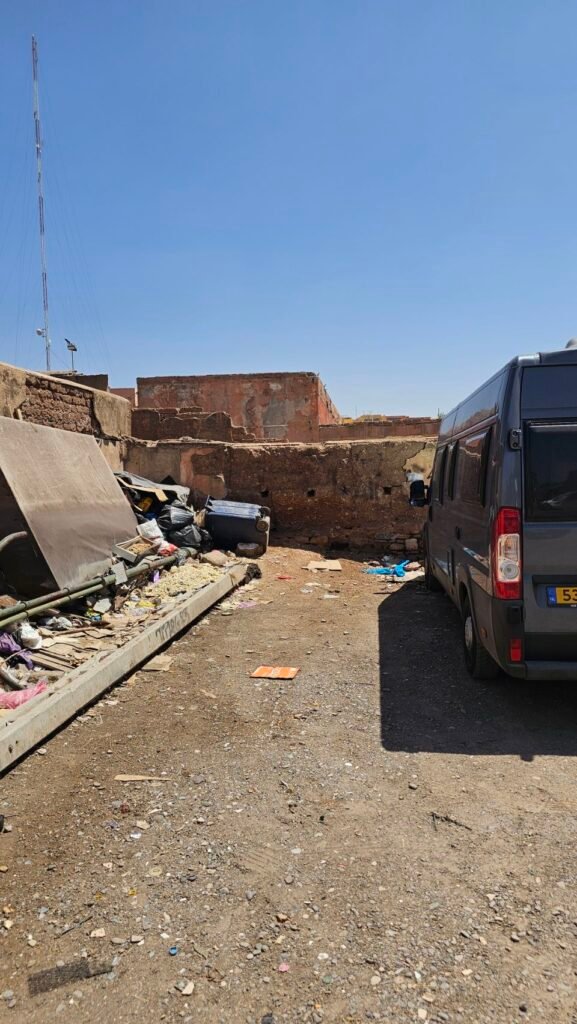
Damage-free and half stress-free we arrived at the car park. Well, car park. More of a dump. With a public toilet, we thought, but the diarrhoea lying there turned out to be jam. Mental breakdown survived. Anyway, it was guarded, so Bertha was fine there for two nights. The spot we used is no longer on Park4night. We do recommend this guarded car park close to Jemaa el-Fnaa: 250 dirham per 24 hours, about €23.
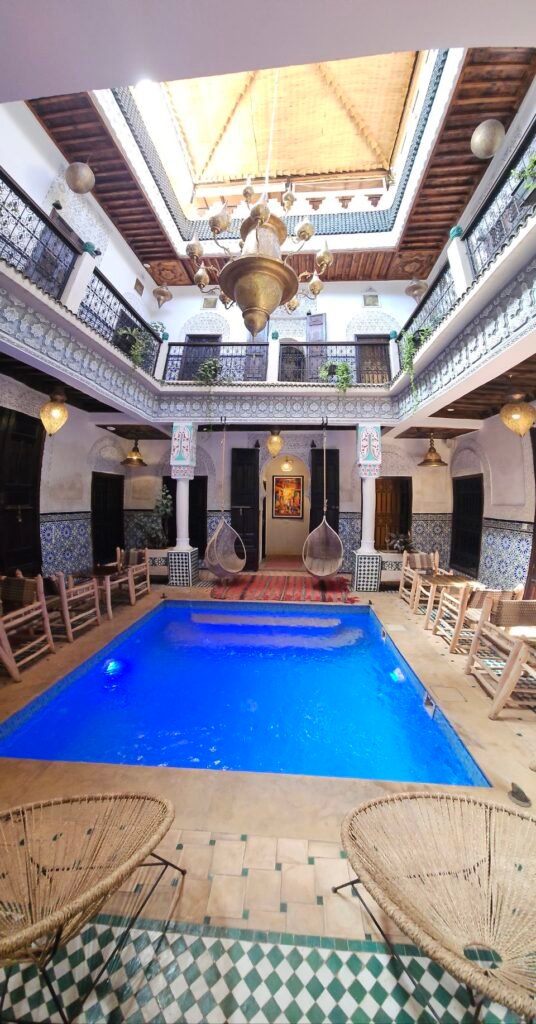
The riad in the medina (Riad Medina Art) was beautiful, although a bit noisy (the cleaning crew started at 6 o’clock) and we found the breakfast a bit disappointing. Luckily we found delicious chocolate croissants for 30 cents along the way. The riad is not a fantastic recommendation, but the little pool was nice for cooling down and unwinding from warm and intense Marrakesh. Almost everything was also within walking distance.
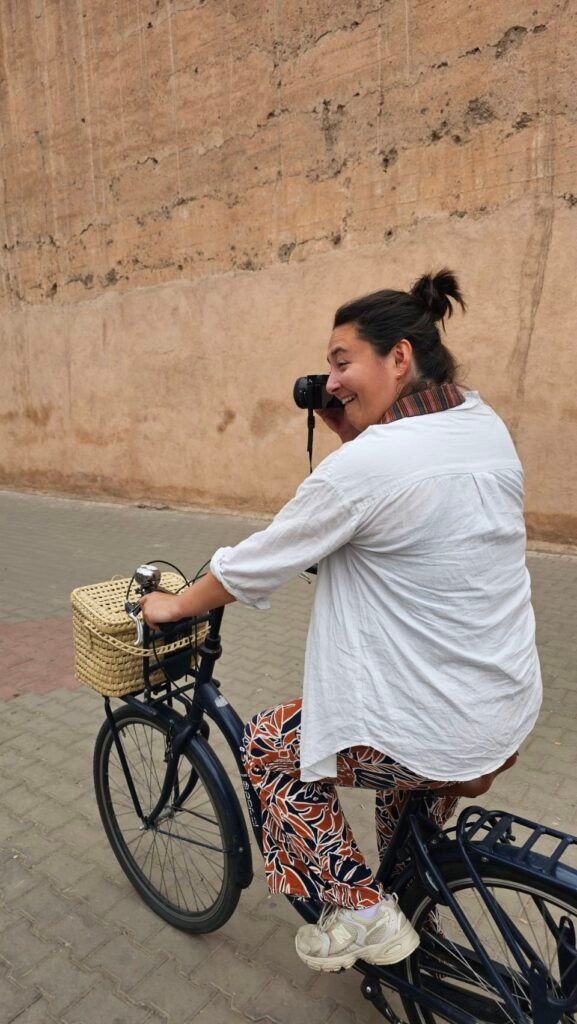
The bike tour. We booked it with Baja Bikes. Our guide spoke Dutch, and it turned out he had taught himself with his phone. Super impressive and really fun. We cycled with only Dutch people, half of whom had just arrived. When someone said: “Imagine having rented a car here, impossible”, we told them we had driven our 6.4 metre long camper over exactly the same streets. Their eyes nearly popped out of their heads. We felt like quite the OG Morocco travellers.
Along the way we stopped at a public wood-fired oven, where you have your own dough or meal (often couscous) baked and pick it up later. We also stopped at a workshop where they make the tiniest details in mosaic tiles with an enormous hammer and chisel. Really special how something so coarse produces the smallest details. After that we visited a Koranic school full of mosaic and wood carving, with here and there a window occupied by an influencer. It was a beautiful place but we felt seriously underdressed among all the gala dresses of influencers who took their time hanging out of the windows and getting the perfect photo. If it works out it is worth it, but for us it was quite an experience. As “micro-influencers” ourselves we still do not quite get it. But it is a building you have to have seen.
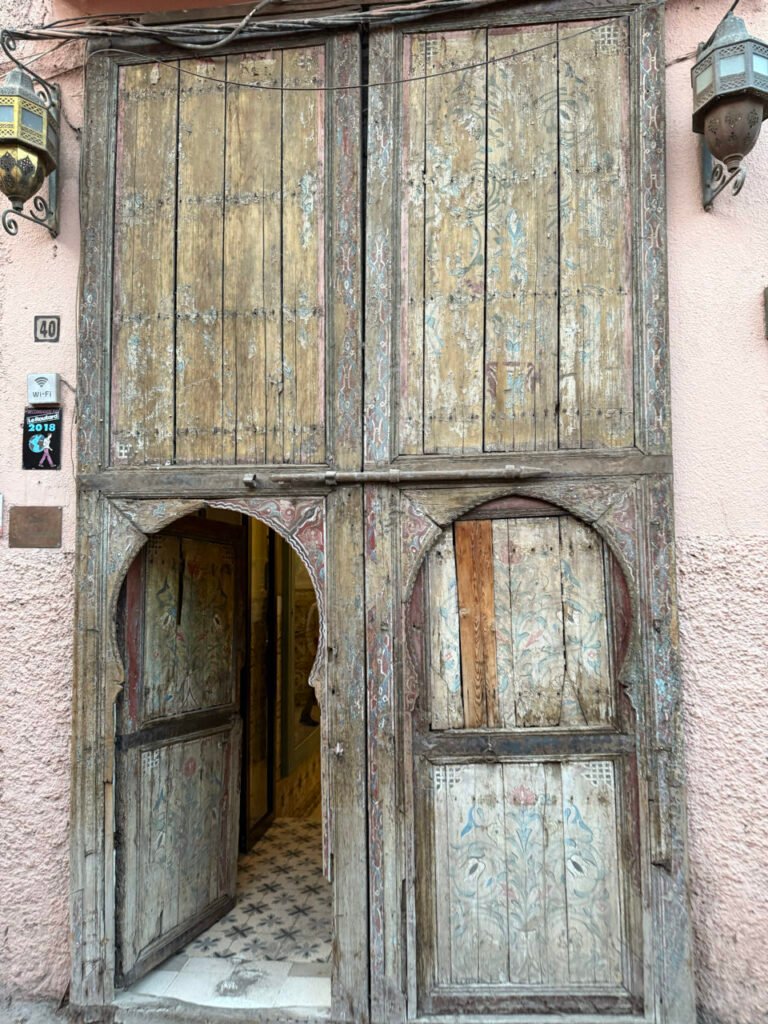
In the evening we ate at Limoni, an Italian with some 30 waiters and a beautiful inner garden. The service was not the problem. And after all the couscous, tajine and mint tea, the delicious Italian dishes tasted really good too. Recommended if you fancy a different cuisine. On the way back we walked across Jemaa el-Fnaa. During the day the square is not much, in the evening it comes alive: music, vendors, dancers, and unfortunately also monkeys on chains and snakes. Our hearts always break a little at this kind of animal suffering.
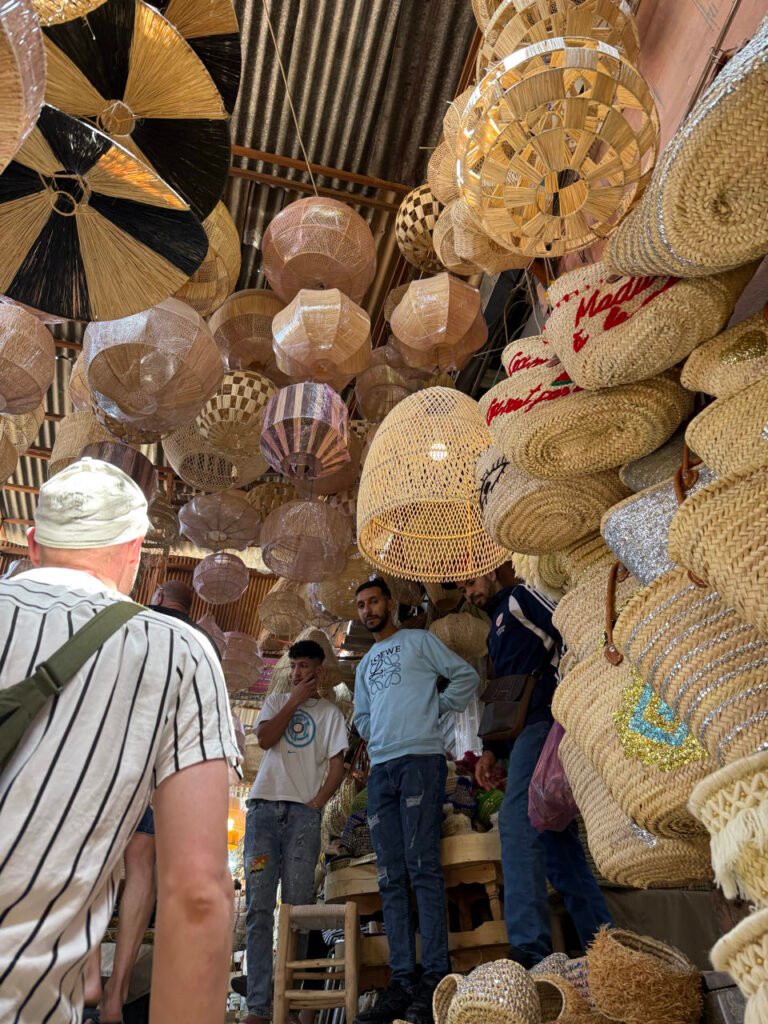
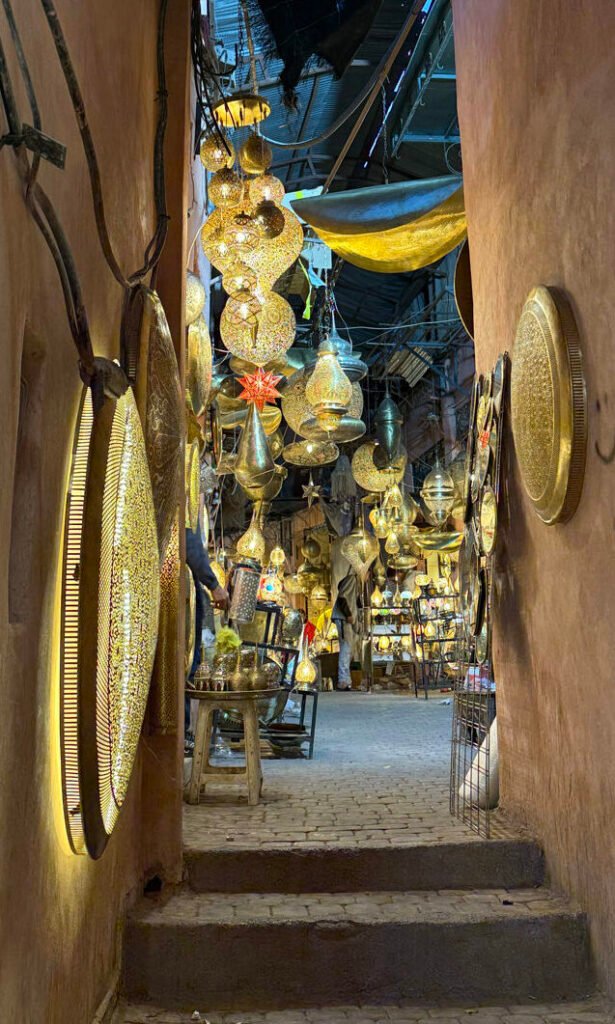
In the meantime we also bought a leather bag, a hand-knotted pendant lamp and a small table lamp. The camper is starting to get quite full. 😅
The coast and back (days 14-24)
The sea in sight! On the way to Taghazout we discovered that beef is transported here by convertible. There were loads of cows standing in the open air on the back of a lorry. In this heat that is rather convenient, otherwise the cows arrive at the slaughterhouse medium-rare. We joke about it, but once again a sad sight. In Taghazout we found a car park with a sea view, gave the night watchman €3 and watched the sea from bed for the rest of the evening.
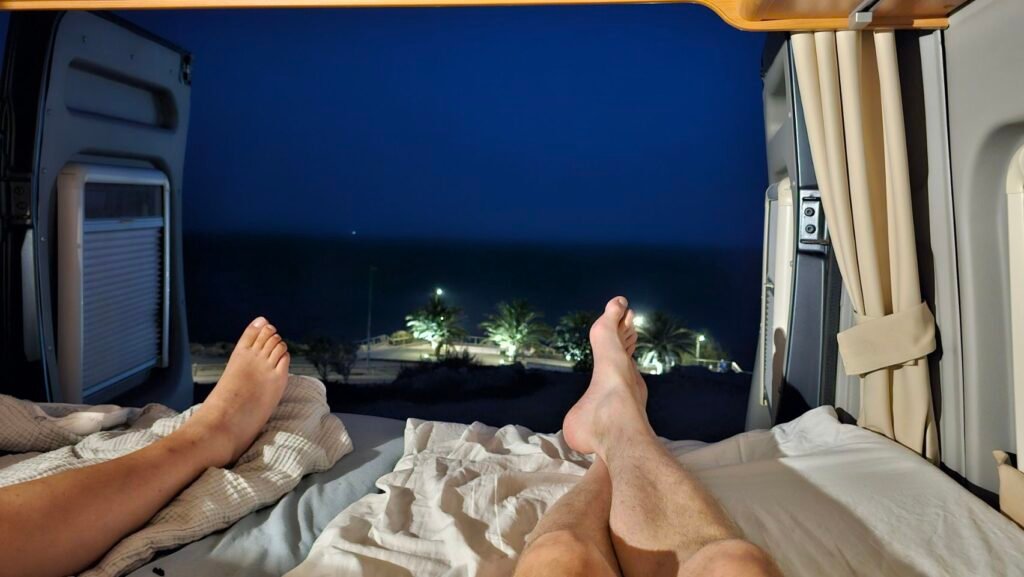
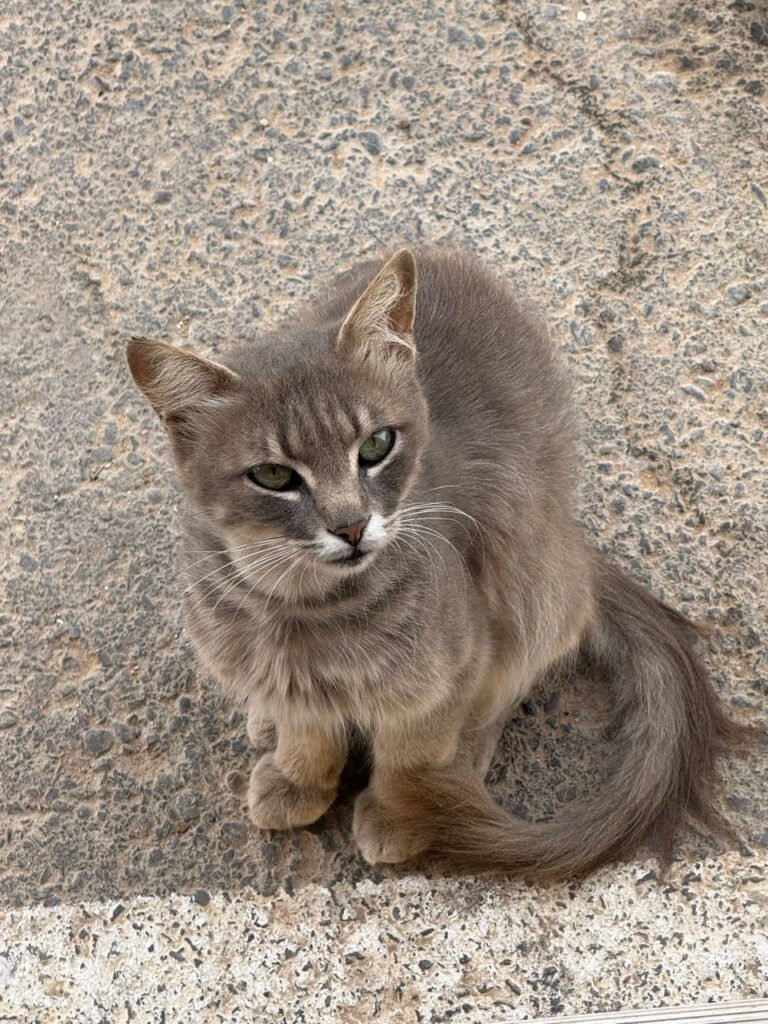
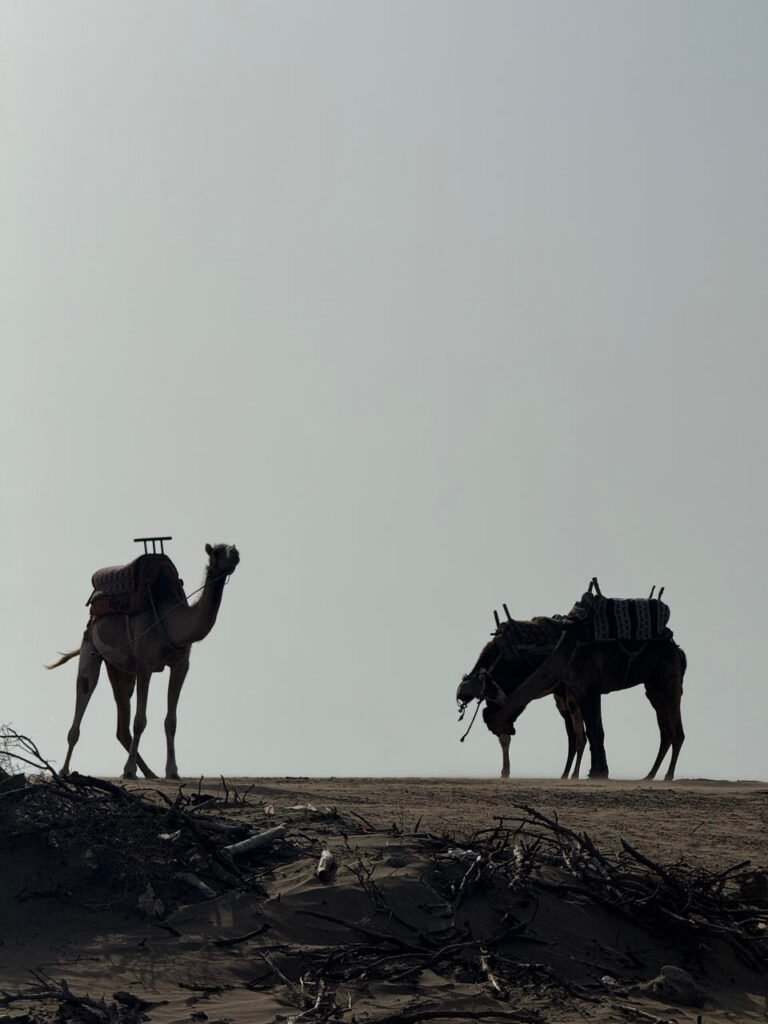
Taghazout. A real surf village with nice little restaurants and shops. We unfortunately did not surf: according to Julian the waves were too small, Florine had a bad back, and actually we both just did not feel like it. Instead we lay on a daybed with a view of camels and horses. We (Florine, actually) made a friend: a beautiful cat that hung around the camper. He really wanted to come to the Netherlands with us. Julian did not allow that. He was already sitting all ready in the camper.
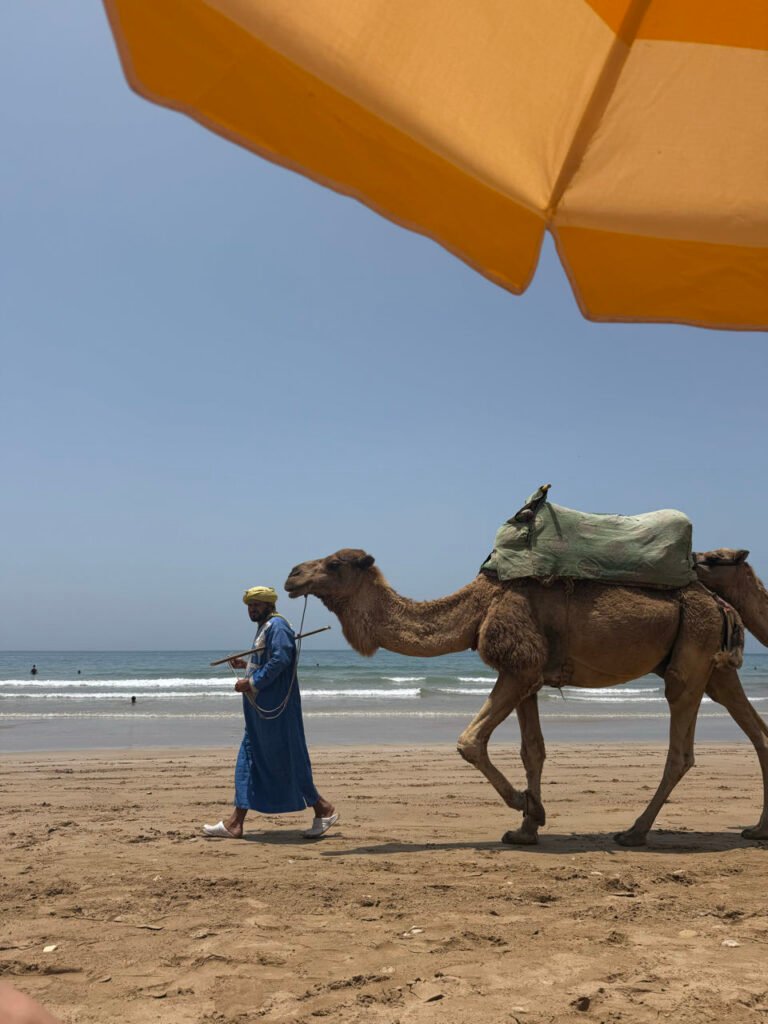
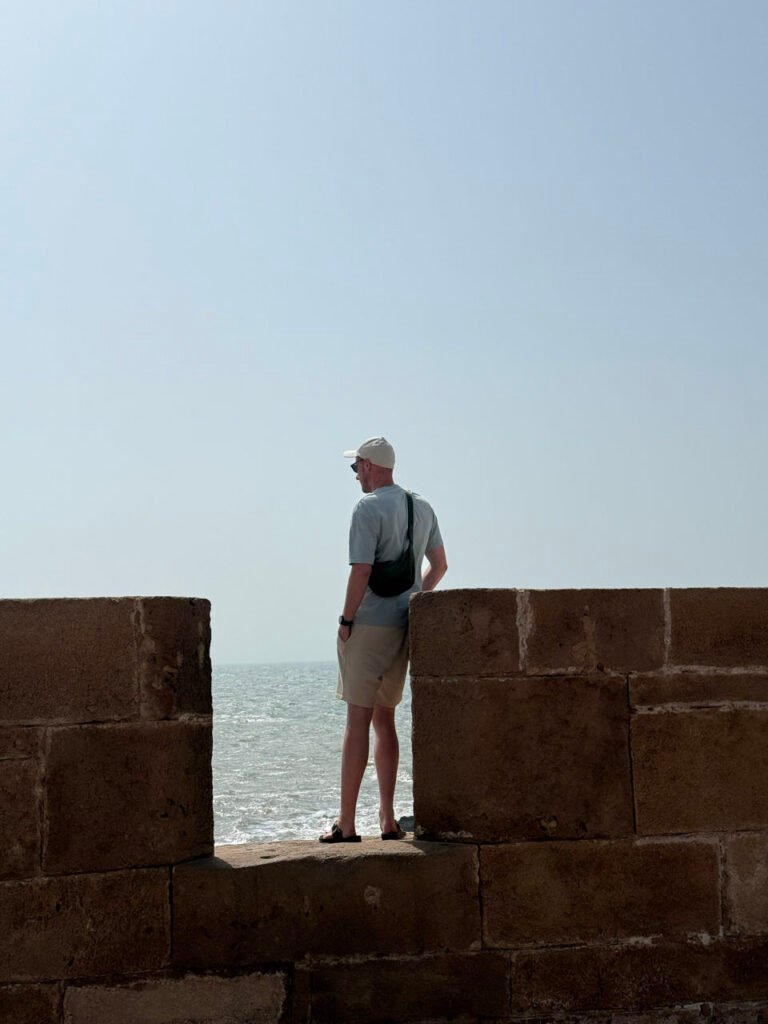
Essaouira. After saying goodbye to our cat we drove to Essaouira, a hip coastal town that Moroccans themselves love to visit. Touristy, but remarkably clean, with a rocky coast along which the walls of the medina run. On a rooftop with a sea view we drank our first cocktail and first beer of the holiday. Drinking alcohol in public is not allowed. In some restaurants, bars and hotels, for example on a roof terrace, it is possible.
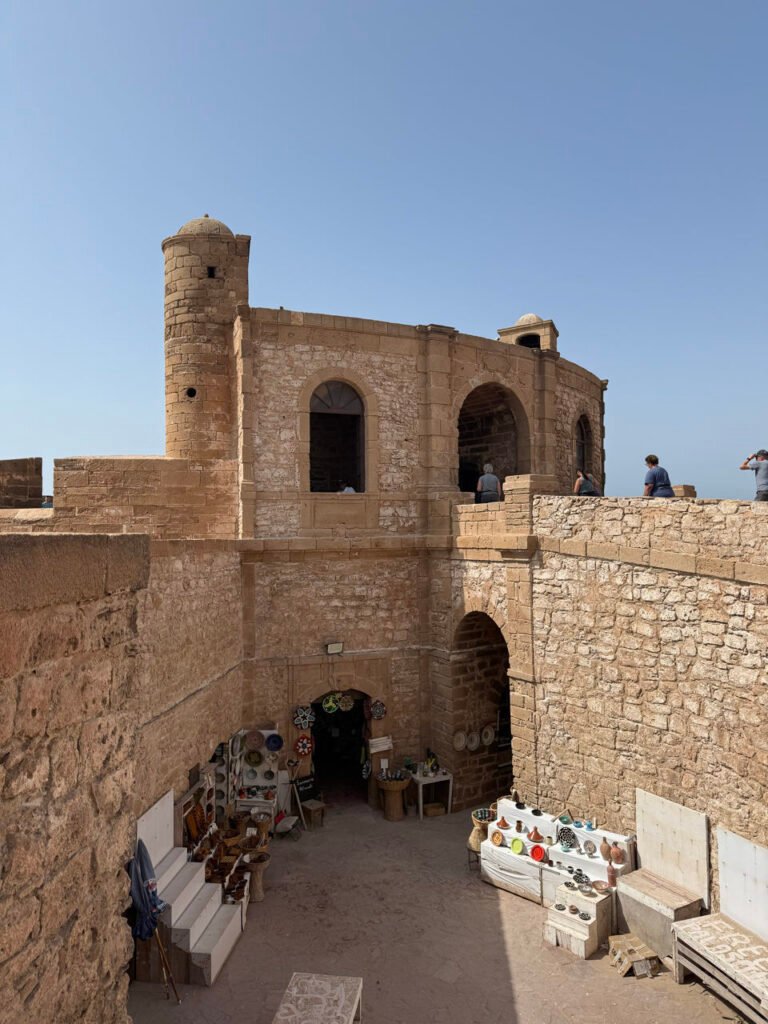
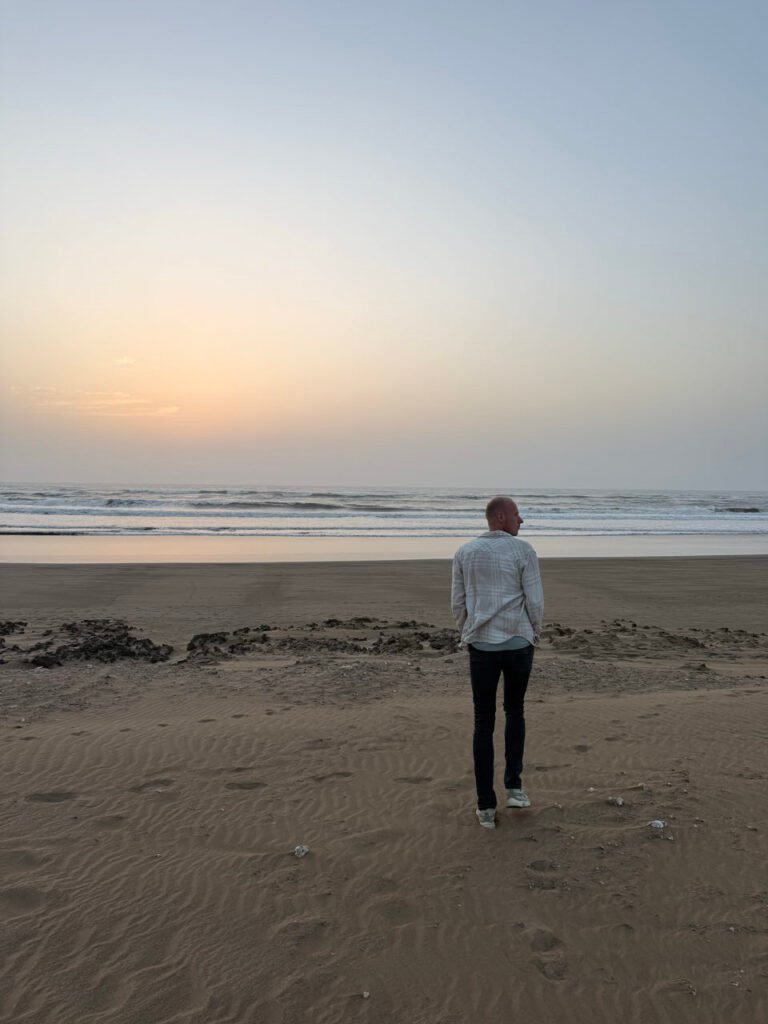
Essaouira is not very camper-friendly. There are no motorhome pitches in the city and the first campsite (Villa Coriandre) was closed, we heard because of trouble with the police over the permit. Filling water and emptying the toilet was allowed. On the way Julian bought a tajine with a charcoal stand at the roadside for €6. In Marrakesh they asked €27 for it. Also a tip, then. Tajines are often sold along the road, they are absolutely not expensive, but in the cities they are expensive and the sellers a lot more aggressive. We ended up at a campsite almost on the beach, with a roof terrace, after 20 minutes over an unpaved road. The best campsite of the trip. You have to be willing to make an effort. That was The Mogador’s Oasis, at Bhaibah beach. We watched a fantastic sunset with a lovely cup of tea.
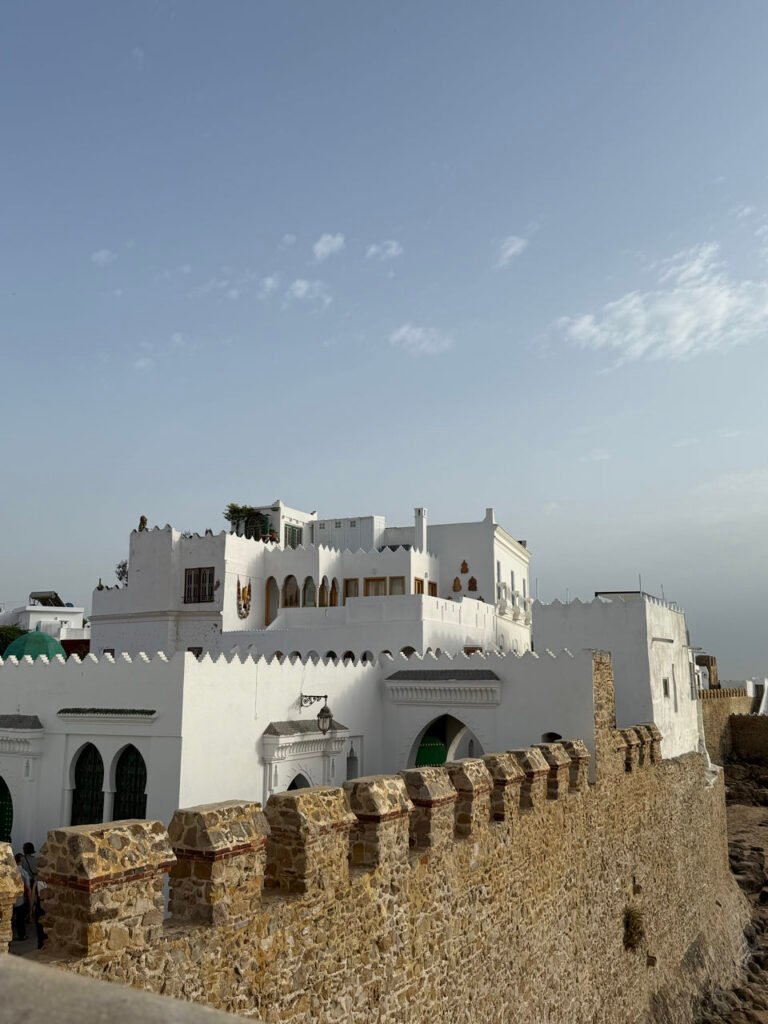
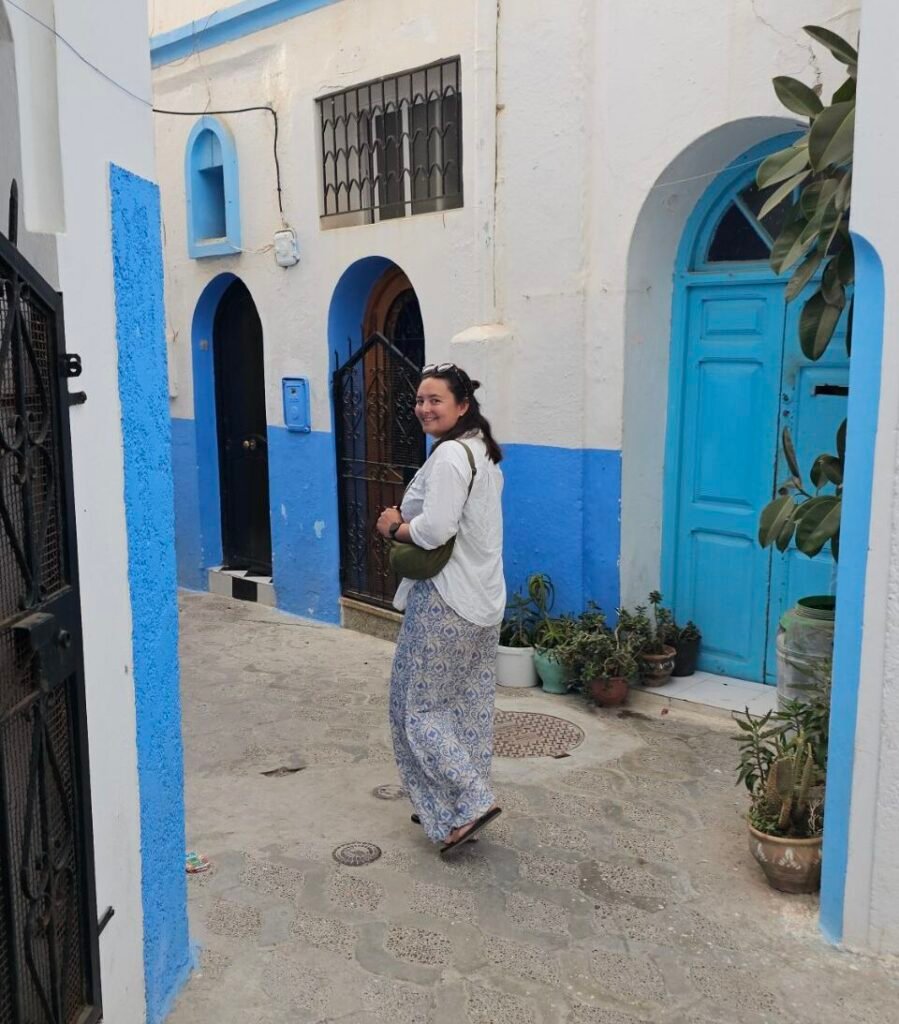
Asilah. On the first day of Eid al-Adha it was very busy here. Via Park4night we still found a spot: a guarded car park close to the medina and the harbour. The medina lies beautifully on the coast and you notice you are back in the wealthier north: clean, well maintained, lots of mosaic and colour. Outside the medina we drank two mint teas for €1, the cheapest of the trip. After that we wanted to sleep in good time. But Eid al-Adha is a big street party, with fireworks and a lot of noise. We were parked in the middle of the party, and yet we did not feel unsafe for a moment. Well, then we would just catch up on sleep on the boat.
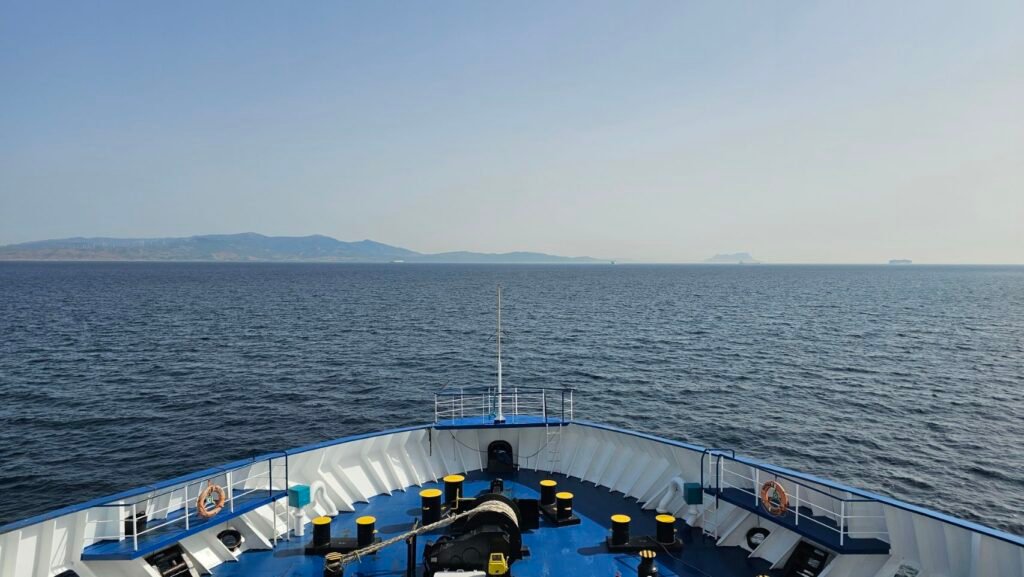
The boat back and Dénia. The alarm went off at 6 o’clock. At customs the whole camper went through the X-ray and a drug dog came past. After that we could simply drive on. The crossing only takes an hour and a half. Bizarre, really, how close Morocco is to Spain. We drove straight through to Dénia, where after two weeks of Morocco we dived straight into the tapas street. That felt a bit like coming home, because we come here quite often.
Via France, where Bodhi had been waiting for us all that time, we headed home. The rugs have found a nice spot and Bodhi is already super happy with them!
Driving, sleeping and refuelling: what you need to know
| Topic | Our experience |
|---|---|
| Boat | You buy tickets from Carlos of Viajes Normandie, just outside Algeciras. They are open tickets, so you choose when you go. The crossing only takes an hour and a half |
| Insurance | Check that your green card (from your camper insurance) covers Morocco (MA). Ours simply had it on there! |
| Customs | On the way in it took under an hour. On the way back the whole camper went through the X-ray and a drug dog came past |
| Roads | Between the well-known places the roads were fine. Our tip is to use Waze: it warns quite well about bad road surfaces! |
| Speed | The maximum speed limit is fairly low everywhere, and there are a lot of checks. In the two weeks we were there we got two fines of €15, both for different speeding offences. |
| Cities | Fes and Marrakesh are fine to reach by camper. We accidentally drove into the Marrakesh medina: just about doable with our 6.4 metre long van conversion, but we do not recommend it. So park the camper in a guarded car park outside or on the edge of the medina. That is what we did in both Fes and Marrakesh, so that we could sleep a few nights in a riad in the medina. |
| Wild camping | Wild camping with a camper in Morocco is a bit of a grey area, but we did not experience any problems. We did stay mostly at campsites, because they are so cheap |
| Campsites | Cheap and often basic, the nicest ones were run by Europeans (often French). Ideal for filling water and doing a load of laundry. Emptying grey and black water is usually only possible at campsites. |
| Diesel | Cheaper than in the Netherlands and easy to find. In September 2026 a litre cost around 15 dirham, about €1.40. That is roughly €1 lower than the price in the Netherlands at the moment |
| Eid al-Adha | Many shops and restaurants are closed during Eid al-Adha and there is a lot of partying in the streets. So take that into account in your planning! |
| Money | Almost everything is cash, so bring enough. For withdrawing money in a foreign currency we always use our Revolut account. The advantage: you pay and withdraw at a favourable exchange rate and usually without the extra costs your regular bank charges. Do keep an eye on the free monthly withdrawal limit of your plan. |
| Clothing | Bring long, airy clothing, especially as a woman. That is respectful towards Moroccan culture and therefore also more pleasant for yourself |
| Haggling | If you want to buy nice things, be prepared to haggle hard. Aim for about half of the first asking price. In the most touristy areas, 30 to 40% of the asking price is a better target |
| Animals | Bring a bowl and some dog food. There are dogs and cats at every car park |
The heat. During the day it was often 35 degrees or more, and in the evening there was no way to get the heat out of the camper. Open windows only help when there is a breeze. After this trip we knew for sure: there had to be a fan on the roof. Read how that went in Camper Van Upgrades: 11 Modifications to Our Factory Camper.
Where we slept
The links go to Park4night, and for the riads to Booking.com (affiliate links). Note: the prices come from Park4night as currently listed and can therefore differ from what we paid in 2025. Where there was a price range we took the most expensive. Dirham converted at about 10.7 per euro.
| Place | Where we stayed | Price |
|---|---|---|
| Northern France | Courcelles-Epayelles (free motorhome pitch) | free |
| Zarautz | Gran Camping Zarautz | €36 per night (according to P4N for adults with a van, without electricity) |
| Mérida | Autocaravanas Area Merida (paid motorhome pitch) | €15 per 24 hours |
| M’Diq | La Ferma (guarded car park) | 60 dirham (approx. €5.60) |
| Chefchaouen | Camping Azila | 125 dirham (approx. €11.70) |
| Fes | Riad Dar Roumana; camper at the guarded car park Tour de Fes N | Riad approx. €145 per night; parking 60 dirham per 24 hours (approx. €5.60) |
| Middle Atlas (Azrou) | Wild camping on the Route Touristique des Cèdres | free |
| Ouzoud | Camping Ouzoud | 30 dirham (approx. €2.80) |
| Aït-Ben-Haddou | Camping Defat Kasbah | 100 dirham (approx. €9.30) |
| Ouarzazate | Camping L’Escale | 80 dirham, electricity 20 dirham extra (approx. €7.50) |
| Marrakesh | Riad Medina Art; camper at a guarded car park (no longer on Park4night). Tip: this car park | Riad approx. €128 per night; tip car park 250 dirham per 24 hours (approx. €23) |
| Taghazout | Car park at Taghazout | 30 dirham (approx. €2.80) |
| Essaouira | The Mogador’s Oasis (Bhaibah). Villa Coriandre turned out to be closed | 150 dirham (approx. €14) |
| Asilah | Guarded car park Avenue Mohamed El Haloui | 80 dirham (approx. €7.50) |
| Dénia | Parking | free |
| Galinat (France) | At Florine’s parents’ house (picked up Bodhi) | n/a |
What we thought of it
The food was super tasty, the people were almost without exception incredibly kind, and driving the camper turned out to be much easier than we expected beforehand. What disappointed us: in some places there was a lot of litter and it was not always equally hygienic. You have to be able to handle that.
We would drive the route again in a heartbeat. We would skip Aït-Ben-Haddou though and stay longer in the Middle Atlas and Asilah.
And we would haggle harder. How that went in practice you can read in Buying rugs in Morocco.
The route day by day
| Day | Place | Highlight |
|---|---|---|
| 1-2 | Netherlands → Zarautz | Left after work, first view of the sea |
| 3 | Mérida | A beautiful old Roman city |
| 4 | Algeciras → Morocco | Tickets from Carlos, boat the same day |
| 5 | Chefchaouen | The blue city |
| 6-8 | Fes | Riad, rugs, cooking class, tailor |
| 8 | Middle Atlas | Cedar forests, Barbary macaques, rain on the roof |
| 9-10 | Ouzoud and Aït-Ben-Haddou | Waterfalls and a film set that disappointed |
| 11 | Ouarzazate | The dream rug |
| 12-13 | Marrakesh | Bike tour and chaos |
| 14-15 | Taghazout | The sea in sight |
| 16 | Essaouira | Rooftop and a beach campsite |
| 17 | Asilah | White-blue medina and Eid al-Adha |
| 18-20 | Dénia | Tapas and beach loungers |
| 21-24 | France → home | Picking up Bodhi |
Going to Morocco by camper yourself? Save this Morocco camper route for your planning.
This post contains affiliate links. If you buy through one, we earn a small commission at no extra cost to you.