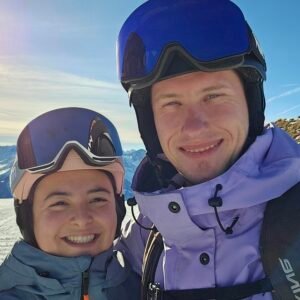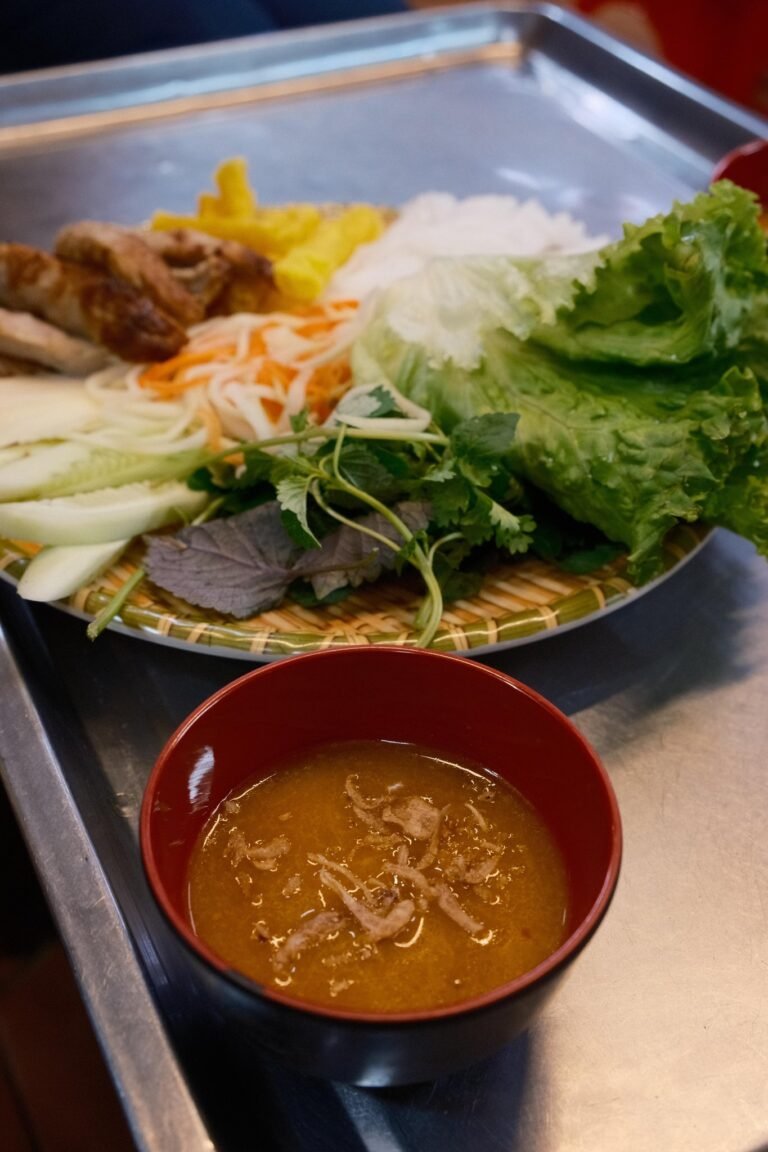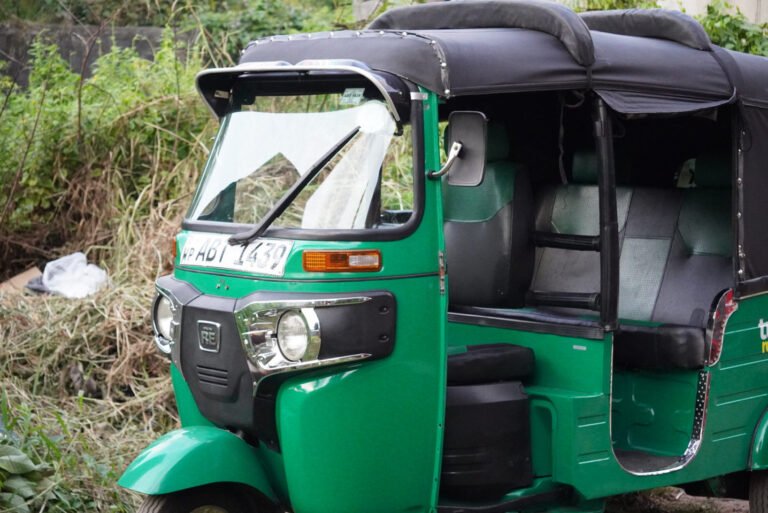
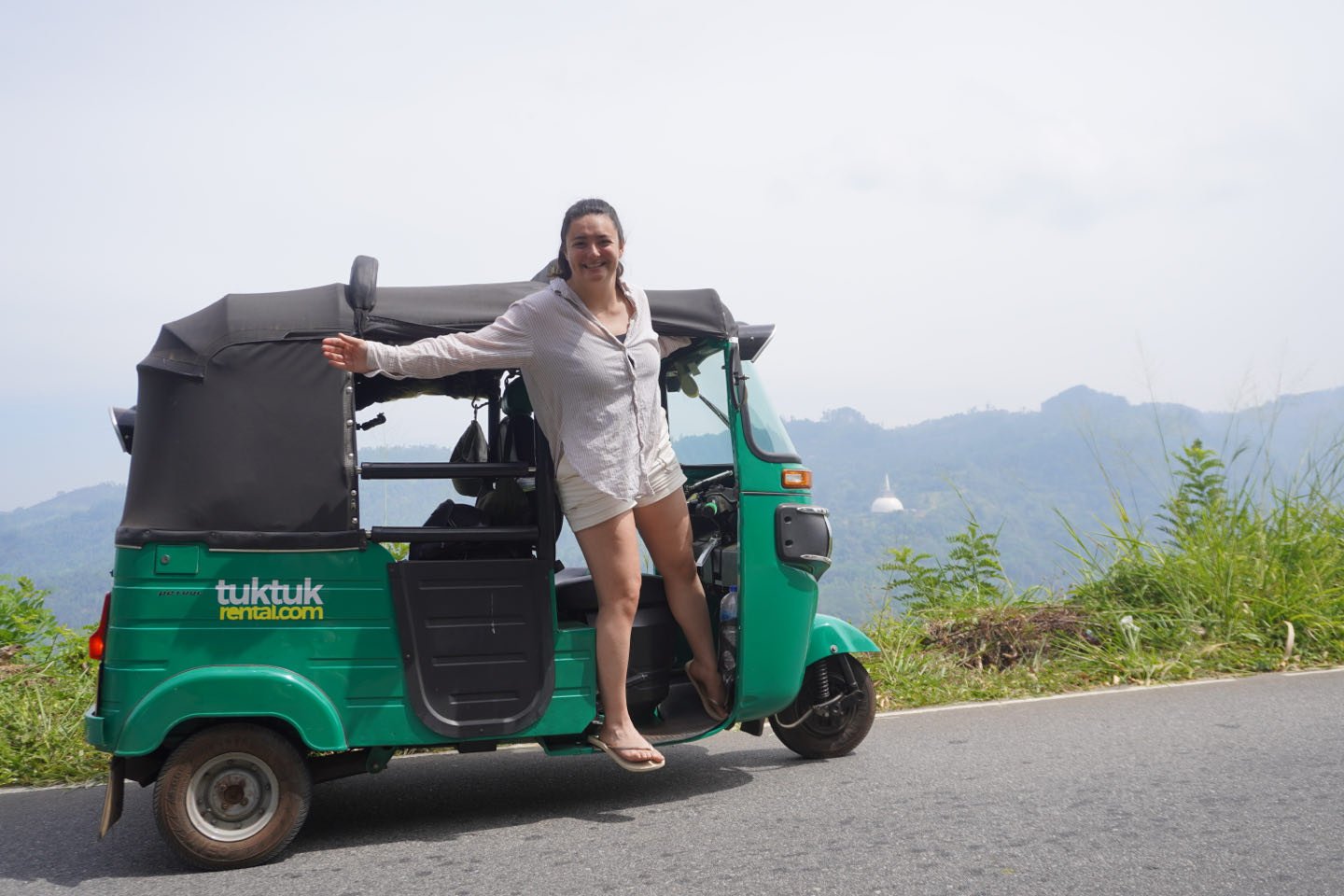
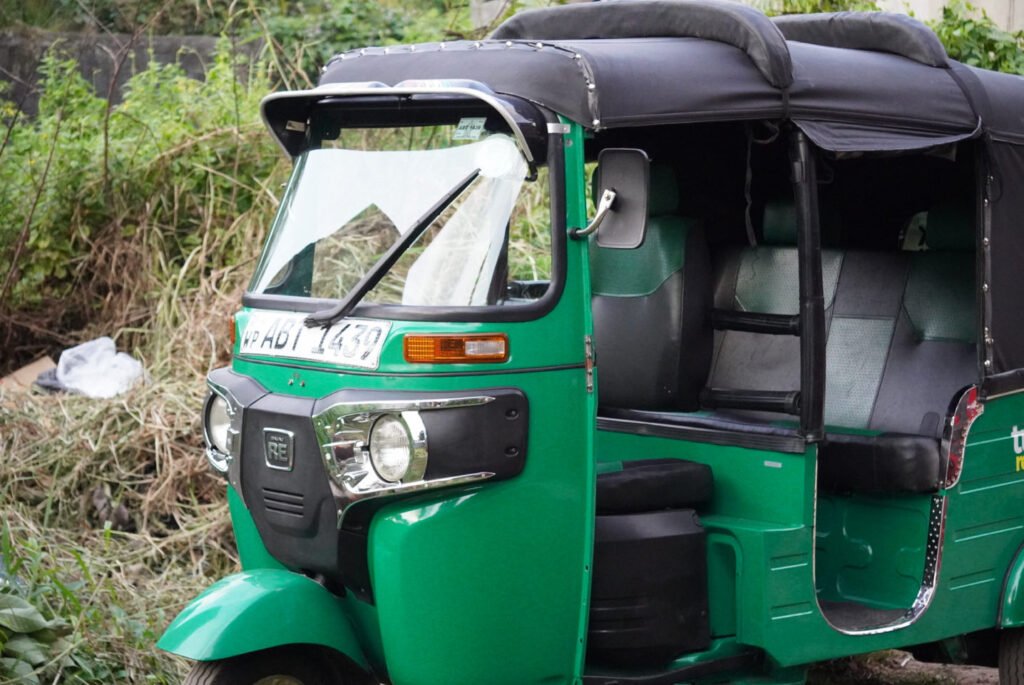
On a rainy day in March we flew to Sri Lanka. For four weeks we drove a loop around the island in our rented tuk-tuk Kermit: first the northwest and the cultural triangle, then up into the mountains, and back to Colombo along the south coast. No train or bus timetables, but plenty of stops for fruit, views and elephants.
There is one thing we would do differently: drive the loop in the opposite direction. You can read why below. Just want the story? Jump straight to our route by region.
This article contains affiliate links. If you book through one of these links, we receive a small commission and you pay nothing extra.
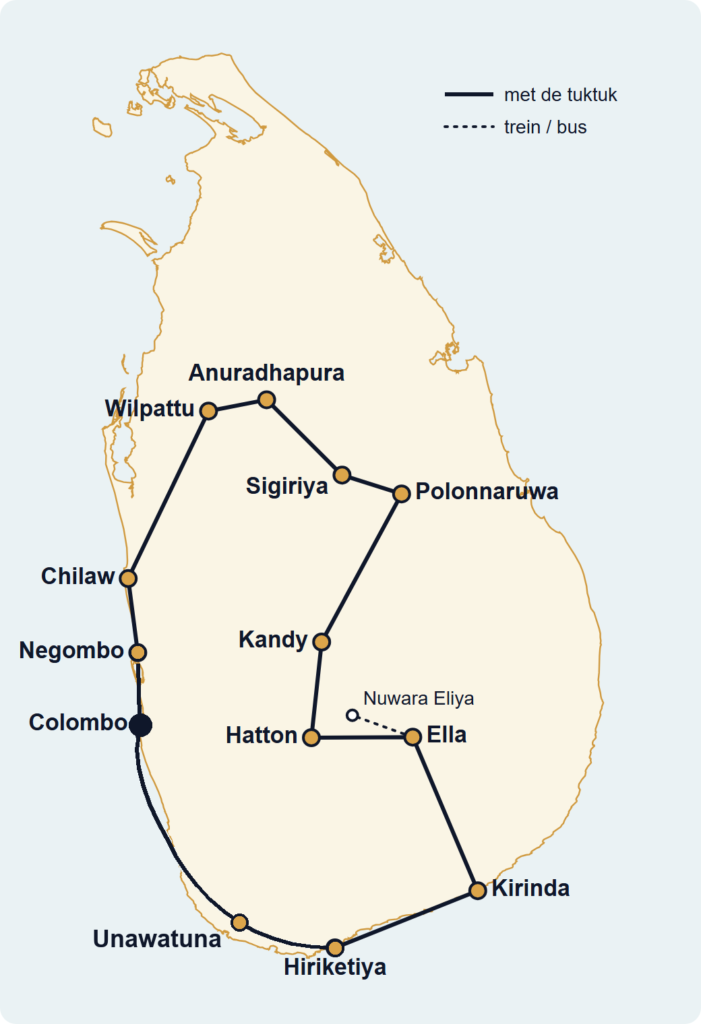
What did our route look like?
In four weeks we drove well over 1,100 kilometres: from Negombo via Wilpattu and the cultural triangle up into the mountains, and back to Colombo along the south coast. This is the route as we drove it.
| Day | Route | Highlight |
|---|---|---|
| 1 | Arrival in Negombo | Picking up the tuk-tuk and driving lesson |
| 2 | Negombo → Chilaw (53 km) | First real drive |
| 3-4 | Chilaw → Wilpattu (approx. 100 km) | Safari (elephants, sloth bear, leopard) |
| 5 | Wilpattu → Anuradhapura (approx. 85 km incl. Mihintale) | Sunset at Mihintale |
| 6 | Anuradhapura | The ancient city with a guide |
| 7 | Anuradhapura → Sigiriya (approx. 80 km) | Roy’s Villa hostel by the rice paddies |
| 8 | Sigiriya | Elephant safari and cooking workshop |
| 9 | Sigiriya → Polonnaruwa (approx. 65 km) | Lion Rock from the air |
| 10 | Polonnaruwa → Kandy (108 km) | The 18-bend road and an empty waterfall |
| 11 | Kandy | Botanical garden, market, dance show |
| 12 | Kandy → Hatton (approx. 80 km) | Tea plantations by tuk-tuk |
| 13 | Hatton → Ella (approx. 100 km) | Even more tea |
| 14 | Ella ⇄ Nuwara Eliya (train 2.5 hours, bus over 3 hours) | Train there, bus back |
| 15 | Ella → Kirinda (113 km) | Nine Arch Bridge and elephants on the B35 |
| 16-19 | Hiriketiya (69 km from Kirinda) | Surfing and turtles |
| 20 | Hiriketiya → Unawatuna (65 km) | Via Matara and Weligama |
| 21-25 | Unawatuna | Diving and a day in Galle |
| 26 | Unawatuna → Colombo (114 km) | Along the coast via Galle |
| 27 | Colombo → Negombo (49 km incl. a loop around Colombo) | A loop around Colombo and saying goodbye to Kermit |
| 28 | Flight home | Via Doha to Schiphol |
Our tuk-tuk Kermit did about 40 to 45 kilometres per hour. With villages, mountain roads and stops, 100 kilometres easily takes half a day.
Why would we drive it the other way around?
This was Julian’s first trip outside Europe, so a real culture shock. In hindsight we would rather have driven the loop the other way around, starting on the south coast. There you get used to the country, the culture and the driving, with Western food and all the comforts within reach. Only then do you head inland, where you are sometimes the only tourist for days. You enjoy that even more, because the beach is no longer the reward at the end but the warm-up.
Driving it the other way around means roughly: after landing, head south to the coast, go up via the B35 to Ella and the mountains, and finish in the cultural triangle and Wilpattu.
What is it like to drive a tuk-tuk through Sri Lanka?
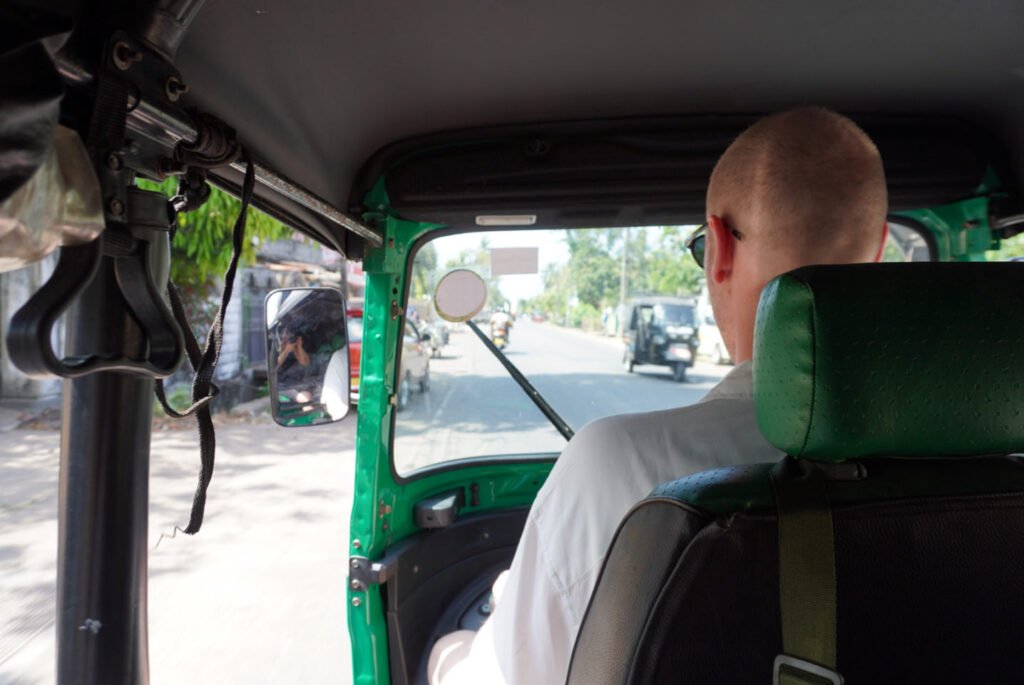
Easier than you think, once you have survived the first day. Right after landing we picked up Kermit and had our driving lesson on three hours of sleep and a bit of jet lag. Our first real drive, 53 kilometres to Chilaw, took us through the busy traffic of Negombo for the first hour. After that it got quieter and greener.
Julian drove, Florine was the ultimate passenger princess in the back.
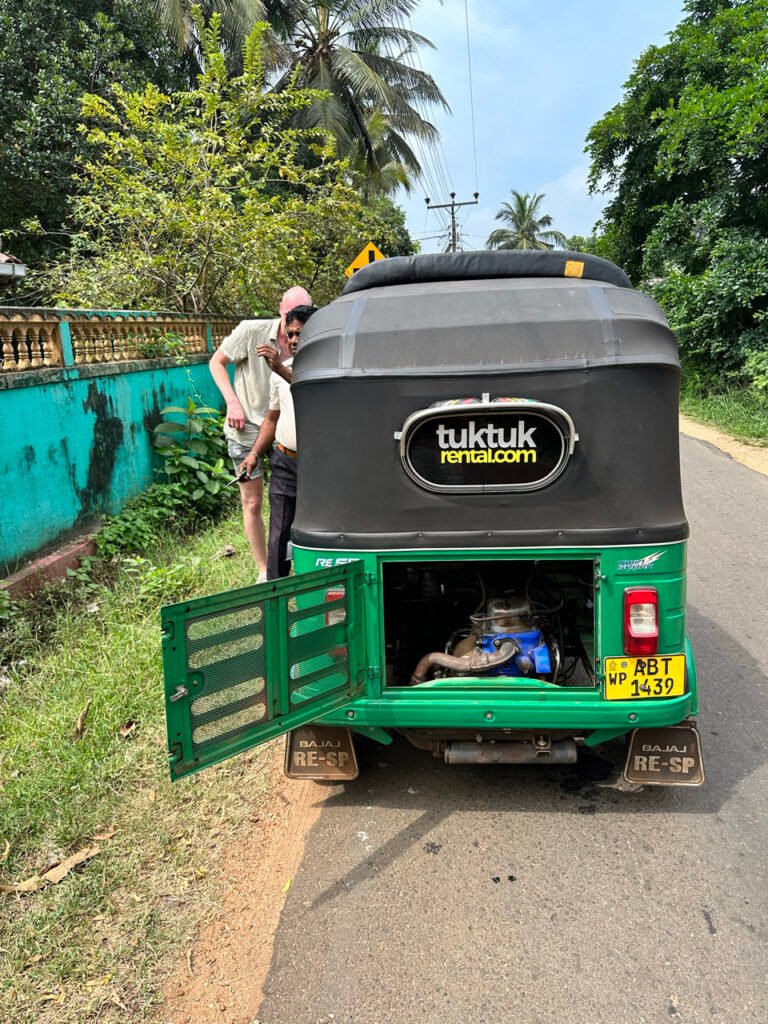
We had a breakdown once along the way, and it was our own fault. You can read that story under Sigiriya.
You can read how the driving lesson works and how to rent a tuk-tuk yourself, including driving licence and costs, in Renting a tuk-tuk in Sri Lanka.
When is the best time to go?
We spent the whole of March in Sri Lanka, which is a favourable month for rain. Sri Lanka has two monsoons that each hit a different side of the island: in the northeast it rains roughly from October to February, in the southwest from April/May to September. In March you are right in between! We only had one rain shower (on the last day).
It is high season though, so expect crowds at popular places like Ella, Hiriketiya and Yala (which is why we chose Wilpattu).
Expect a big temperature difference between the mountains and the rest of the country. In the mountains it was around 25 degrees and cooled down further in the evening; at sea level it was a lot hotter, around 30-35 degrees. So pack for both, and don’t plan the hottest hours in a botanical garden.
Our route by region
Is Wilpattu worth it?
Yes, we realised that after five minutes in the park! But first we had to get there.
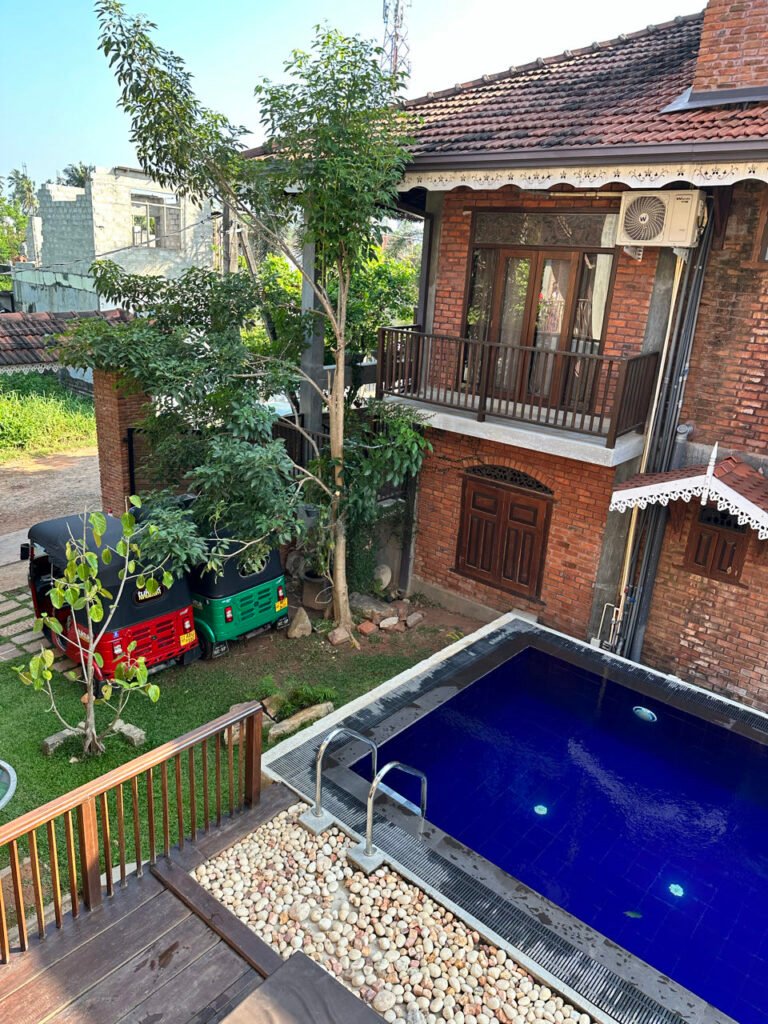
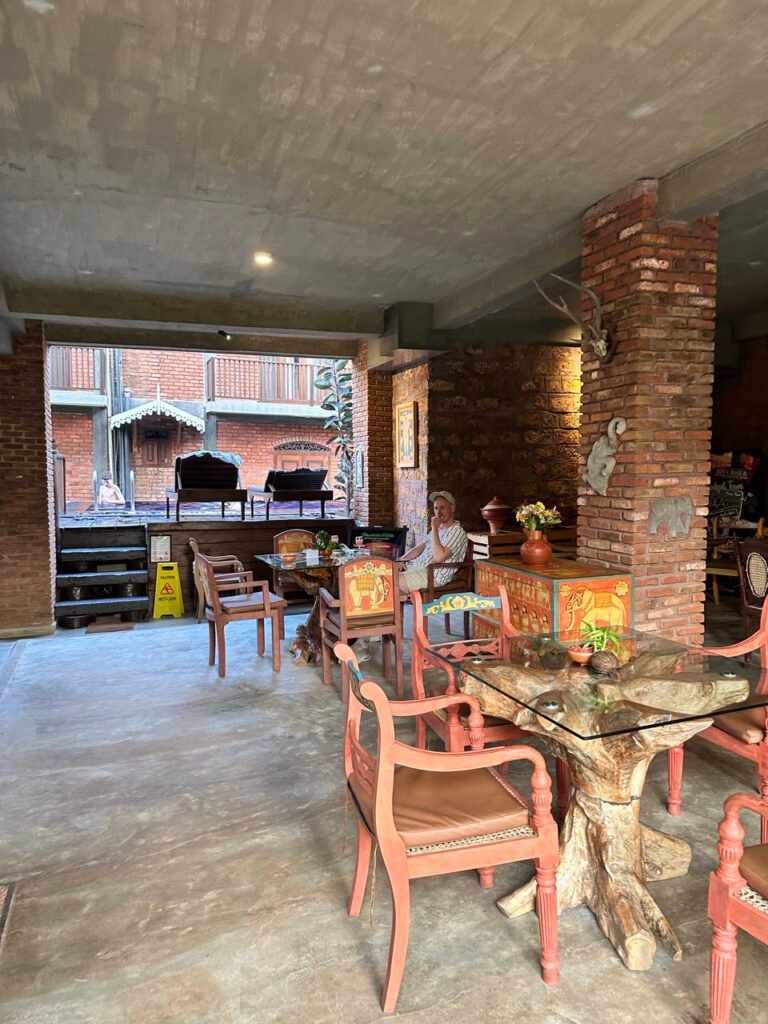
After a long journey with lots of delays, a plane change and lots of crying children, we were finally in Sri Lanka. In Negombo we slept at the Boutique Villa, a small hotel with a pool, and in the evening we walked to the beach to eat. Mostly watching the locals, fetching water and sleeping.
On the way to Chilaw we bought fresh fruit. Our first purchase was a fact. Now we just needed a knife. When we asked whether a little shop sold a “knife for cutting fruit”, we got blank stares. Luckily he did understand “banana chop chop chop”. He came back with a small knife and the rest of his family, because they also wanted to see the two Westerners in the shop. The whole family waved us off. In Chilaw we slept at the Coco Village Hotel, a bungalow park with more staff than guests, and even more dogs than staff.
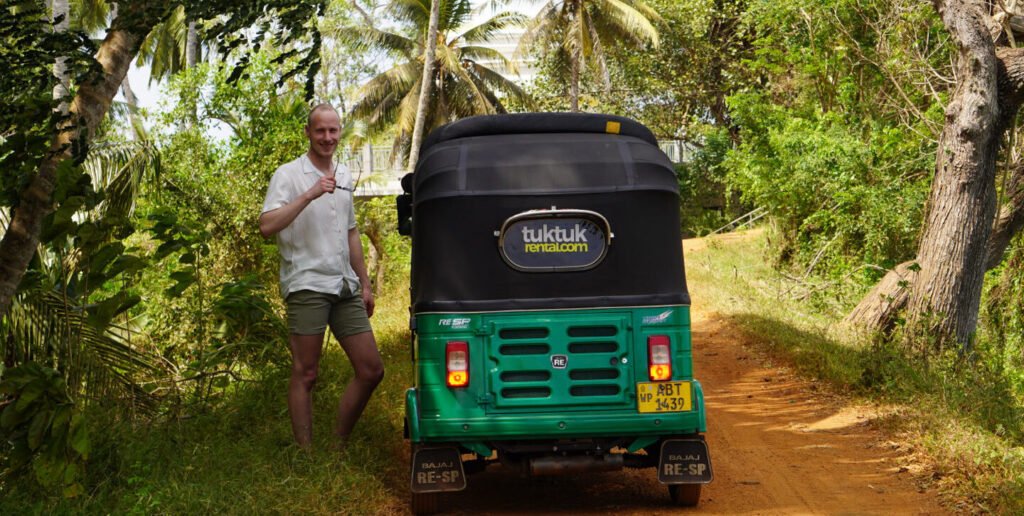
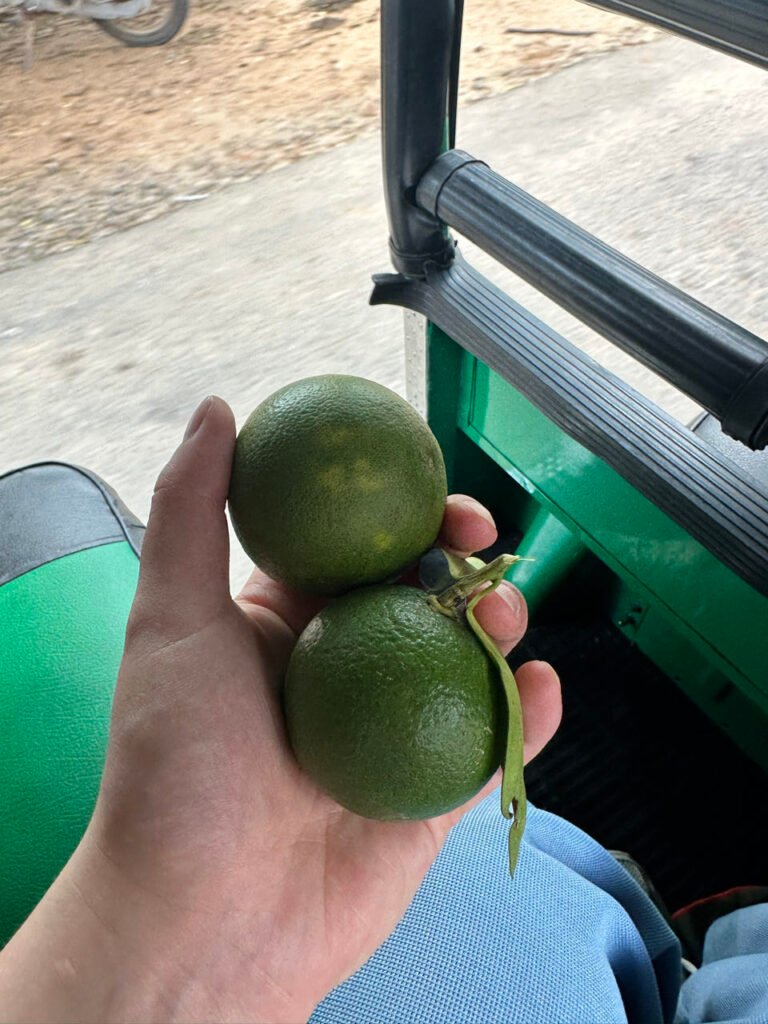
The drive to Wilpattu, the largest national park in Sri Lanka, was long and sometimes unpaved. At one stop a man pressed two green fruits into Florine’s hand. Limes, we thought. Mandarins, it turned out later.
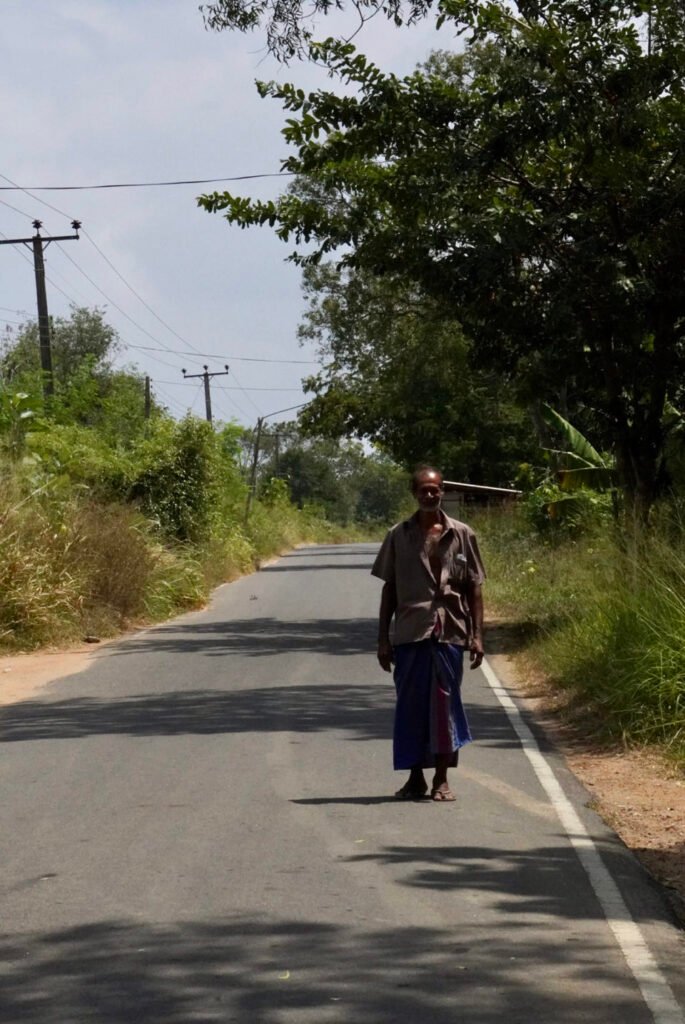
On the way we made a short stop at the Paramakanda cave temple near Anamaduwa. A temple with caves in the rocks that goes back to King Walagamba, well over 2,000 years ago. At the top you will find a footprint of the Buddha carved into the rock.
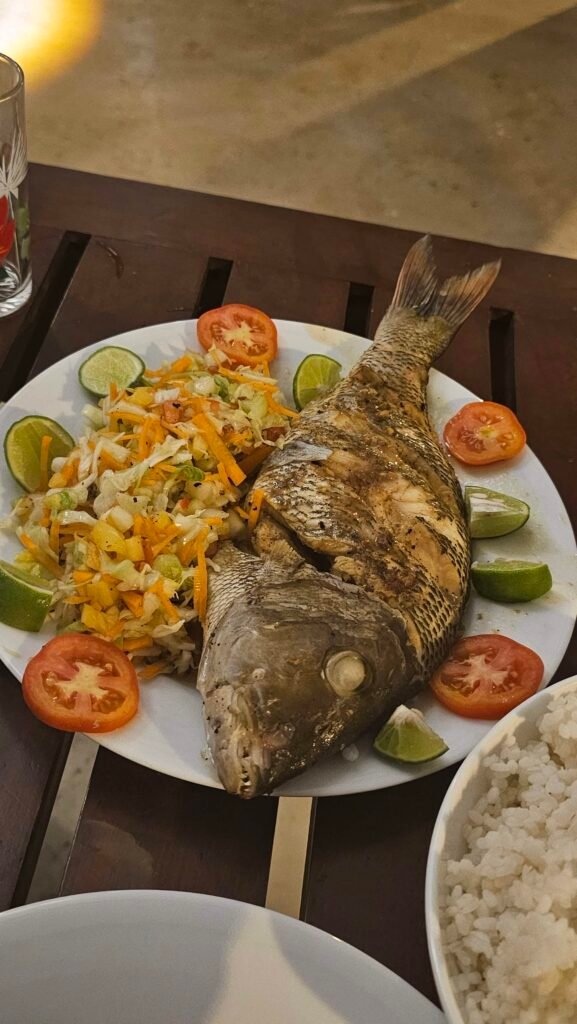
We stayed at Moni Farmhouse, a remote house near the park, and it was one of the best places of the trip. We were looked after by a boy who didn’t speak a word of English but always smiled. At sunset we were given a whole fish from the lake. It was at least fresh, let’s put it that way…
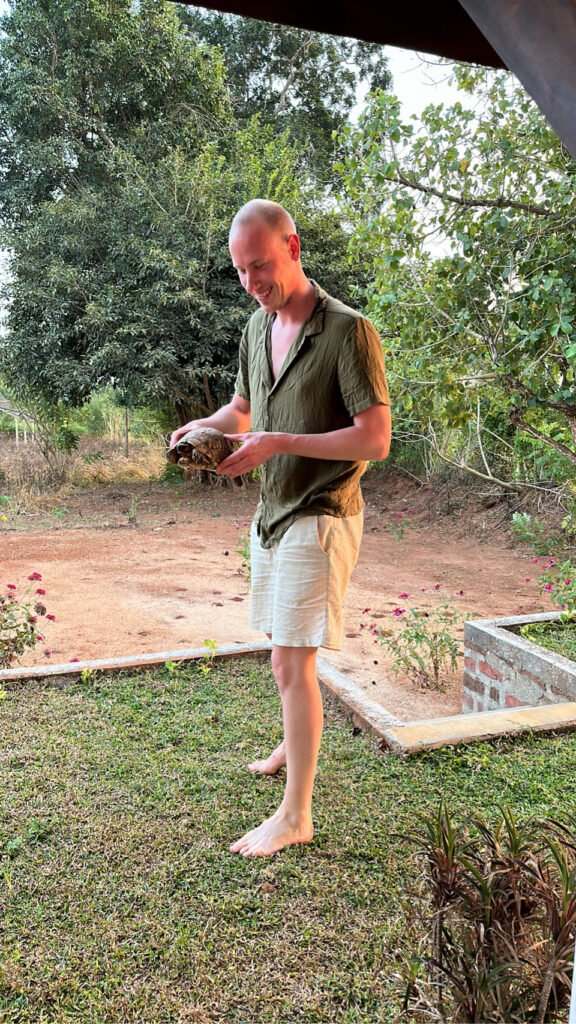
On safari day our guide picked us up early in the morning at our accommodation. We had just forgotten to bring cash, oops… Luckily there were helpful Dutch people at the park entrance who did have enough cash with them!
Tip: The easiest way to arrange a safari in Wilpattu is through your accommodation. We had already arranged ours in advance via the chat on booking.com
Oh, and bring enough cash on safari day to pay and tip your guide!
The safari lasted from 6 to 6, with guide Manu: 18 years old and a handful of English words. With hands and feet you get a long way. The goal for the day: at least one elephant, and with a bit of luck a leopard or sloth bear. After less than five minutes we heard a heavy sound we couldn’t place. An elephant, less than twenty metres from the track, hidden in the bushes. Our day was already made.
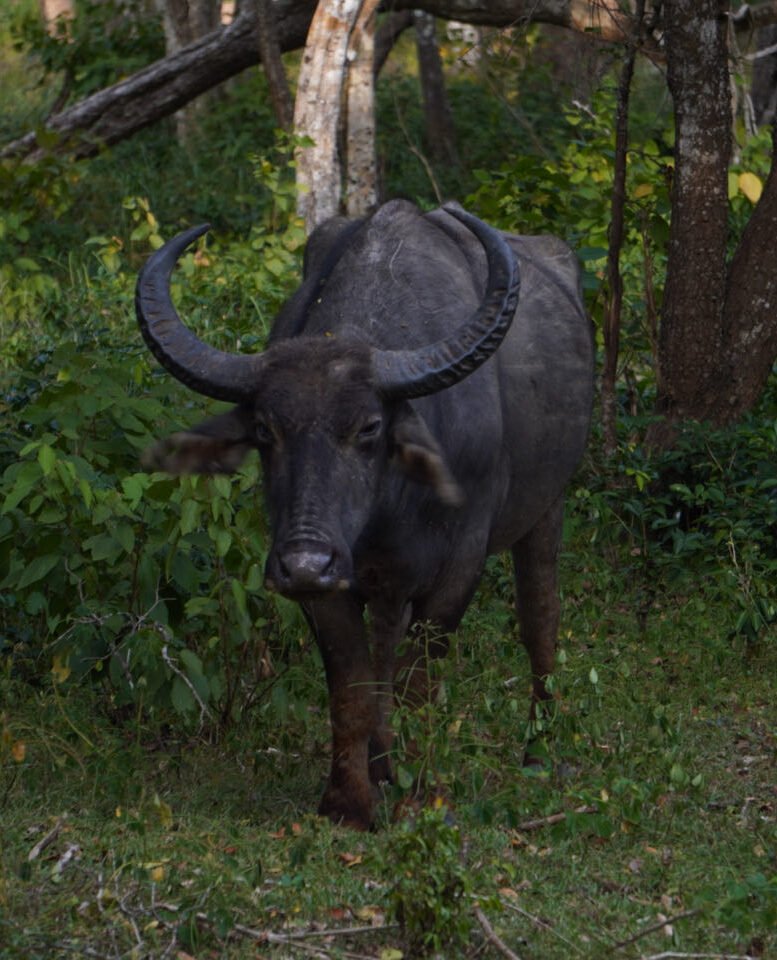
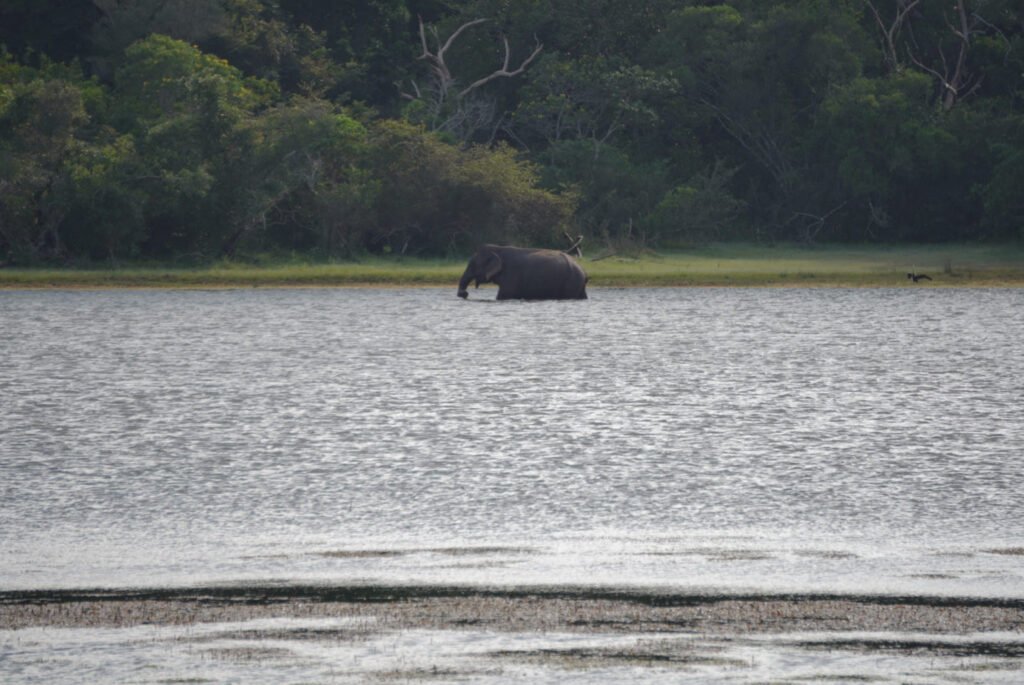
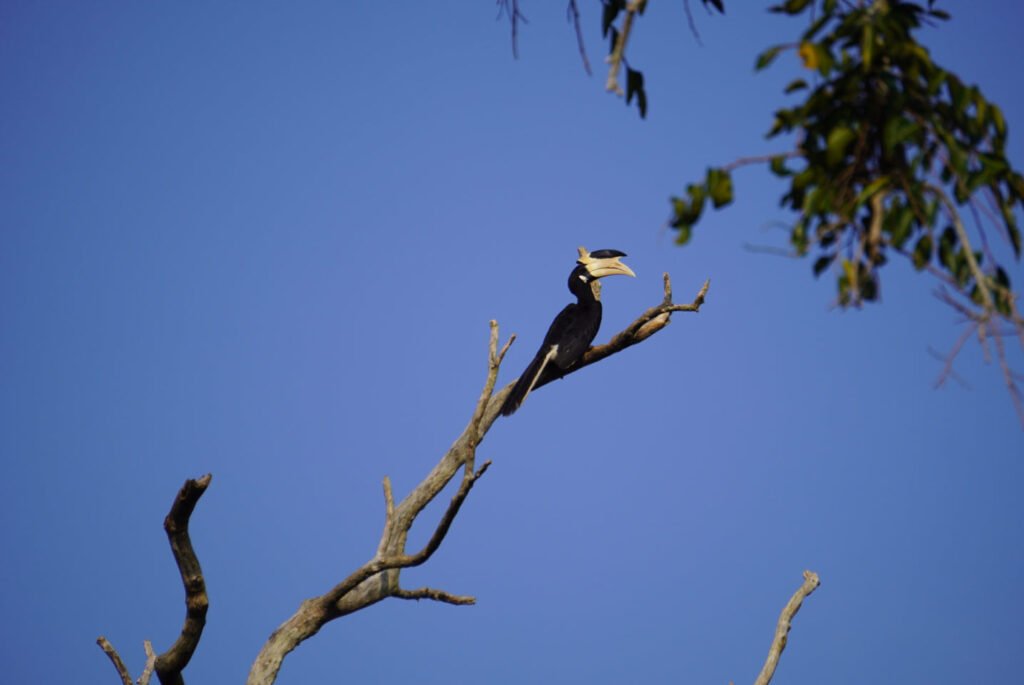
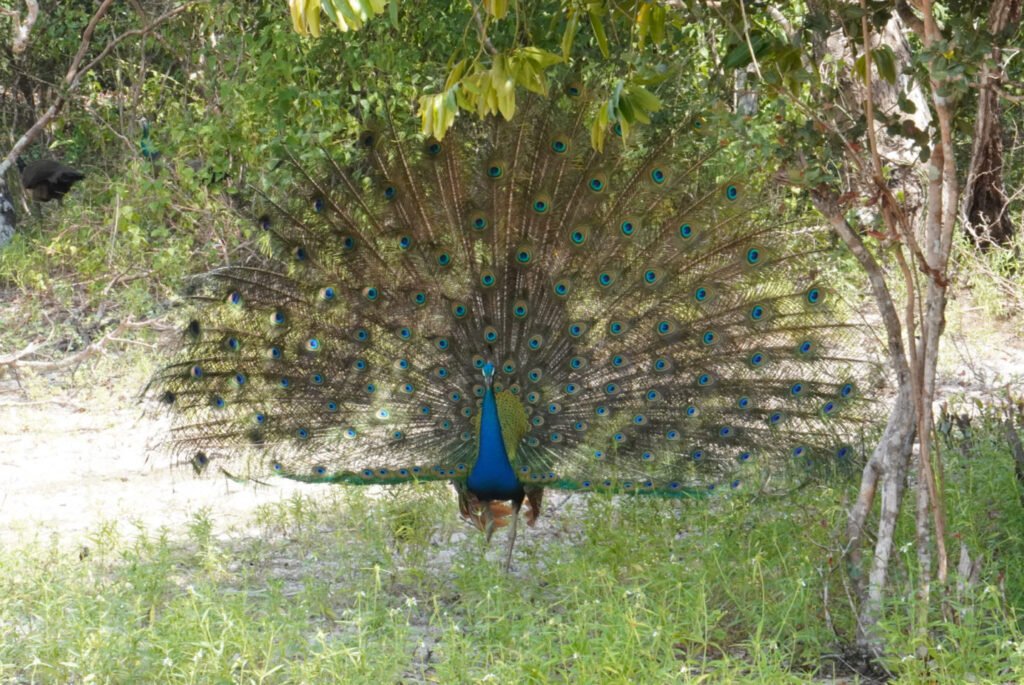
After that came peacocks, deer, crocodiles, monitor lizards, bee-eaters, even more peacocks, monkeys, water buffalo and the national bird of Sri Lanka: a chicken. We didn’t see a leopard, despite waiting an hour at a small lake. But just before leaving there was one more elephant on the other side of the water. And the hornbills we missed in the park? They were sitting in the tree next to our breakfast the next morning.
Good to know: the safari cost us about €120 for two people for a whole day. We were lucky to have the jeep to ourselves.
Is Mihintale worth it?
Yes, especially around sunset. More locals than tourists come here.
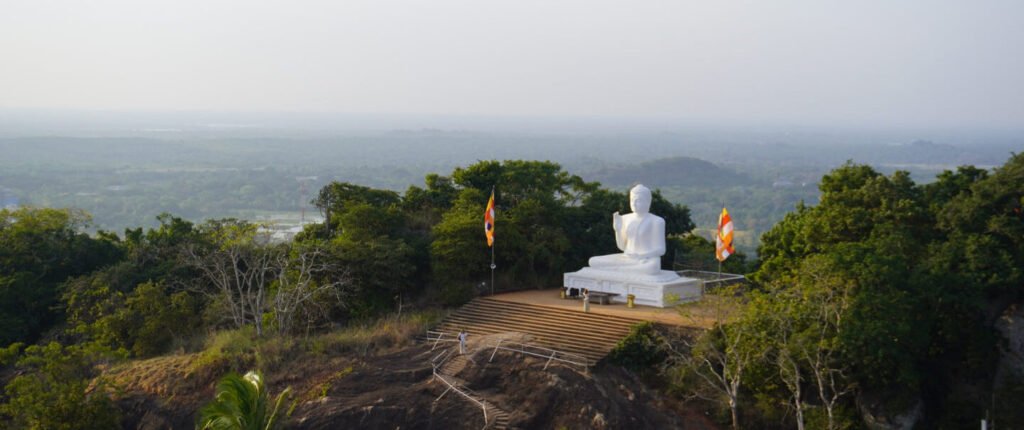
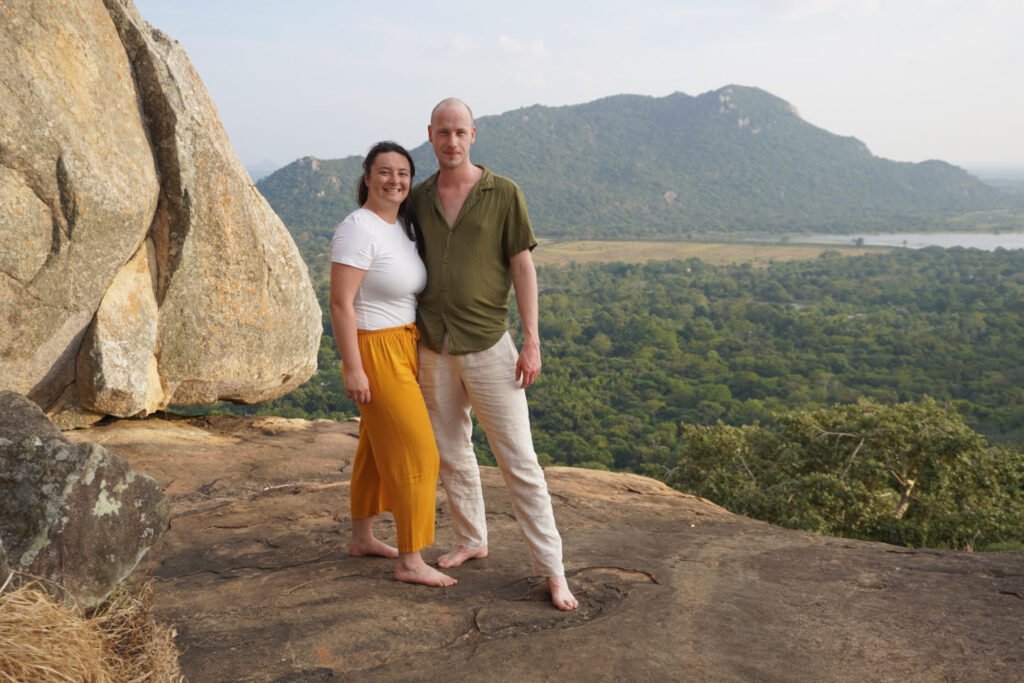
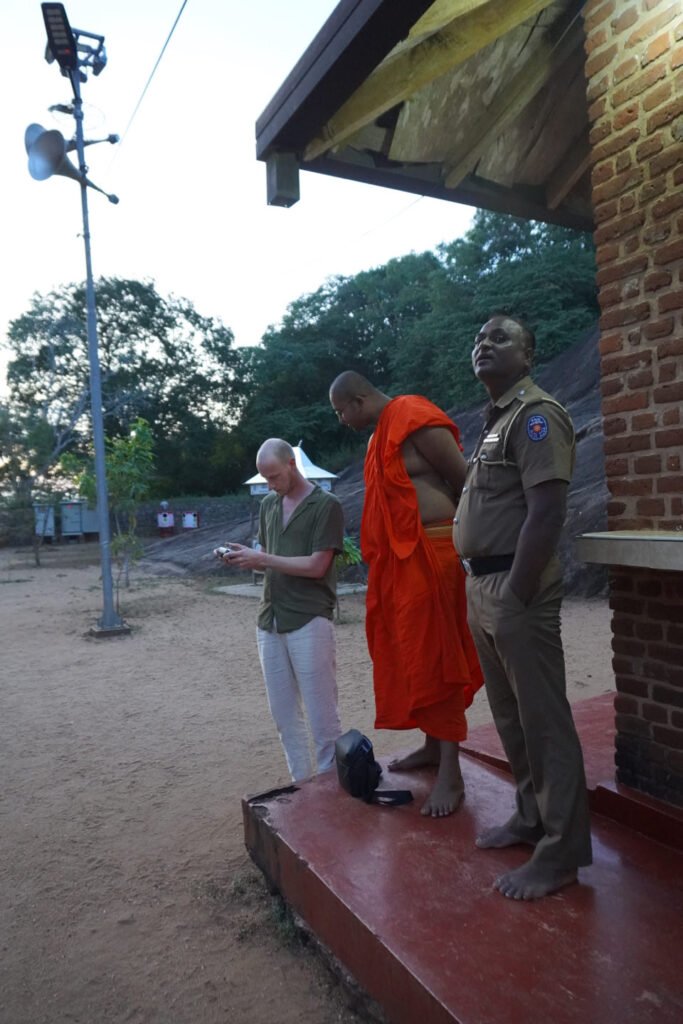
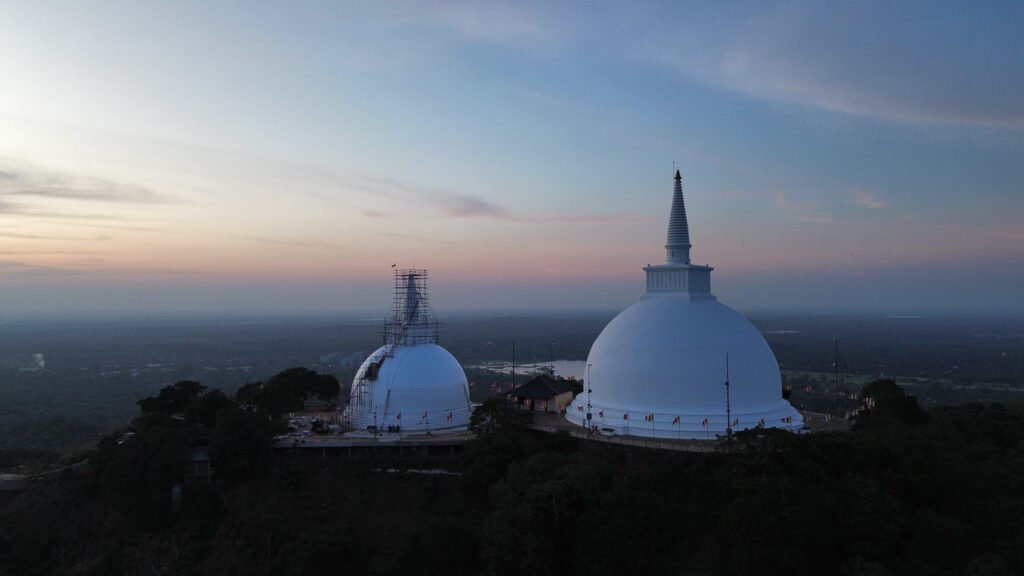
On the way from Wilpattu to Anuradhapura we stopped at Mihintale, a temple complex on one of the few hills in the area. According to our guide, this is the site of the first Buddhist temple in Sri Lanka. Julian really wanted to fly the drone, but didn’t have the right permit for this spot. So we hired a guide who might be able to sort something out. We were right: the police were called and the permit was waved through. That was luck, not advice: arrange your drone permit in advance. At the top of the mountain it turned out to be far too windy, unfortunately.
Our guide cost about €20 here.
On the way back a monk and a police officer asked whether we were going to fly after all. So Julian tried once more, and it worked. The monk clearly knew a lot about drones and happily watched along on the screen. Julian is now friends with him on WhatsApp.
Do you need a guide in Anuradhapura?
We would say yes: there is so much to see here, and with a guide it becomes a lot more accessible.
In Anuradhapura we ate in a local place for the first time. People thought it was wonderful that we sat down. Fine to stay for a bit, but definitely not too long.
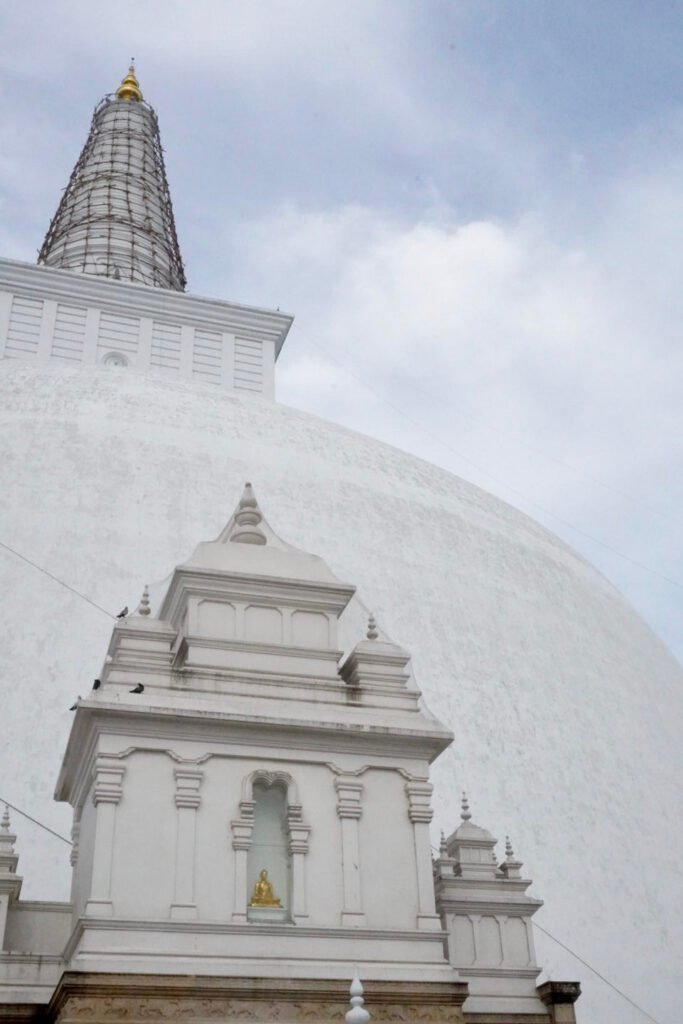
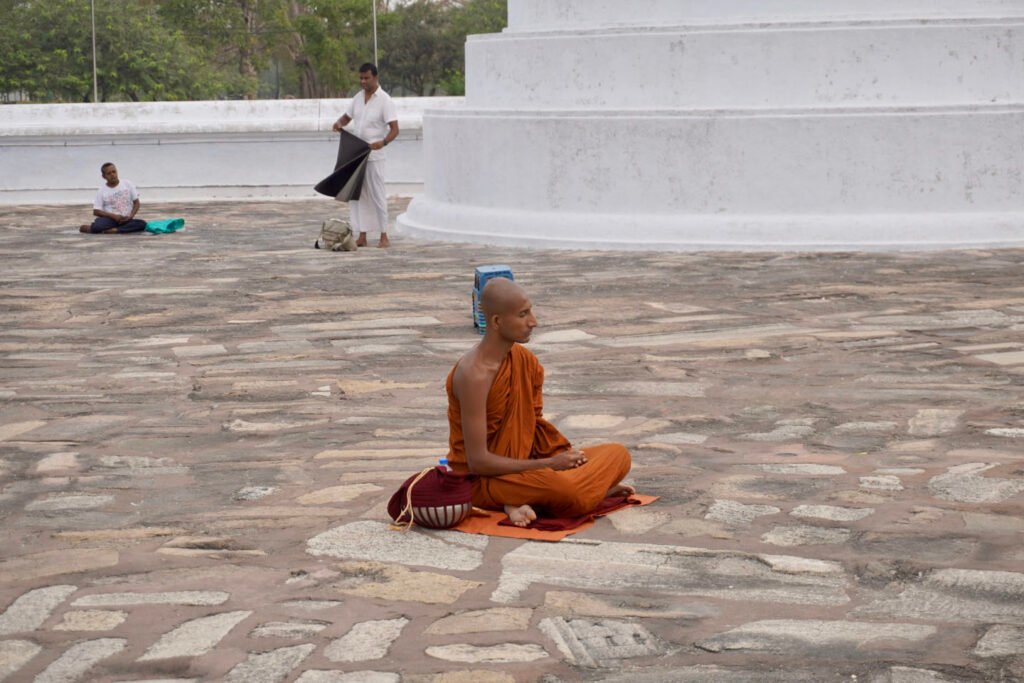
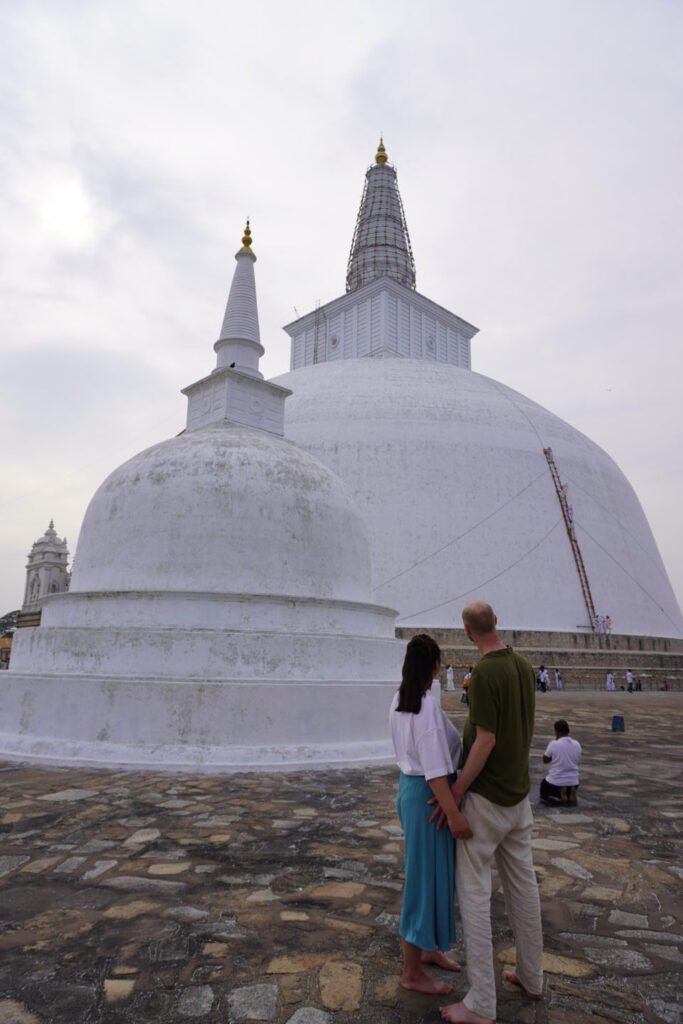
Anuradhapura was the first capital of the Buddhist kingdom. Every stupa holds a relic: ashes, a piece of collarbone, an alms bowl, a tooth, a toenail, or in one case a genuine curly hair from the forehead of the first Buddhist monk of Sri Lanka. We were lucky: at the first sacred tree of Sri Lanka some 2,000 people dressed in white were walking two by two in an enormous line to the tree, with flowers and food as offerings. We were the only tourists that early, and people were only too happy to have their photo taken with us.
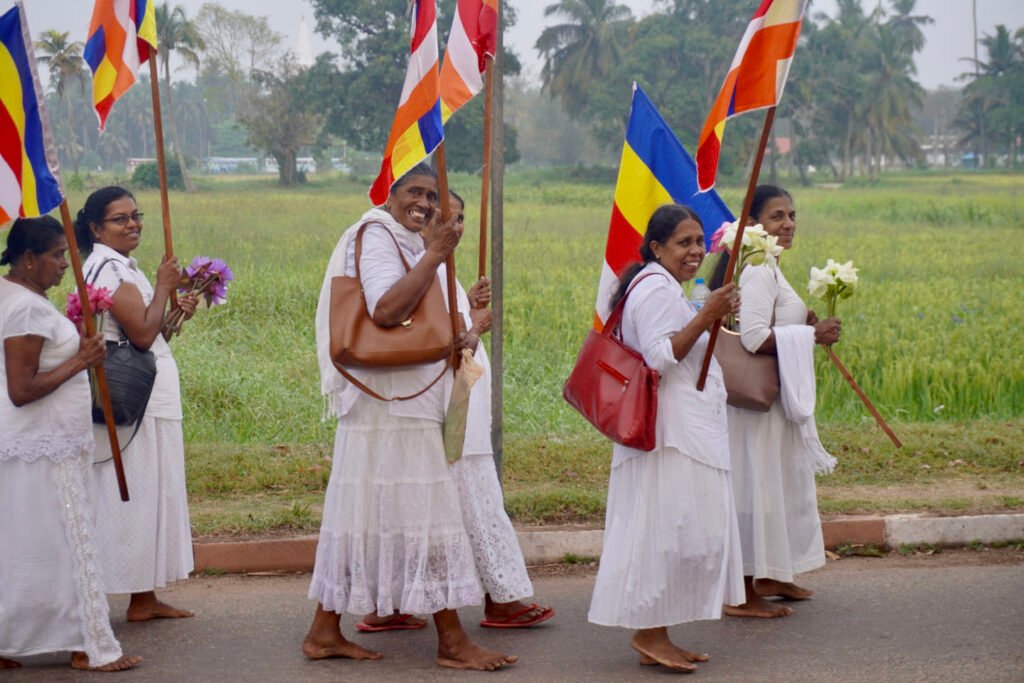
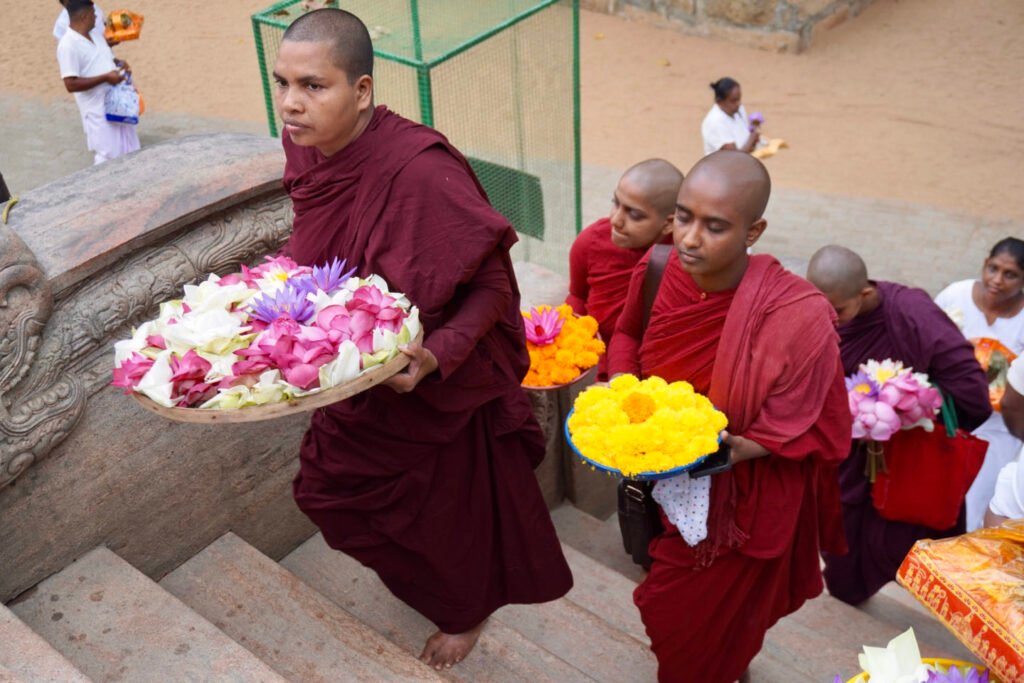
That tree had an extra meaning for us afterwards. It is the Jaya Sri Maha Bodhi, grown from a cutting of the tree in India under which the Buddha is said to have reached enlightenment. A cutting of this tree was brought to Sri Lanka in the 3rd century BC, and it is considered the oldest human-planted tree in the world. Bodhi means awakening or enlightenment. When we were looking for dog names a year later, we came across the name Bodhi and knew right away that this had to be the name for our dog!
Our guide was Amara, who picked us up at 7 in the morning at our homestay and drove us around in his own tuk-tuk. He has a lot of passion for his work, knows everything about Buddhism and was happy that more tourists are coming to Sri Lanka again. After two days it was mostly stupa, stupa, Buddha, stupa for us, but with Amara it stayed interesting. In the afternoons we read a book, did puzzles and lay in the pool at Villu Villa. The dinner there was quite spicy; we really felt like eating a bit less curry.
Good to know: guide Amara can be reached via WhatsApp: +94 76 051 4232
A private guide with a tuk-tuk in Anuradhapura often costs around €25-30 per person, excluding the entrance to the area (€30 p.p.). Tip: contact your guide before your visit to ask where and how best to buy the tickets. There may still be something to arrange regarding the price.
Elephants at Sigiriya: is a safari worth it?
Absolutely, although they came closer than our guide had planned.
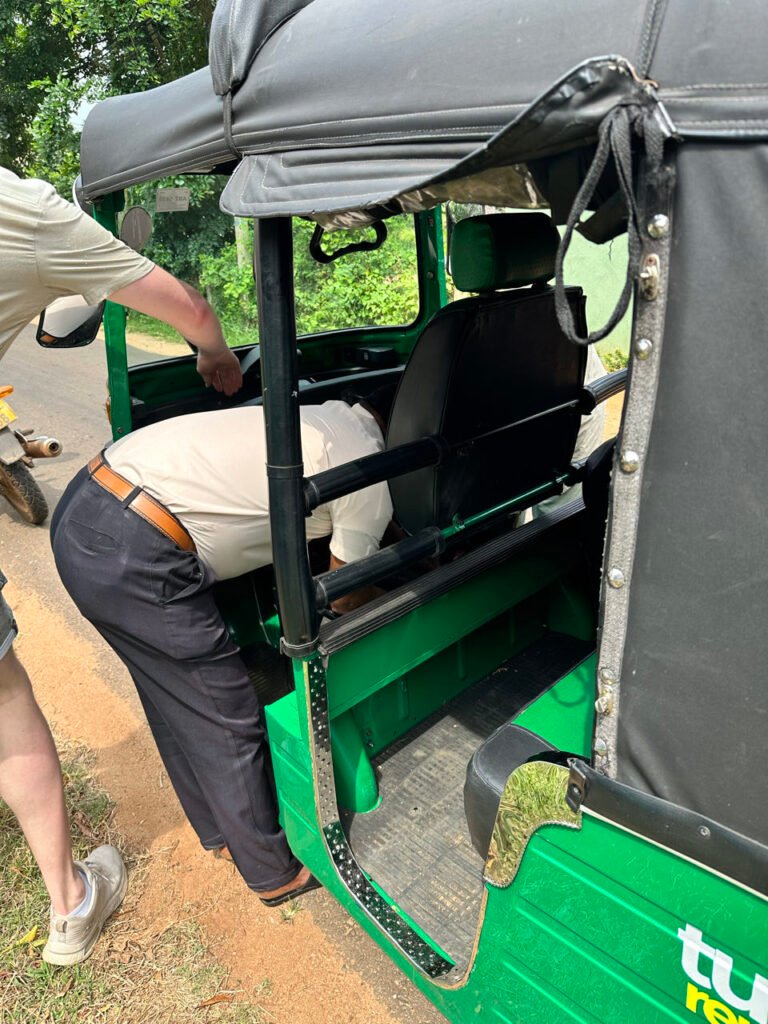
When leaving Anuradhapura for Sigiriya we turned the corner at our homestay, and Kermit gave up. Half the neighbourhood was mobilised in no time. The cause: a main switch of the tuk-tuk in a little compartment, where we had stuffed something. Oops. It can happen to the best of us, but honestly not the best spot for a kill switch either. The wife of one of our helpers offered us a cold pineapple juice at her home, after which we could get back on the road.
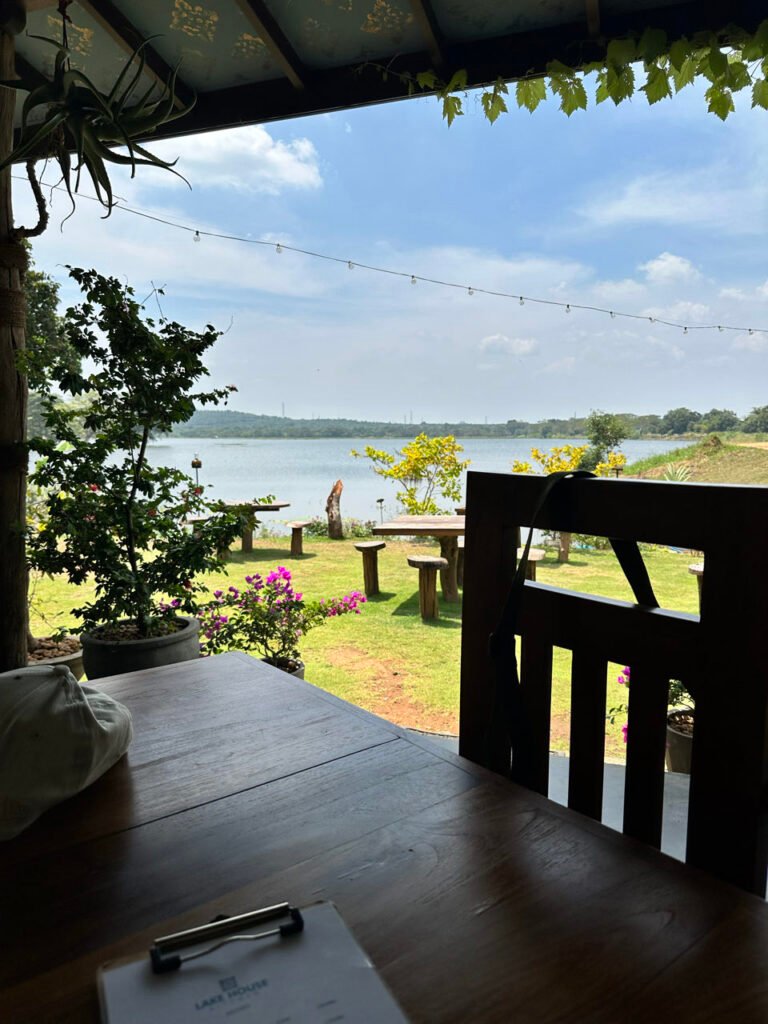
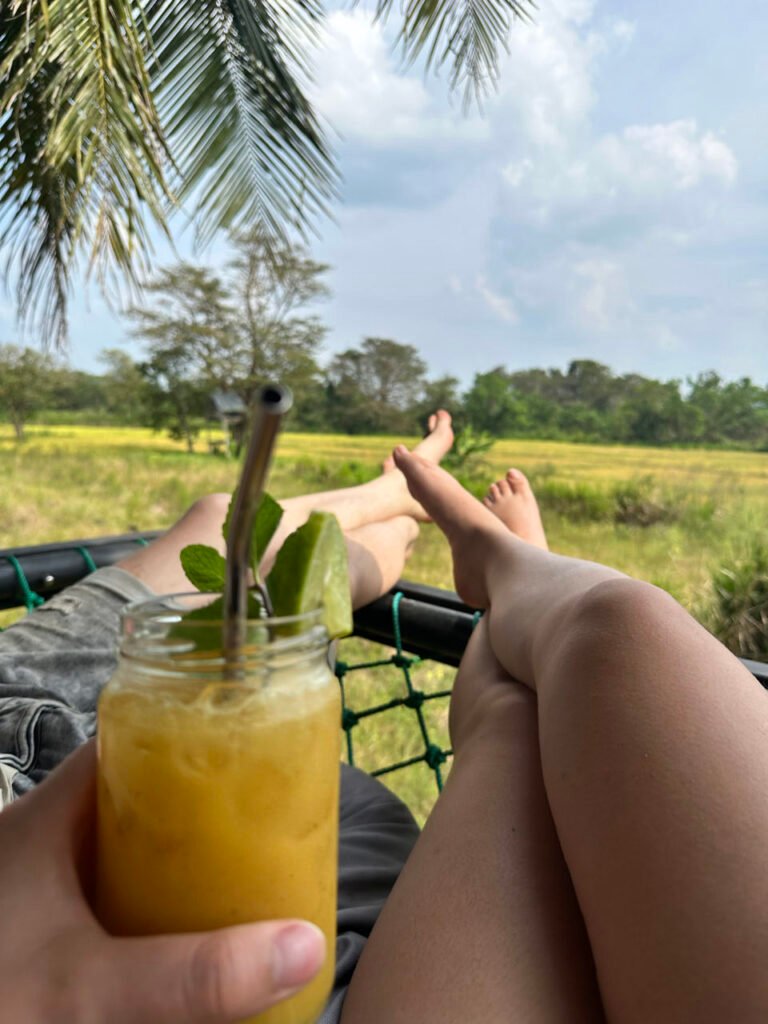
On the way to Sigiriya we had lunch at Habarana Lake, with Western food: Julian a big steak, Florine a good plate of pasta bolognese. How much we needed that after all those curries. With a smile from ear to ear we drove on to Roy’s Villa in Sigiriya, beautifully located by the rice paddies. Our dorm turned out to be overbooked, so we had to sleep in a private room the first night. Such a shame.
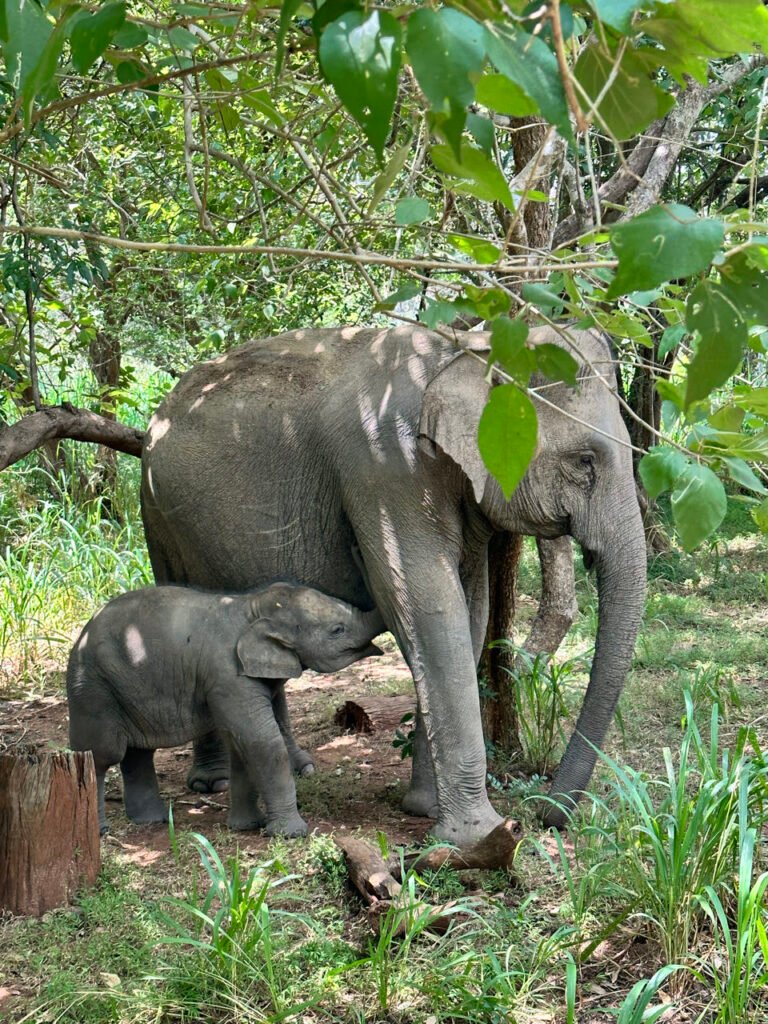
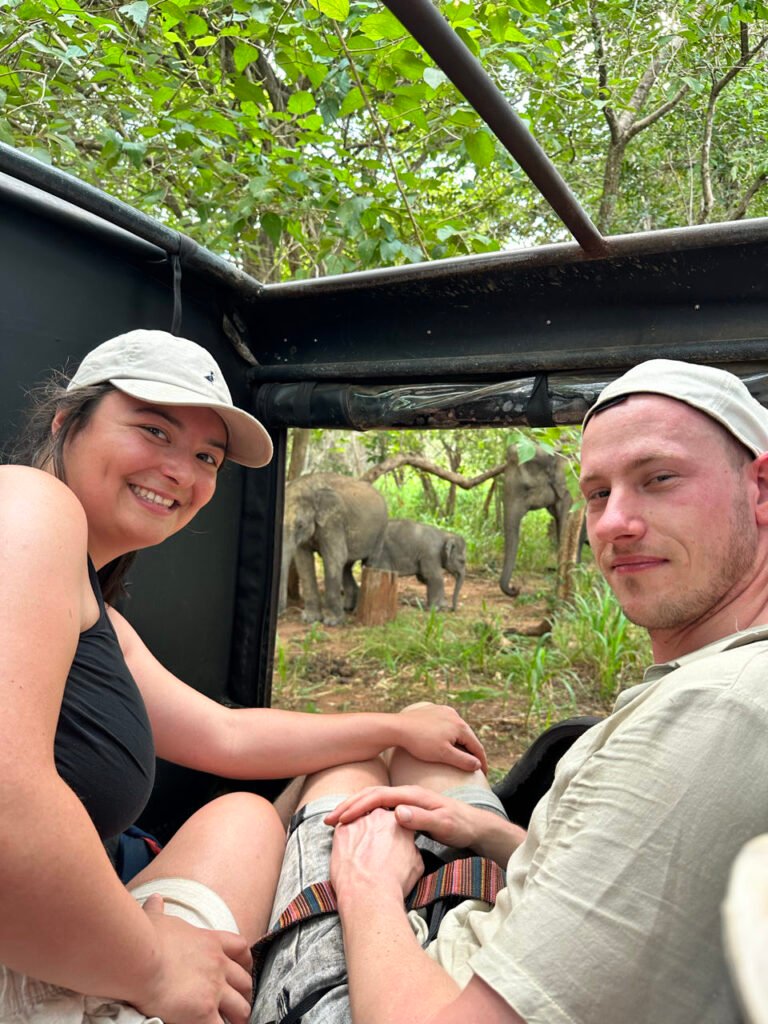
The next day we went on an elephant safari with the people from the hostel. With fully loaded jeeps, Swiss people and an English couple, we headed to an open park where elephants live in herds. Our guide took a small track to get closer to one group, and to our surprise we suddenly found ourselves right in front of another group. Less than five metres away. We think our guide was a little startled himself. In front of us stood a mother, a daughter of four or five and a son of one, who kept staring at us in amazement for ten minutes. Such curious animals. In total we saw some 25 to 30 that day!
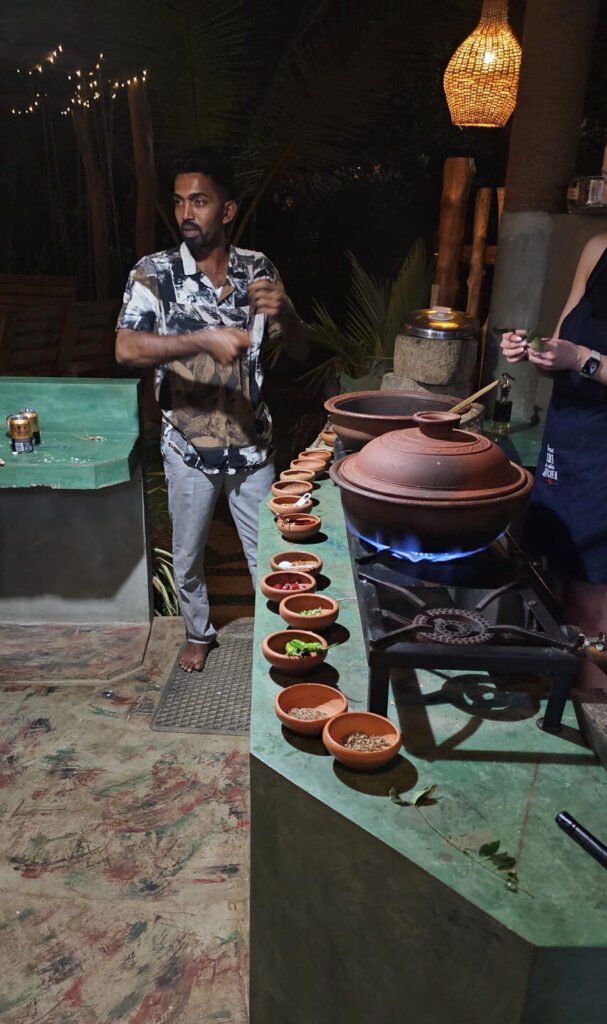
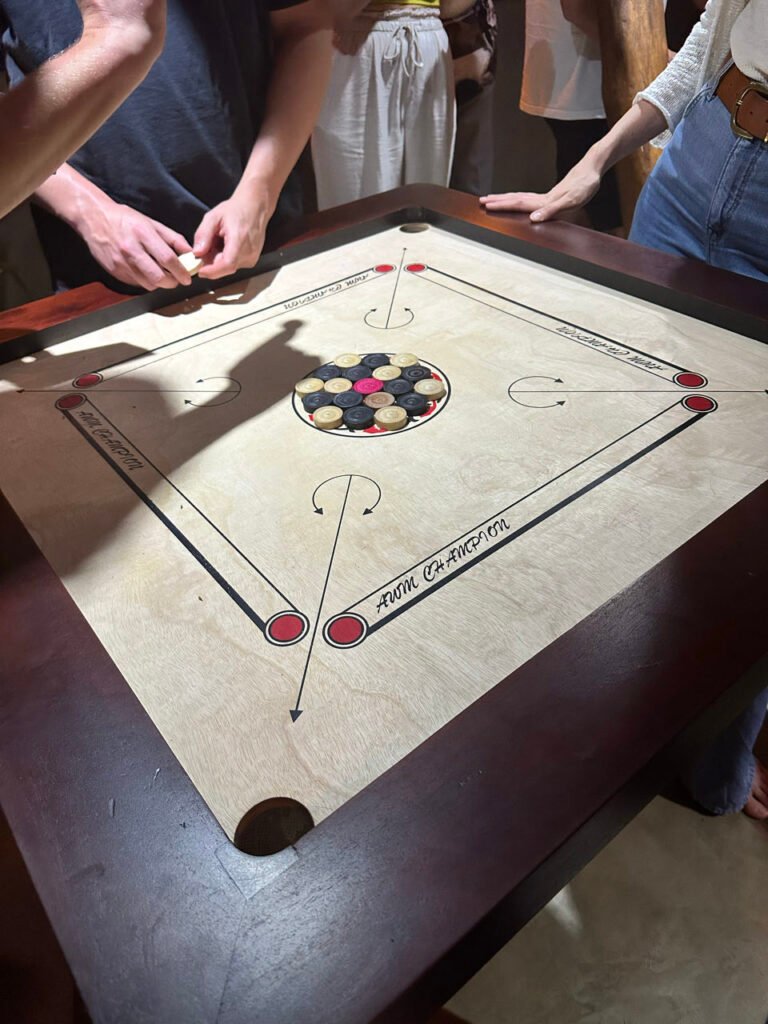
In the afternoon we made curry in a cooking workshop. We got to make the coconut milk: grating coconut on a very creative setup and then squeezing it out by hand. After dinner carrom came out, a typical Sri Lankan game, a bit of a mix between air hockey, pool and shuffleboard. After two games we were already out of the competition. With heads hanging, we went back to the dorm.
From the hostel you could take a sunrise hike to Pidurangala Rock (entrance Rs 1,000 p.p.), which gives you a beautiful view of Lion Rock. We skipped it because we could do with some sleep.
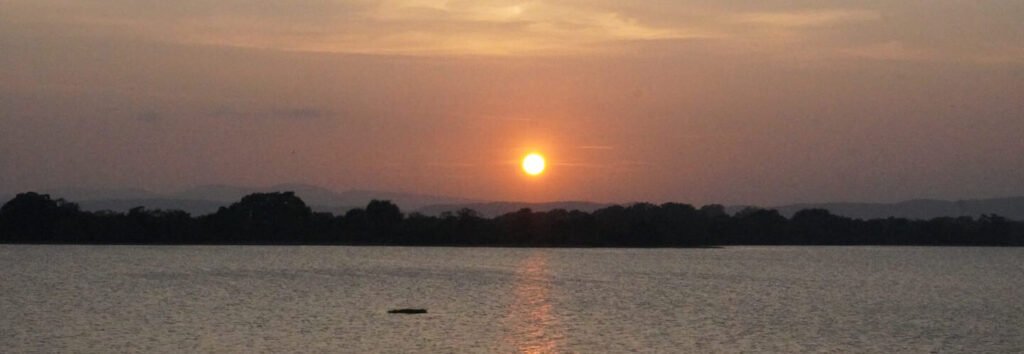
On the way to Polonnaruwa we passed Lion Rock, a rock about 200 metres high with the ruins of a royal palace on top. “Shall we do the hike up?”, we asked ourselves. Conclusion: we’ll just fly the drone up there, that’s easier. In Polonnaruwa we slept at the Sudu Neluma Home Stay, with a kind man who just forgot to tell us that the shower boiler and the air conditioning couldn’t be on at the same time. Polonnaruwa is a city similar to Anuradhapura, with lots of stupas and temples. We had seen enough temples by now, so we decided to skip this one after all and watched the sunset at the lake instead.
Can a tuk-tuk handle the 18-bend road?
Yes, in second gear.
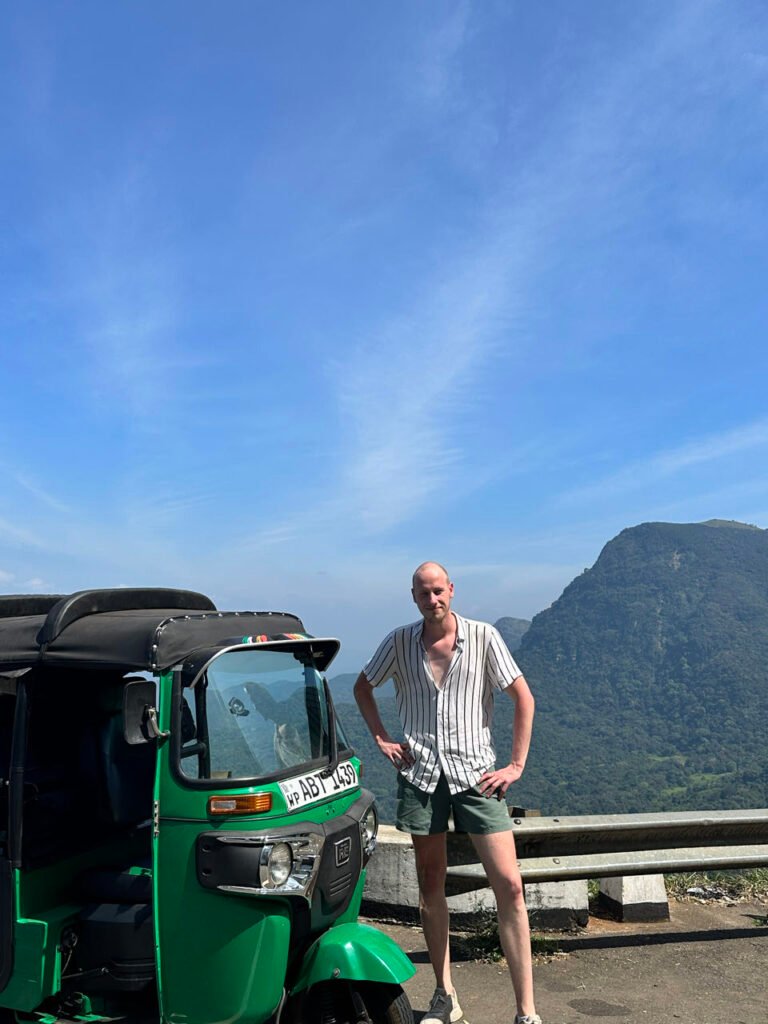
We were finally heading into the mountains. It became a very long travel day, but we were looking forward to it. The landscape changed quickly and the first rice terraces came into view. The iconic 18-bend road consists mainly of eighteen hairpin bends, and in second gear Kermit tackled it quite nicely. So we could enjoy the view.
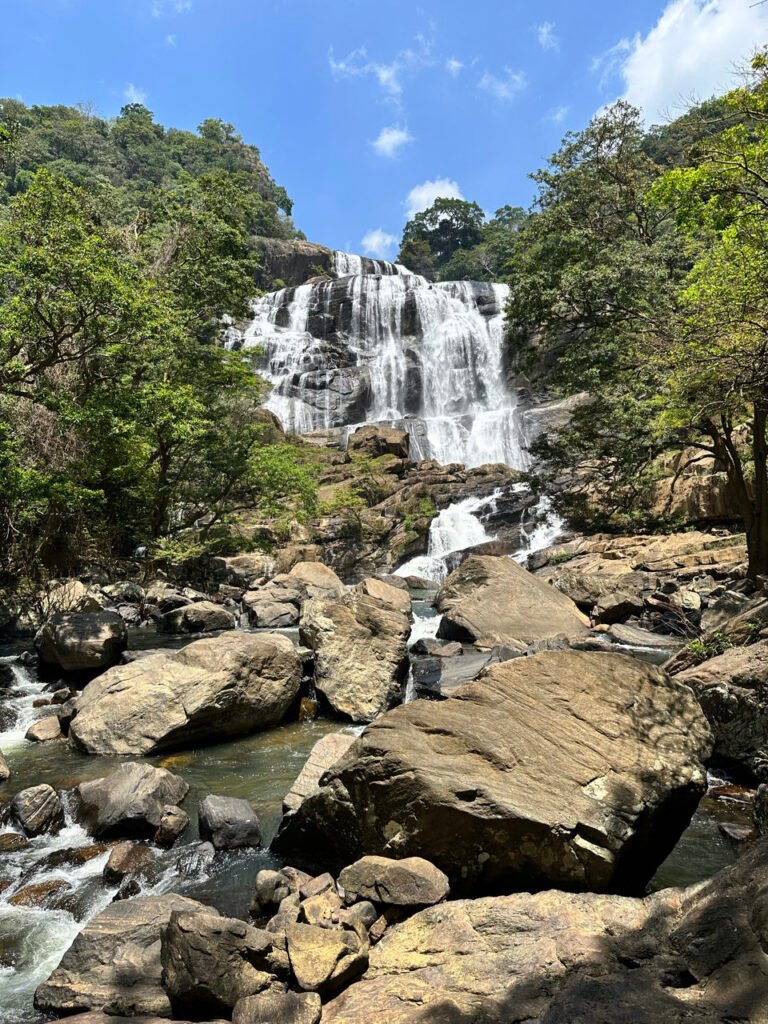
On the way we stopped for a hike to a waterfall, the Rathna Ella Bunt. After about four kilometres of hiking we stood at a beautiful waterfall, and there was nobody there at all! So we took a lovely dip and shot some drone footage.
What to do in Kandy?
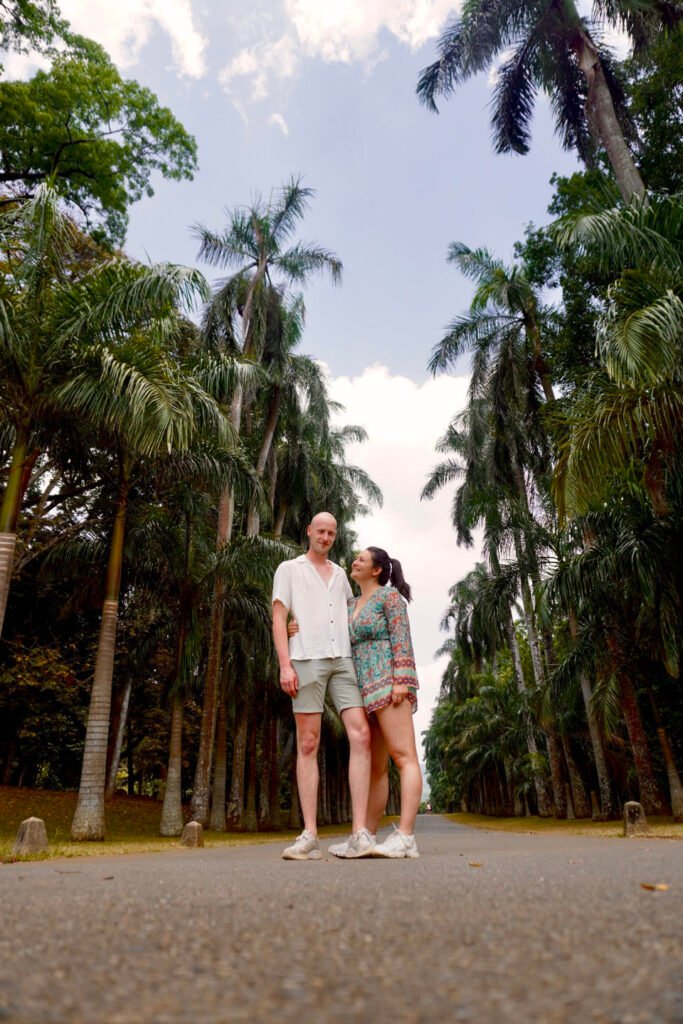
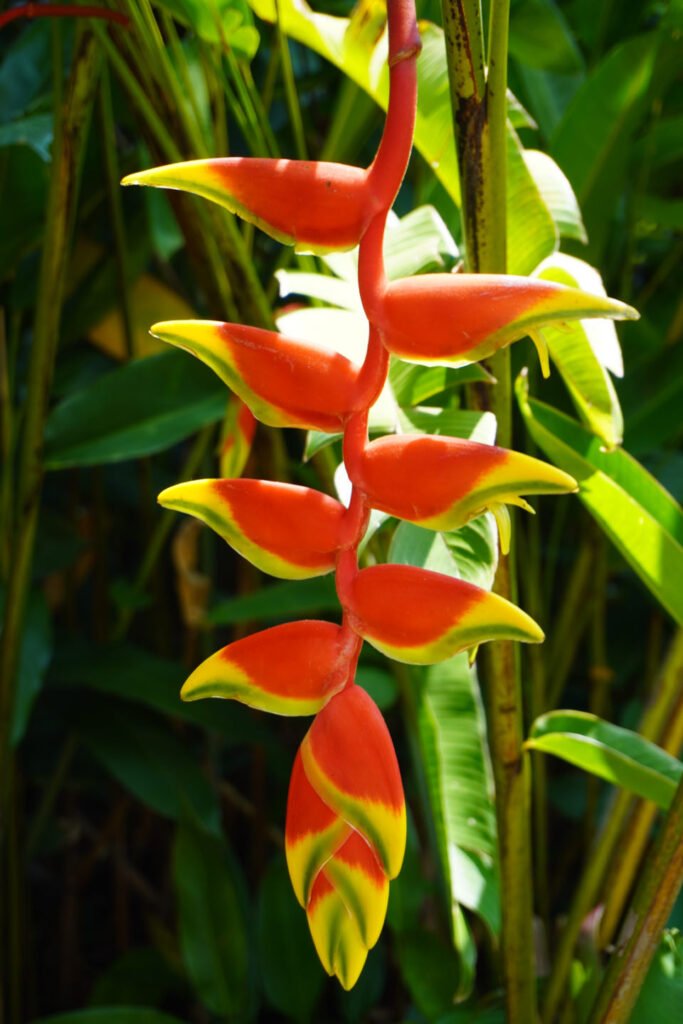
In Kandy we slept at St. Bridget’s Country Bungalow and took the tuk-tuk to the botanical garden: a great collection of plants, trees and flowers. If you love beautiful and unusual plants, you can easily spend a few hours here! Entrance for tourists is about €10 per person.
After parking the tuk-tuk back at our hotel, we took a tuk-tuk taxi with a driver. The poor man surely had the time of his life, because the bottle of liquor was three-quarters empty when we got in. Not our smartest ride in hindsight. We visited the Kandy Municipal Central Market, the largest market in the city. You will find stalls with fruit, vegetables, spices, clothing and souvenirs. Entrance is free and the morning is the best time, because it is less busy and the stalls are freshly stocked.
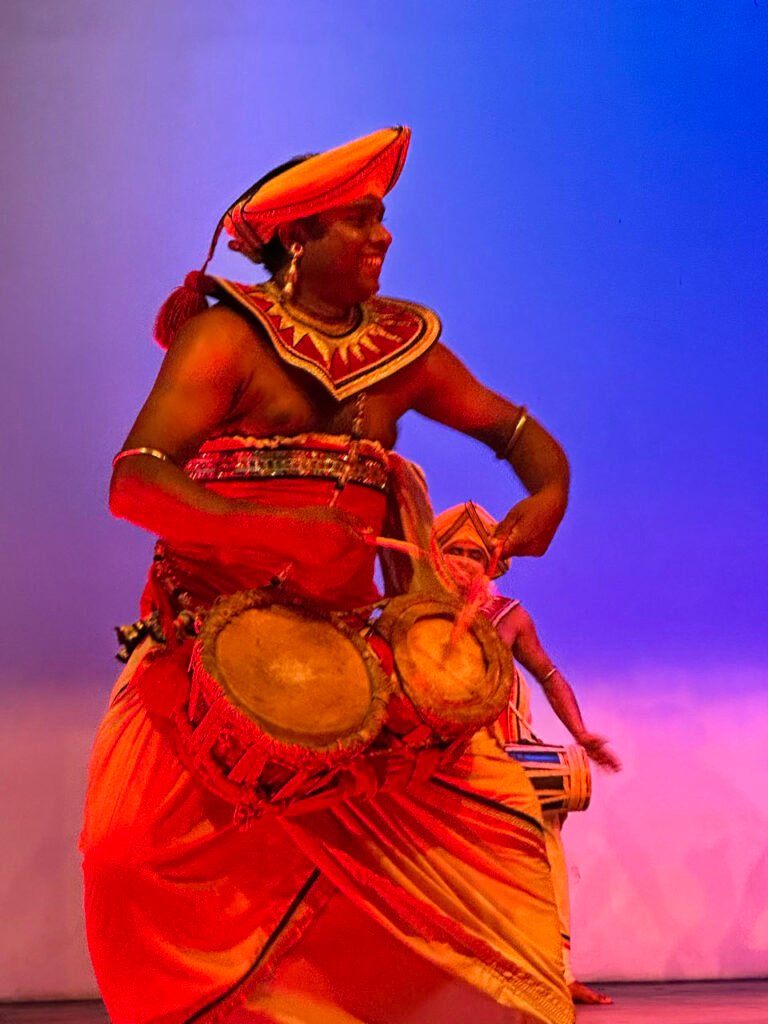
In the evening it was time for a cultural highlight: a dance show at Kandy Lake Club. We didn’t quite know what to expect, but it was actually really fun. There were peacock imitations, a lot of drumming and walking over hot coals.
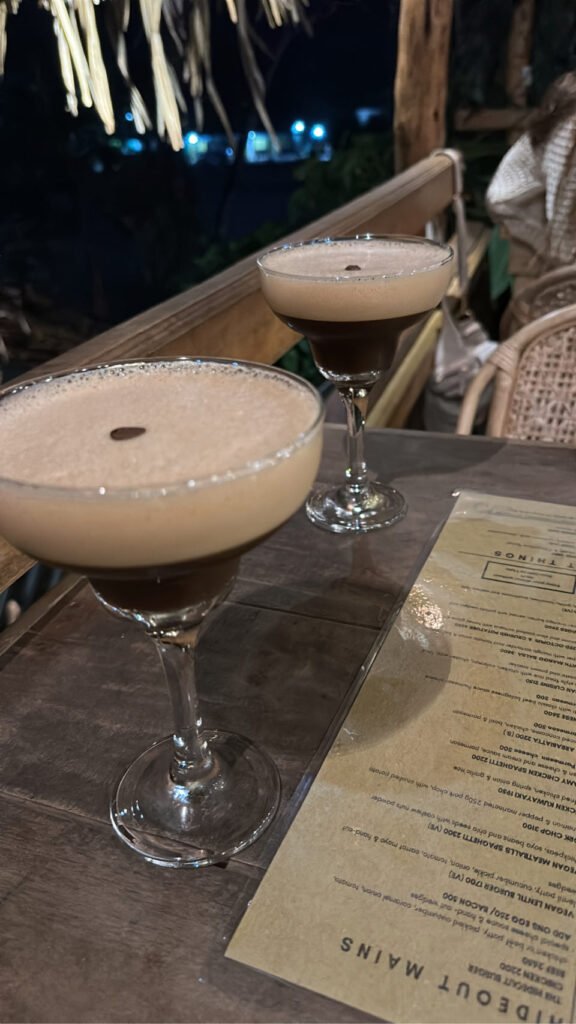
After the dance show we called our tuk-tuk taxi again so he could take us to a beautiful restaurant with delicious food and drinks. Hideout Lounge in Kandy is really a recommendation if you fancy some luxurious Western dining! (the prices are just a bit less Sri Lankan here… )
Kandy to Hatton: train or tuk-tuk?
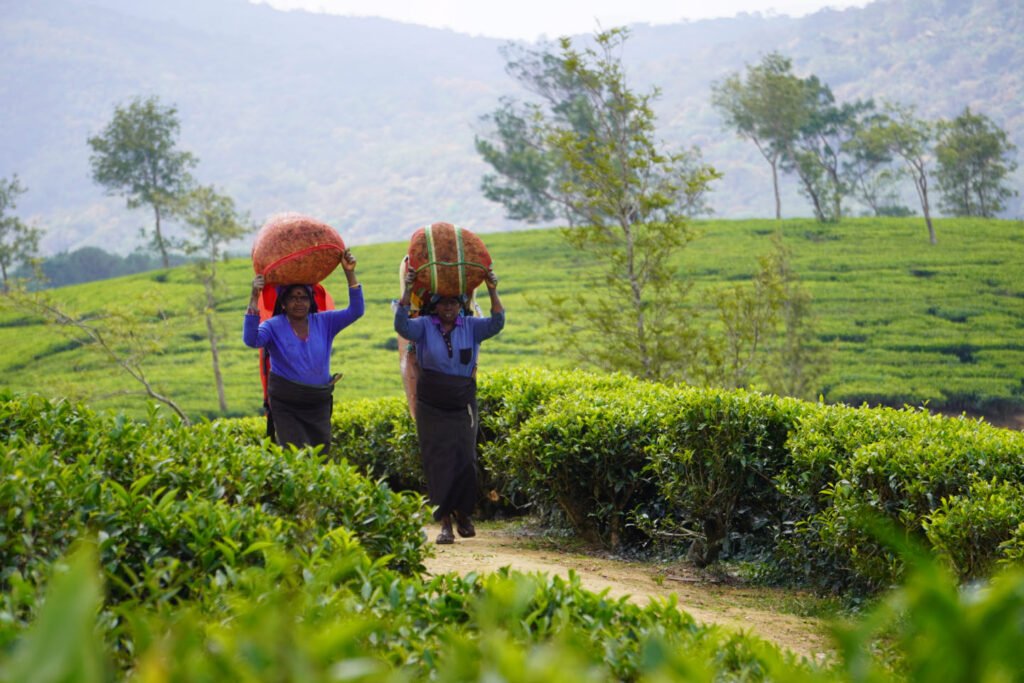
Tuk-tuk, if you ask us. Most people do this stretch by train. We had heard that it would be great by tuk-tuk too, so why not? And it was. Good weather, Kermit was in the mood, and we took the country roads past waterfalls, the Kothmale dam and an awful lot of tea plantations. Of course we still wanted to catch a bit of the train. So we planned a trip by bus and train from Ella.
On the way to Ella we stayed at Princess of Dickoya Homestay in Hatton, one of the nicest places of the trip. We ate whatever was on the table, together with another Dutch couple.
Is the train from Ella to Nuwara Eliya doable in third class?
Yes, and it was a lot better than the bus back.
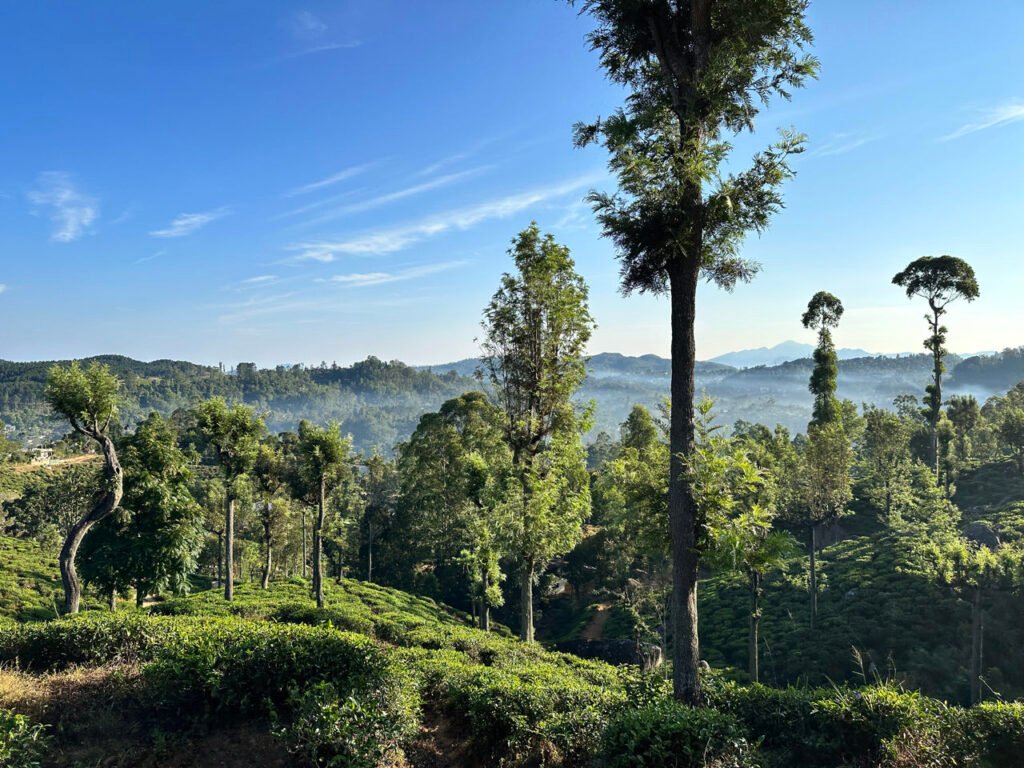
In Hatton we woke up to a beautiful picture: the valley wrapped in mist, with the morning sun on it. We said goodbye to the Dutch couple and drove through the tea plantations again, with the owners’ names in big white letters between the bushes, like we know from vineyards.
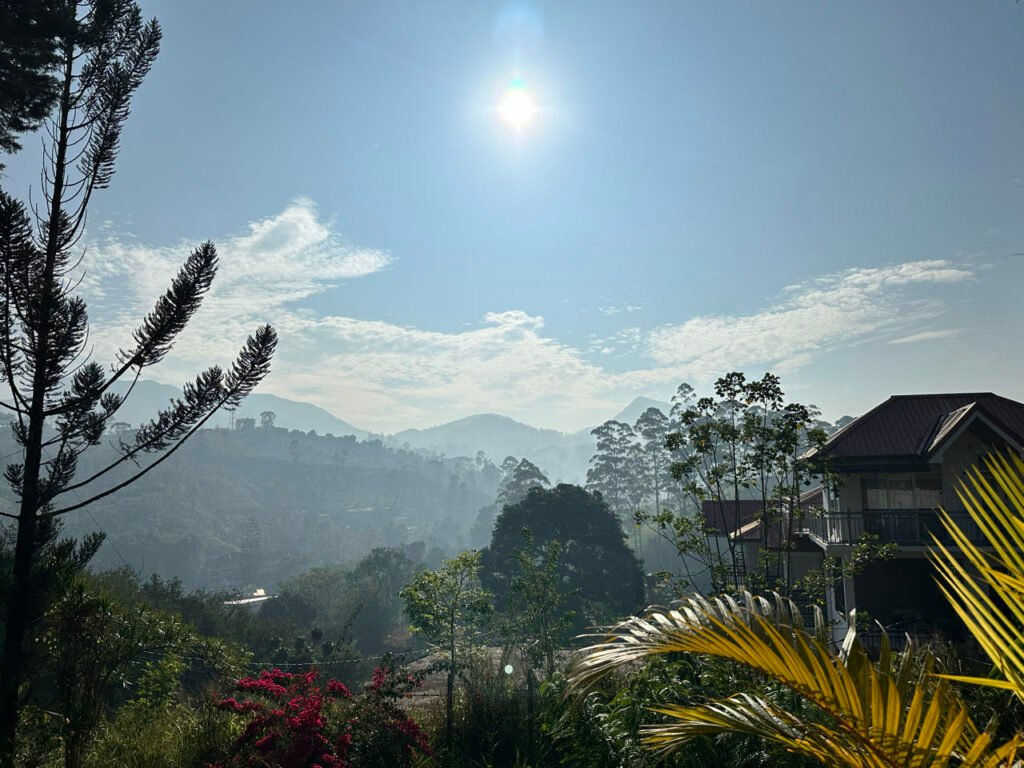
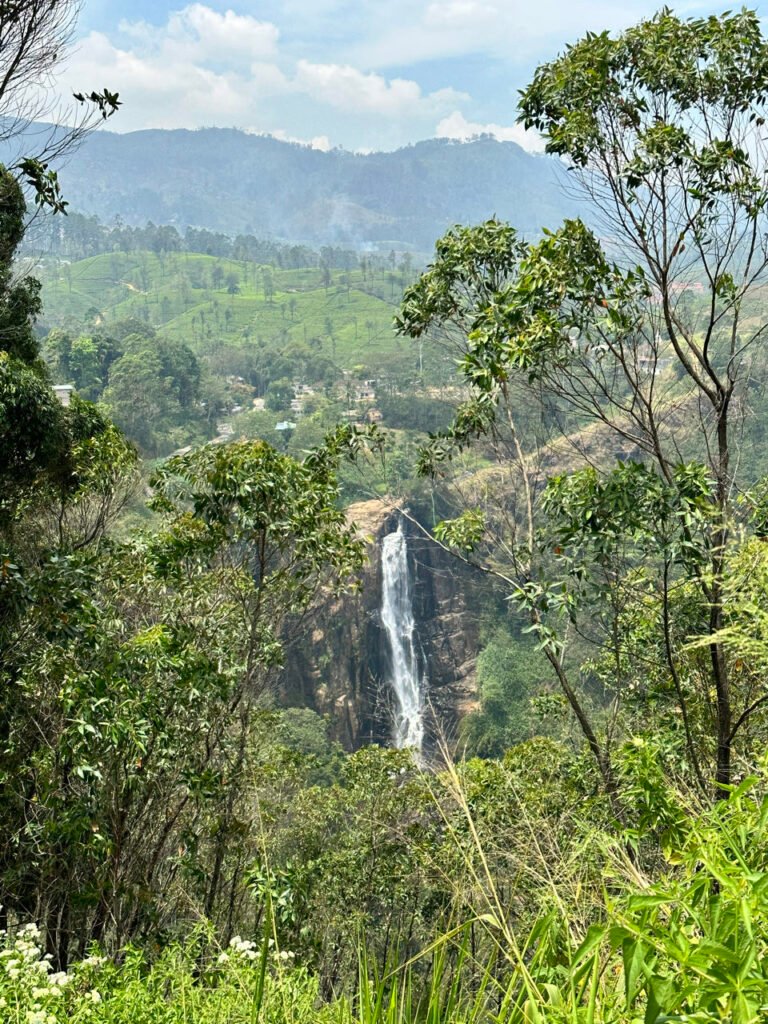
In Ella we slept at Hilltop Guest House. Ella itself is an overgrown village with more travellers than locals. Where we had seen at most five Westerners together until now, we now had to do our best to spot five locals. A world turned upside down. But everything here is set up to make travellers feel at home, from Western food to lounge bars, and we gratefully made use of that.
The alarm went off at 5:15, because we were taking the first train out of Ella. On the advice of a hostel owner we went the quiet way, so from Ella towards Kandy.
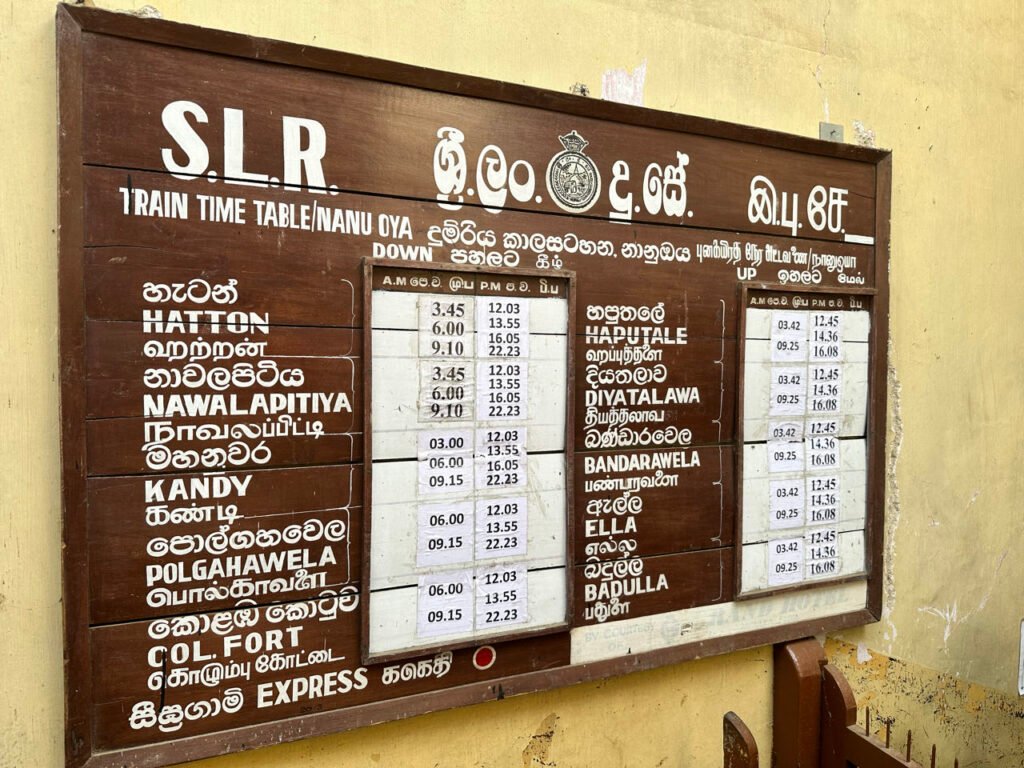
At the ticket counter people gave us funny looks for really wanting to travel third class. But of course we wanted the full experience. 900 rupees per person (€2.50) for two and a half hours of train. The train was on time, there was plenty of room, and they even sold breakfast. Dutch Railways should learn from this! The only downside: the doors wouldn’t open, while Florine so badly wanted to take a photo from a moving train. Luckily a big ladder had to be loaded sideways into the train halfway, so the doors had to open. So we seized our chance and took the iconic photo! The train ride went through beautiful areas, and we wouldn’t have wanted to miss the experience. But we were glad we had already driven the rest of the route by tuk-tuk.
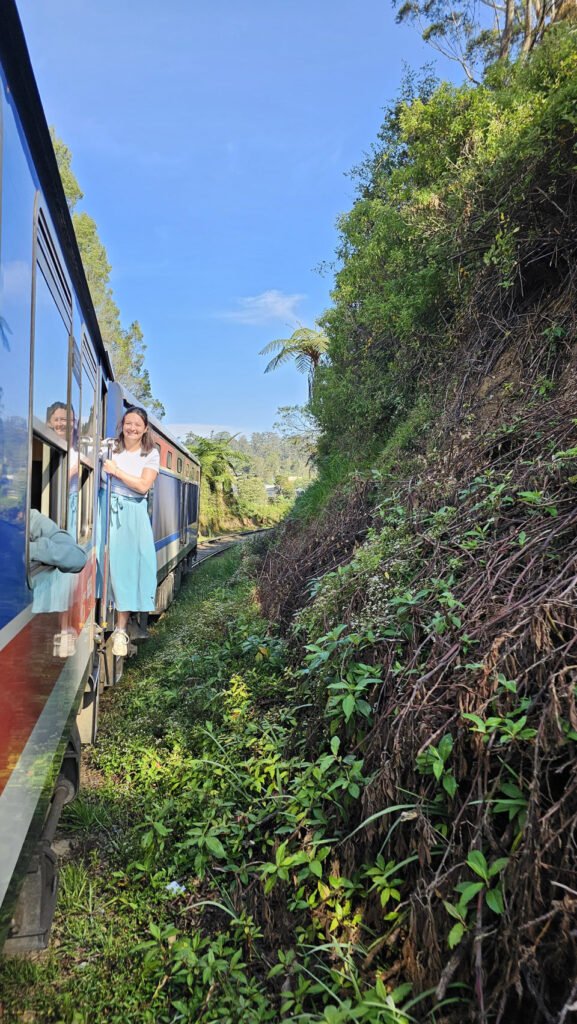
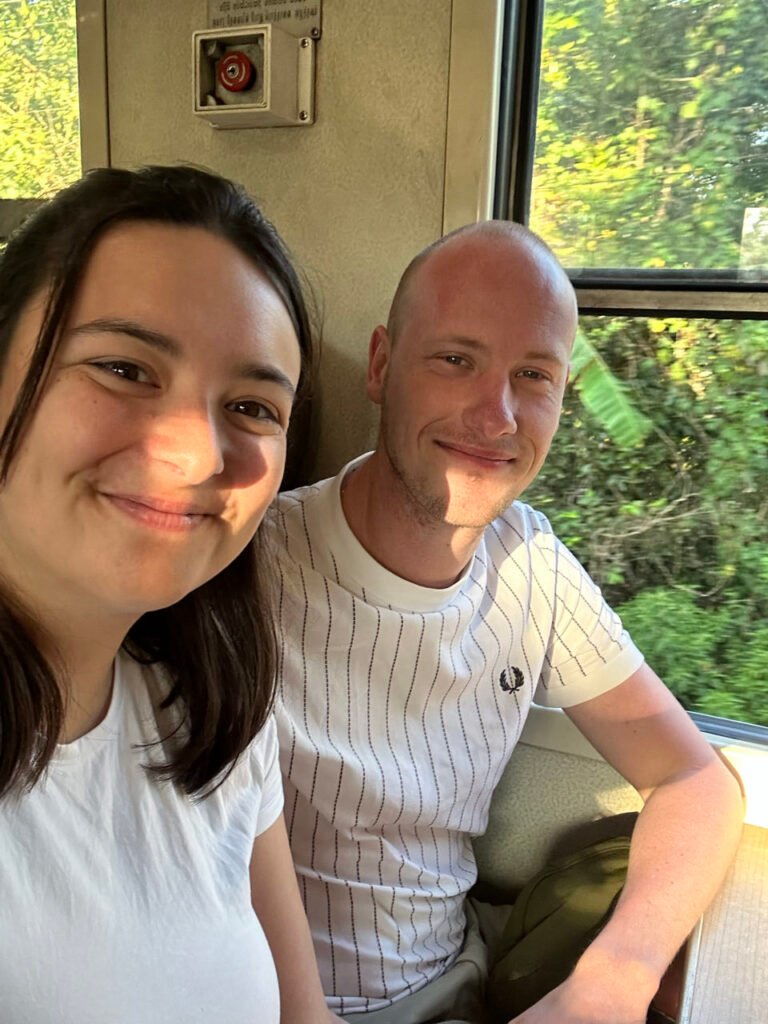
We got off at Nuwara Eliya, also known as Little England. You see a lot of English influence here from the time the English were here. On the way back we took the infamous Sri Lankan bus for the first time, and it was at least as much of an experience as the train. Only in a negative way. We were the last to get on, so no seat. How bad can it be? Well, pretty intense. Standing through the mountains with a bus driver who drives like a madman is next-level scary. And nauseating. An older man offered to swap places. At first we said no. But when your brunch is coming back up and he asks again, you say yes.
How do you get past the elephants on the B35 with a tuk-tuk?
With patience, at a distance and preferably with the help of a large vehicle.
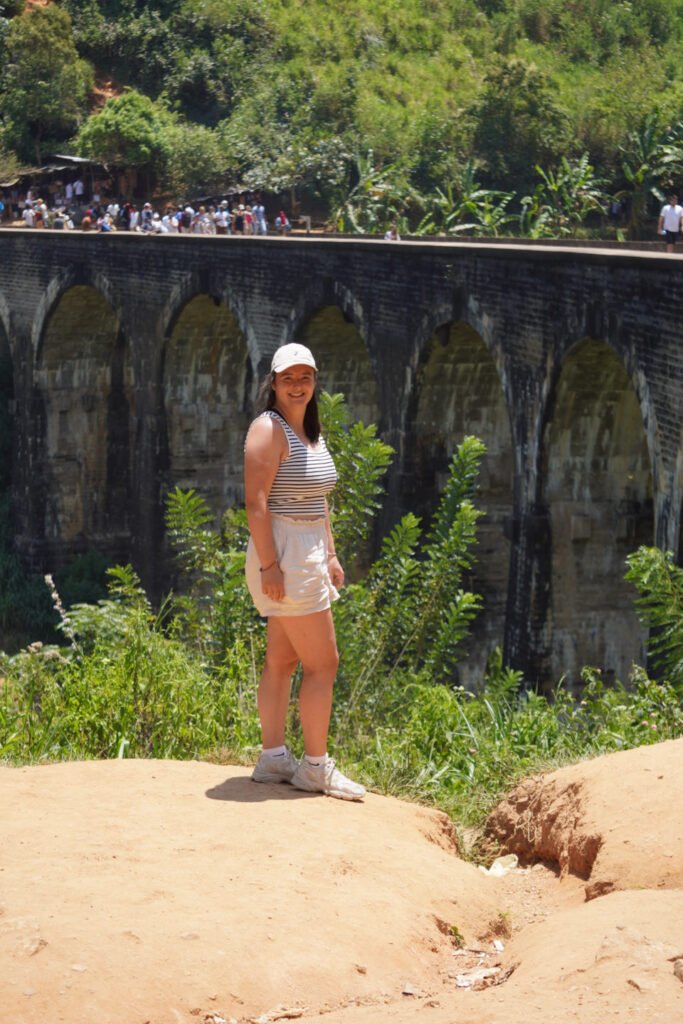
Our time in the interior was over. On the way down we stopped by Nine Arch Bridge, one of the most famous railway bridges in the world. We quickly took a few pictures and then quickly fled, because it was so crowded with tourists. Coming down from the mountains we only noticed again how hot it is at sea level. On the way we happened to drive past a Buddhist procession half a kilometre long, with traditional clothing and dances. We recognised all of it, of course, since our dance show in Kandy. There was even a costumed elephant walking along.
That costumed elephant would not be the only one of the day. On the B35 there are elephants running a scam: standing in the middle of the road and only moving aside when they get food. We soon saw the traces: elephant poo, elephant paths and lots of broken glass from car windows. After a quarter of an hour we met the first (and luckily only) one, taking a nice siesta in the shade, with a safari jeep next to it. We could safely pass behind it. Survived again.
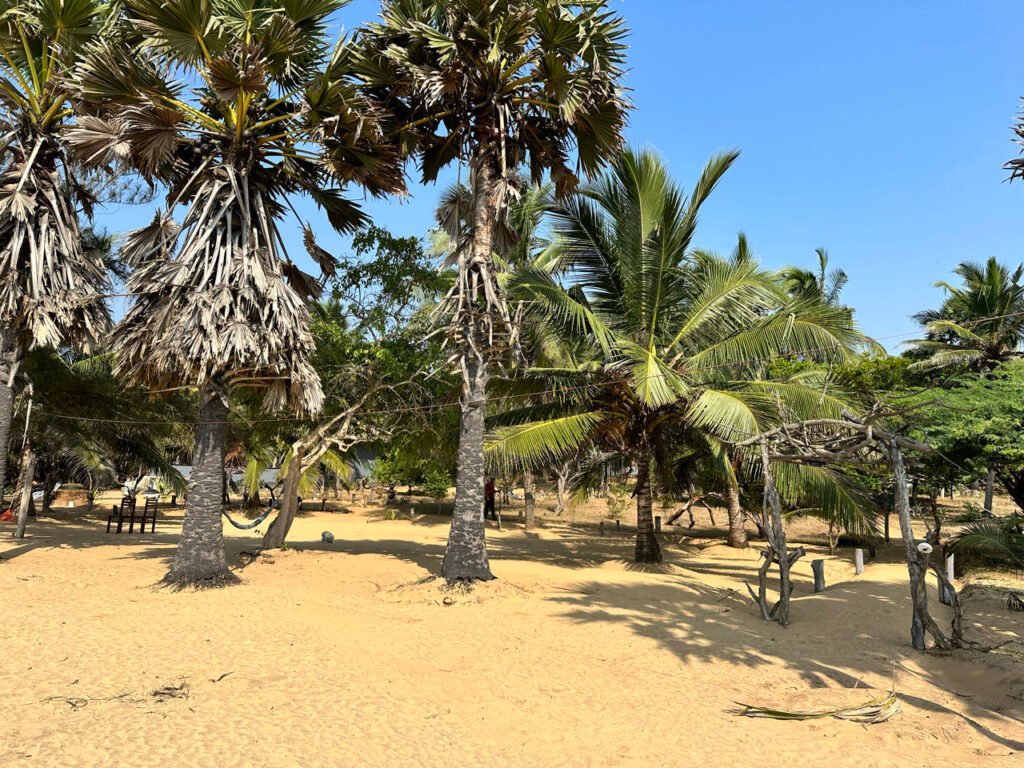
In Kirinda we slept at Beach Bungalows & Beach Camping: a house with a sea view in a town where there isn’t much else to do. A tasty bite to eat out at Cafe Culture, and then off to bed.
Good to know: make sure you pass the elephants on the B35 calmly and at a distance, preferably wait for a larger vehicle that can guide you past safely.
Is Hiriketiya good for learning to surf?
Yes. It is a small bay with long, steady waves, and that is what most people come for.
For the last two weeks we had no plan yet, other than chilling by the sea. A bit of surfing, sunbathing, maybe diving. We stayed in a hostel right near the beach and the nice street: Chill Vibes Hiriketiya.
We couldn’t wait and walked straight to the beach for our first surf lesson. Don’t expect too much: you get the basics explained and then go into the water with a coach, so they can push you onto the waves. After surfing we mostly took it easy: good food, drinks and reading. That works perfectly here!
In Dikwella, the village next to Hiriketiya, we sent a postcard home from the post office. Cost: a few euro cents. And it even arrived.
Where can you swim with turtles?
Turtle Point is a bay where you can snorkel with turtles. We expected it to be overhyped and full of tourists, but luckily that wasn’t the case. After ten minutes of snorkelling we had both already seen three turtles. The locals don’t touch or feed them here, and that was nice to see.
Can you learn to dive in Unawatuna?
Yes. Julian did his PADI Open Water course at Sun Diving Center Sri Lanka, Florine did a number of fun dives. That meant getting up early: the dive days started around half past seven and often ran until the afternoon, sometimes with an evening session on top. We slept six nights at Villa Windfall, and Kermit got a rest: for short distances we took a tuk-tuk taxi. The diving was beautiful and we visited many different dive sites, although unfortunately we often had poor visibility underwater.
What is the best way to visit Galle Dutch Fort?
On the day off between dives we went to Galle Fort, originally a Portuguese fort, but eventually conquered by the Dutch, who expanded it considerably. The fort is a UNESCO World Heritage Site, but it is not a ruin: inside the walls people simply live among the little shops, cafés and small hotels. You can visit it for free and it is open day and night. We walked around for about three hours, over the walls, past the lighthouse and with a break at Pedlar’s Inn Cafe.
Saying goodbye to Kermit
From Unawatuna we drove the 114 kilometres to Colombo in about four hours, for a last night in the luxurious Granbell Hotel and a loop through the city. Then we took Kermit back to Katunayake, near the airport. After four weeks and well over 1,100 kilometres our trip was over! We spent the night in an airport hotel room, waiting for our 03:19 flight.
Where did we sleep?
Our favourites were Moni Farmhouse near Wilpattu and Princess of Dickoya Homestay near Hatton. All prices are what we paid per night in 2024, for a room for two.
| Place | Accommodation | Price per night (for two people) |
|---|---|---|
| Negombo | Boutique Villa | €26 |
| Chilaw | Coco Village Hotel | €29 |
| Wilpattu (Nochchiyagama) | Moni Farmhouse | €33 |
| Anuradhapura | Villu Villa | €20 |
| Sigiriya | Roy’s Villa | €39 |
| Polonnaruwa | Sudu Neluma Home Stay | €7 |
| Kandy | St. Bridget’s Country Bungalow | €36 |
| Hatton (Dickoya) | Princess of Dickoya Homestay | €25 |
| Ella | Hilltop Guest House | €34 |
| Kirinda | Beach Bungalows & Beach Camping | €31 |
| Hiriketiya | Chill Vibes Hiriketiya | €78 |
| Unawatuna | Villa Windfall | €53 |
| Colombo | Granbell Hotel Colombo | €129 |
What does four weeks in Sri Lanka by tuk-tuk cost?
Unfortunately we didn’t keep track of what we spent on food and drinks, but the table below shows our main expenses.
| Item | Cost |
|---|---|
| Tuk-tuk rental, 4 weeks | €520 |
| Fuel | approx. €60 (tuk-tuks run on petrol: well over 1,100 km at approx. 20 km per litre, Rs 371 per litre) |
| Accommodation | €1,201 for 26 nights (average €46 per night) |
| Safaris (Wilpattu and Sigiriya) | About €200 in total for two people. |
| Guide in Anuradhapura | approx. €75 (Anuradhapura approx. €55 for two, Mihintale €20) |
| Diving at Sun Diving Center (PADI Open Water and fun dives) | €400 (€360 PADI Open Water, €40 fun dives) |
| Train Ella to Nuwara Eliya, third class | €5 (2 × €2.50) |
| Total | approx. €2,460 for two people, excluding flights, food and entrance fees |
Our verdict
We would do Sri Lanka by tuk-tuk again in a heartbeat! What we would recommend most: the safari in Wilpattu, the elephants at Sigiriya and the drive from Kandy to Hatton by tuk-tuk.
What was disappointing: the crowds in Ella and at Nine Arch Bridge. But if you do the loop the other way around, you will be less shocked by it.
Frequently asked questions
Are you allowed to drive a tuk-tuk yourself in Sri Lanka?
Yes, with your own driving licence, a physical international driving licence and a local permit from the Automobile Association of Ceylon. The rental company arranges that last one for you. You can read how that works in Renting a tuk-tuk in Sri Lanka.
Are you allowed to fly a drone in Sri Lanka?
Yes, but only with a permit that you apply for per location in advance. The rules change regularly, so check the current requirements with the Civil Aviation Authority of Sri Lanka shortly before departure.
What do you wear at temples?
Long clothing. We bought long trousers and a long skirt at the market in Anuradhapura, €8 together.
How many kilometres do you drive in a tuk-tuk in four weeks?
We drove well over 1,100 kilometres, an average of about 40 per day. Our longest driving day was the second to last: 114 kilometres from Unawatuna to Colombo, in about four hours including stops. Kermit does about 40 to 45 kilometres per hour, so don’t count on motorway speeds.
Going yourself?
Going yourself? Then start with Renting a tuk-tuk in Sri Lanka for driving licence, costs and traffic rules. You can rent via TukTukRental, and if you book through our link you get 5% off!